Ole Miss QB Trinidad Chambliss seeks injunction from Mississippi court against NCAA
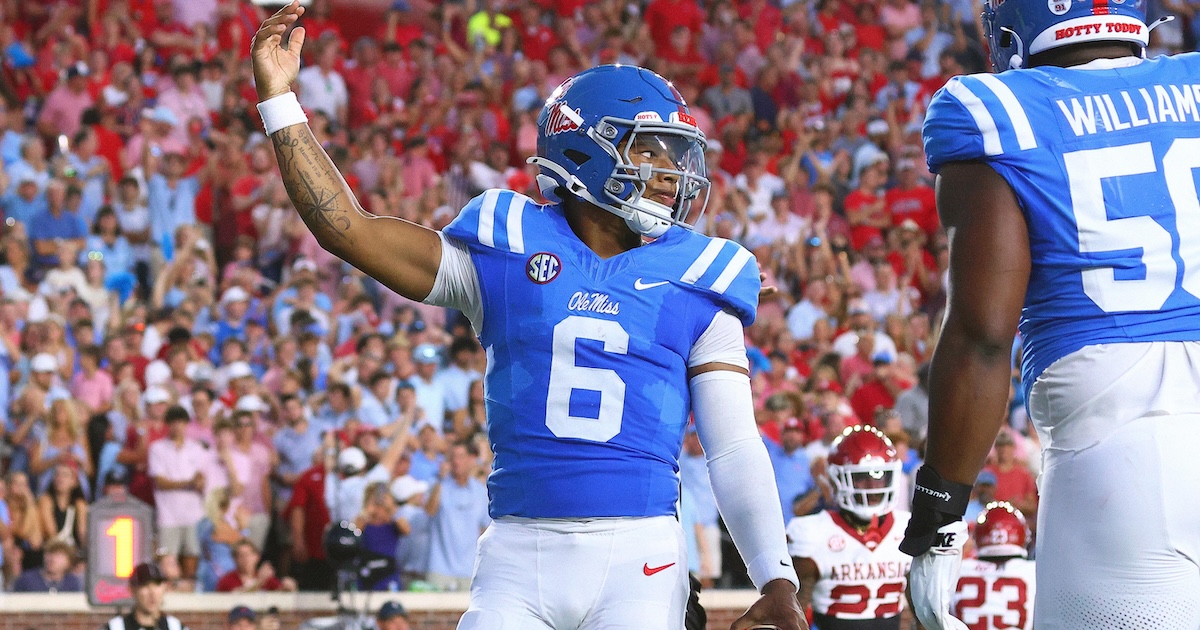
Ole Miss quarterback Trinidad Chambliss filed a petition Friday asking a Mississippi court to grant an injunction that might allow Chambliss to play in college during the 2026 season. Chambliss’ petition, filed in Lafayette County chancery court, argues that Chambliss should not have been denied a waiver last week that would have granted him an extra year of eligibility.On Jan. 9, the NCAA denied Chambliss’ request for a sixth year of eligibility. Chambliss redshirted as a freshman at Division II Ferris State in 2021 and spent the 2022, 2023 and 2024 seasons on the roster at the Michigan school before playing this past season at Ole Miss. Chambliss had retained attorney Tom Mars to handle his eligibility case with the NCAA. After the waiver was denied, Chambliss also retained Mississippi-based attorney William Liston III. Liston co-founded the Grove Collective, which provides NIL services for Ole Miss athletes.The Chambliss case differs from most other NCAA eligibility actions in that it was filed in state court on contractual grounds rather than in federal court on antitrust grounds. The NCAA has been more successful defending eligibility cases in federal court — the NCAA has fared poorly in cases involving player compensation — so Chambliss’ team opted to try to get a home-field advantage of sorts by filing in state court in Oxford, Miss., where Ole Miss is located. His attorneys are arguing that the NCAA applied its rules unevenly in Chambliss’ case, which they claim represents a contractual breach between the NCAA and its member schools and third parties such as Chambliss.The judge assigned to the case is Robert Whitwell, who holds a law degree from Ole Miss. Whitwell also is a former quarterback. He was a captain for the Northwest Mississippi Community College team that won a state title in 1965. Whitwell went on to get his undergraduate degree from Delta State.The petition seeks a preliminary injunction that would keep the NCAA from enforcing its eligibility decision and asks a judge to make the injunction permanent. Such an injunction likely would allow Chambliss to play in 2026. Without one, he’d have to move on to the NFL.After redshirting in 2021 and not playing any games in 2023, Chambliss first saw the field for Ferries State in 2023. In 2024, Chambliss led Ferris State to a Division II national title. In 2025, Chambliss transferred to Ole Miss with a plan to back up Austin Simmons. But when Simmons was injured early in the season, Chambliss was pressed into action. Chambliss wound up leading Ole Miss to the College Football Playoff semifinals, where the Rebels ultimately fell in the Fiesta Bowl to Miami. Chambliss threw for 3,937 yards and 22 touchdowns and ran for 527 yards and eight touchdowns.Chambliss’ attorneys argue in the petition that Chambliss has only competed in three seasons of college football, not four, because they argue a medical condition hampered his ability to compete in 2022 as a redshirt freshman. The petition details Chambliss having issues with enlarged tonsils following bouts of mononucleosis. It claims that airway obstruction caused by the condition bothered Chambliss for several years until he ultimately had his tonsils removed in December 2024.The NCAA denied Chambliss’ appeal in part because Ferris State didn’t seek a medical hardship waiver for him while he was experiencing the medical issues he claimed cost him the 2022 season. Typically, schools will apply for a hardship waiver following the season in which a player was incapacitated. For example, if a third-year football player who had already redshirted breaks his leg in the second game of a season, the player’s school usually would request a waiver after that season so that player and school know how much eligibility remains.Chambliss’ attorneys argue in the petition that Chambliss didn’t need to seek a waiver then. They also argue that Division II waiver rules — which differ from those in Division I — should have been applied to Chambliss since he played for a Division II school during the year in question. Medical records from 2022 were included in Chambliss’ petition to the NCAA.“In 2022, and until Ole Miss’s 2025 request to the NCAA for an eligibility waiver, Trinidad could not foresee any need to obtain a medical opinion in 2022 relating to his medical and physical incapacity to participate in intercollegiate athletics,” Chambliss’ attorneys wrote in the petition.An NCAA statement issued after denial of the waiver claims Ferris State indicated it had “no documentation on medical treatment, injury reports or medical conditions involving the student-athlete during that time frame and cited ‘developmental needs and our team’s competitive circumstances’ as its reason the student-athlete did not play in the 2022-23 season.”Chambliss’ attorneys attacked this statement in their petition, citing a letter to the NCAA from Ferris State associate athletic director Sara Higley that included this passage: “The decision to redshirt Trinidad in 2022 was based on his developmental needs and our team’s competitive circumstances at that time. Trinidad also had a few medical problems that arose during the fall 2022 season that could have played a role in the decision to redshirt him.”Now the NCAA will have to defend its decision in a Mississippi court. The governing body likely will attempt to argue that because it is a national organization with member schools in every state that federal court will be a more appropriate venue. Chambliss’ attorneys will fight to keep the case in Mississippi, where they’ll hope local affection for Ole Miss and Chambliss and a lingering mistrust of the NCAA based on previous investigations of Ole Miss may swing any decision in Chambliss’ favor.


Most Popular