India-Pakistan no-handshake moment explained

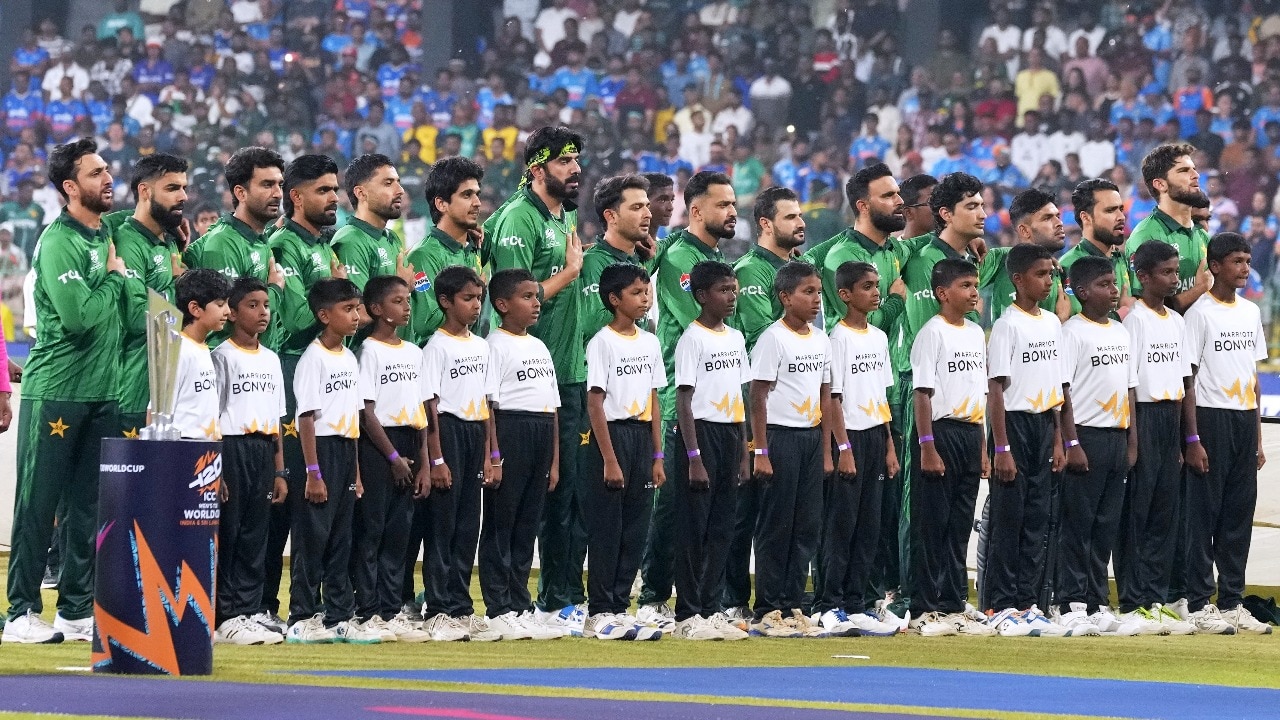
A commanding win on the scoreboard was followed by an awkward few seconds off it, as a viral video from Colombo showed two Pakistan cricketers momentarily waiting after India’s victory — a clip that has since fuelled debate across social media.The footage, circulating widely online, appears to show Shaheen Afridi and Usman Tariq pausing at the end of the ICC Men’s T20 World Cup 2026 Group A fixture at the R. Premadasa Stadium before eventually turning back toward the pavilion as Indian players celebrated among themselves.Viral video spotlights post-match momentIndia had just sealed a 61-run win over Pakistan on Sunday, 15 February, extending their recent dominance in the rivalry. But while the match itself delivered a decisive result, the aftermath drew equal attention.In the widely shared clip, Pakistan’s last batting pair — Tariq and Afridi — can be seen briefly facing toward the Indian side, who were congratulating each other following the victory. After waiting for a few seconds, the two Pakistan players walked off.It remains unclear whether the pair were specifically expecting a customary post-match handshake or had paused for another reason. The moment, however, gained traction because of India’s established stance in recent fixtures.India continue no-handshake policyIndia have maintained a no-handshake policy with Pakistan since the Asia Cup 2025, a decision that applies across men’s and women’s cricket at all age-group levels. The approach was again visible in Colombo.Even before the match began, there was no departure from that position. At the toss, India captain Suryakumar Yadav upheld the existing protocol with his Pakistan counterpart Salman Ali Agha. The same pattern followed at the conclusion of play, with no formal post-match interaction taking place between the two teams.The policy traces back to the aftermath of the Pahalgam attack in Jammu and Kashmir, which resulted in the deaths of 26 civilians. Following the incident and subsequent military action conducted by the Indian Armed Forces, sporting relations in certain disciplines were affected.Notably, the restriction applies specifically to cricket and kabaddi. In other sports such as hockey and tennis, the long-standing custom of post-match handshakes between the two nations has continued.Tensions before the toss, dominance on the fieldThe build-up to the India–Pakistan clash had already been dramatic. At one stage, there was uncertainty over whether the contest would go ahead after Pakistan announced they would not take the field in solidarity with the ejected Bangladesh cricket team. That stance was later reversed, clearing the way for the high-profile encounter.Once play began, however, the narrative was one-sided.Batting first, India posted 175/7, powered by Ishan Kishan’s explosive 40-ball 77. His innings featured 10 fours and three sixes, providing the foundation for a total that proved well beyond Pakistan’s reach.Pakistan’s chase never gathered momentum. Regular wickets disrupted their pursuit, and they were eventually bowled out for 114 in 18 overs. The emphatic result secured India’s qualification for the Super Eights stage of the tournament.For Pakistan, the equation has tightened. They must now win their final Group A match against Namibia to stay in contention for the next round.Cricket rivalry extends beyond the boundaryWhile India’s performance with bat and ball dominated the competitive narrative, the closing moments ensured the conversation extended beyond the numbers.The viral clip of Afridi and Tariq pausing has added another layer to an already intense rivalry, underscoring how off-field policies continue to shape the optics of one of cricket’s most closely watched contests.In Colombo, the result was decisive. The reaction afterward ensured the discussion was not confined to the scoreboard alone.

Most Popular