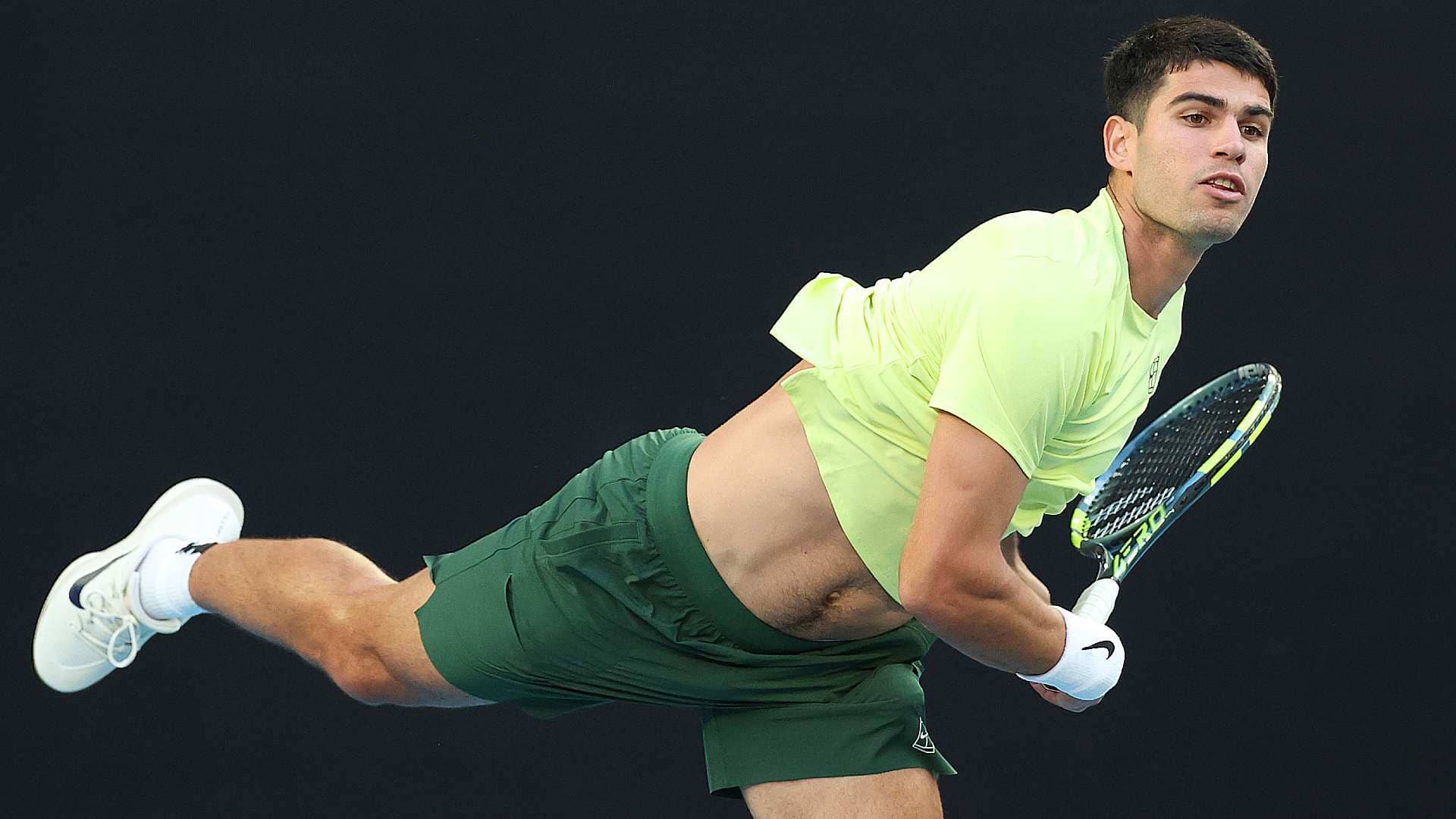
Jannik Sinner’s return to the Australian Open, a tournament of triumph and turmoil

MELBOURNE, Australia — Jannik Sinner was silent, lost in thought as he recalled the moment he considered quitting tennis.Sinner had arrived at the 2025 Australian Open as defending champion. He had also arrived uncertain about his sporting future. Though an independent tribunal had found that Sinner bore “no fault or negligence” for two positive tests for clostebol in March the previous year, he awaited a possible one- or two-year ban following an appeal from the World Anti-Doping Agency.He felt uncomfortable under the heavy gazes of his peers. The impending decision weighed on him on the court and off. The arc and pitch of his career had changed irrevocably in the space of a year. So, as he told the Italian TV station RAI in April 2025, “for a moment, I even thought about giving up everything.”Imagine! Carlos Alcaraz probably would have won Wimbledon, as well as the French Open and U.S. Open titles he defeated Sinner to claim in 2025. A spectacular, beloved rivalry would have met an early death. Other players on tour might just have perked up at Sinner’s departure from the sport, feeling that they were one Alcaraz implosion away from their first major title. Various players’ chances to win one of the four biggest tournaments on tour would have risen from “definitely impossible” to “highly improbable.” The nation of Italy’s devastation would have been felt for generations. And the Carota Boys would have had to find another calling.Instead, Sinner was merely resuming his answer to a question from the press room of a tournament he has won two straight times, and where he is no worse than co-favorite to win this year. He has compiled dozens of weeks at No. 1, two more major championships, a Tour Finals title, and a Masters 1000 trophy since he considered hanging up his racket. The criticism from fellow players over his positive tests has largely faded into the memory, as has his unexpected decision to rehire his former trainer Umberto Ferrara, one of two team members deemed to blame for the clostebol in Sinner’s system. He is free to focus on his tennis, career, and life.That doesn’t mean the moment didn’t happen, however. “I didn’t know exactly what’s going to happen,” Sinner said during his news conference Friday. “So I tried still to enjoy it when you go out on the court, but you still have it in your head.“It was difficult. Now it’s tough to say because I know the ending, you know? … It was difficult for me, but also for the family. I tried to stay with the people I really love, which at times worked very well. At times it was a bit disappointing, too.”Was Sinner remembering those letdowns during the pause? Merely recalling that he’d once considered giving everything up before a long ban had a chance to take everything from him?It’s difficult to know, in part because Sinner’s unflustered on-court performances at last year’s turmoil-suffused tournament belied his crisis. Sure, he dropped the first set to Tristan Schoolkate, but he’d solved the Australian’s serve-and-volley style by the middle of set two. He was trembling from the heat and staring down break points early in a seemingly decisive third set against Holger Rune, but he saved one with a 37-shot rally, threw down a couple aces on the others, and finished the match so convincingly that by the end, it was hard to believe Rune ever had a chance of winning.Sinner then eviscerated Alex de Minaur in the quarterfinals, shaded a close first set against Ben Shelton and dominated the next two in the semis, and never looked fewer than several classes above Alexander Zverev in the final. His excellence during that challenging time, and since his three-month ban from the sport, has led to the suspension being framed more often as the reason why he is no longer No. 1 in the rankings, rather than a punishment for having a banned substance in his system. The possibility of a seismic change to tennis’ established order has been reduced to a pause in an answer. Pressure only seems to affect his game when he plays Alcaraz.Not that Sinner necessarily minds the loss of the ranking, beyond seeing 2026 as an opportunity to regain it from his rival.“I surrounded myself with really, really good people,” Sinner said. “I’m very happy with the people I have. That for me is most important. Whatever comes on court, results-wise, is all an extra. I live the sport in a very different way now, which is relaxed, but I give everything I have. It’s a balance of everything.“So yeah, I’m very happy.”

Most Popular




Gades hit the mark with Archer signing
2 hours ago