Referees in crisis and pitch pressure: six things we learned from Afcon 2025
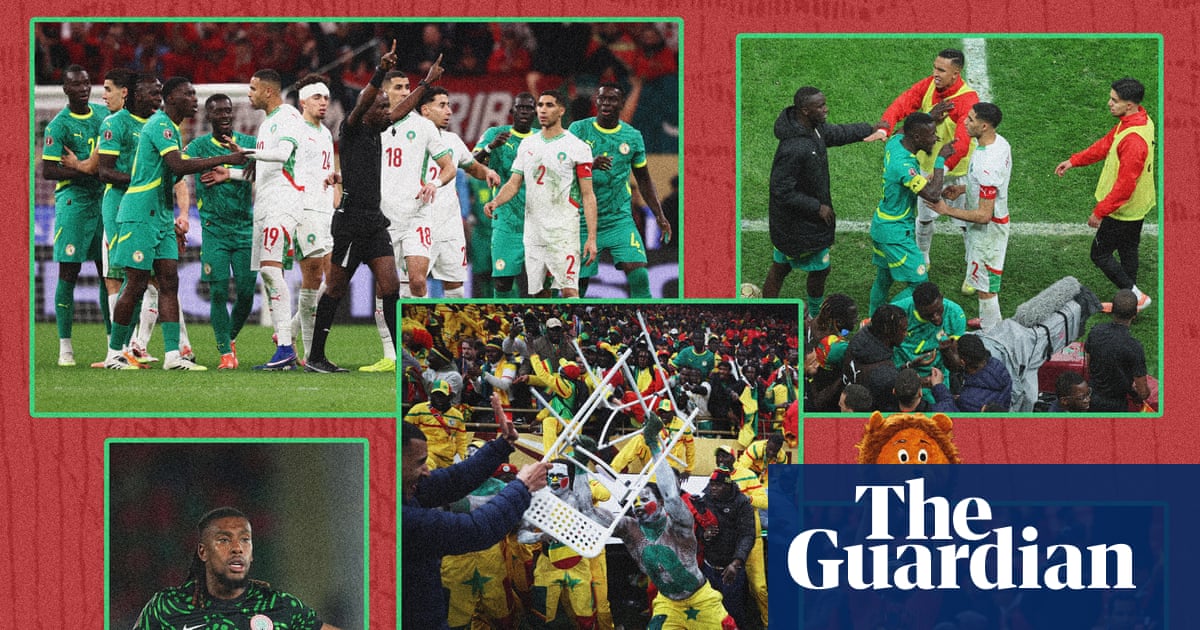
At the 2024 Africa Cup of Nations in Côte d’Ivoire, officiating was at its finest, with the Confederation of African Football’s video assistant referee operation setting standards that were the envy of the Premier League and several other European leagues. Sadly, refereeing standards took a nosedive at this tournament, which many associate with the abrupt dismissal of the Ivorian Noumandiez Doué as head of Caf’s refereeing department on the eve of last year’s African Nations Championship.With clear penalties not given, obvious VAR decisions not made and some referees asked to handle knockout games when poor performances should have led to their being sent home, Caf has a herculean task to get refereeing back to acceptable standards at the next Afcon.Its refereeing department must be filled with competent, independent-minded people who have the courage and ethics to withstand pressure even from Caf’s most powerful politicians. Caf alone is responsible for ensuring Afcon games are managed without fear or favour and Caf alone must be held responsible if refereeing is poor.What should have been a sterling Afcon final between the hosts, Morocco, and Senegal was turned into a farce by the referee Jean-Jacques Ngambo Ndala, from the Democratic Republic of the Congo. His unacceptable decision to rule out what would have been a legitimate Senegal goal (blowing for a foul before the ball went into the net meant VAR could not intervene) set in motion an extraordinary series of events. When he then gave Morocco a penalty, with a controversial but arguably legitimate call, it prompted Senegal’s coach, Pape Thiaw, to take his team off the field in protest. It took the gravitas of Senegal’s captain, Sadio Mané, who understood the wider picture of an abandoned Afcon final, to bring them back on to the field.The 29-year-old was finally unleashed by Nigeria’s head coach, Éric Chelle, in the free role he enjoys at Fulham and was majestic in Morocco. Iwobi, the nephew of the former Super Eagles great Jay-Jay Okocha, ended up with his second Afcon bronze medal, after winning his first at the 2019 tournament in Egypt, to go with a silver from 2024. His vision in the centre of the field and pinpoint passing to colleagues such as Victor Osimhen and Ademola Lookman were second to none. “Alex Iwobi is a player that smells football,” Chelle said. “His [game] IQ is very high and I am really proud of him.” Iwobi’s YouTube channel, where he has been documenting his Afcon experiences with his teammates, has been a hit with followers of the Super Eagles.Although Mali did not advance beyond the quarter-finals, falling to the superior firepower of Senegal, the tactical acumen of their Belgian coach won plaudits, especially in the group game against Morocco. Saintfiet’s strong opposition to the change to the frequency of the Afcon, from every two years to every four years, also earned him praise for defending the prized football traditions of a continent that has provided him with great career opportunities.I have covered the Afcon for nearly 30 years, the 1998 tournament in Burkina Faso being my first. The pitches and stadiums in Rabat, Fez, Marrakech, Casablanca, Tangier and Agadir have set the world-class benchmark for the stage on which the tournament should be played. It is a far cry from the potato-farm pitches in Port-Gentil during the 2017 Afcon in Gabon, where Ghana’s Baba Rahman sustained a cruciate injury that could have ended his career. “Good pitches make football matches and that is why I have been a strong advocate for this, in Nigeria and across Africa,” says the former Nigeria captain Segun Odegbami, who won the 1980 Afcon. Uganda, Kenya and Tanzania, co-hosts of the 2027 Afcon, have an extremely hard act to follow.Football in the cold and rain is par for the course in Europe. But it has never been the staple diet at the Afcon, which is usually played in more appealing climatic conditions. The miserable weather in Morocco has not done much good for the health of the players and officials, and it certainly did not help in creating the joie de vivre that comes with playing the Afcon in traditionally hospitable weather which naturally helps to bring out the best in human nature.The last Afcon played in north Africa, in Egypt in the summer of 2019, was a complete contrast to what we had in Morocco, where the opening and final games – and several in between – were played in wet, windy and chilly conditions.Bill Shankly, the late, great Liverpool manager, did not have Morocco in mind when he said that football is much more important than life and death. But the passionate, welcoming people of this country of 38 million people certainly embody his words.The hurt of having not won the Afcon for 50 years – which will be 51, at least, after their loss in Sunday’s final – led to incredible pressure being put on the Atlas Lions’ manager, Walid Regragui, and his players. “I know the people of Morocco will be upset that we didn’t win – I am too – but it is not easy to win the Afcon,” Regragui said. “We have to keep faith in this team and continue to build. Senegal have reached three finals in the last four Afcons. We took 22 years to get to this final. We have to continue working and we shall get there.”Regragui has done an outstanding job with Morocco over the past three and a half years and it would be a profound act of self-sabotage for the Royal Morocco Football Federation to deny the 50-year-old the right to take the Lions to this summer’s World Cup.


Most Popular