Kate O’Connor on her gruelling seven-event sport: ‘It’s so tough on a woman’s body’

Sunlight streams on to Kate O’Connor early on a Monday, otherwise known as “shot-put day” in the training life of Ireland’s new star of track and field. The serial medal-winner in heptathlon and pentathlon is at home in Dundalk, where she has positioned her screen for our video call in front of her window. “I was like, ‘It’ll be lovely lighting,’ and the sun is blinding me a little bit,” she says, before adjusting to the glare. It is auspiciously gold in colour.After a breakthrough year in 2025, O’Connor is growing accustomed to the spotlight. “Nothing can really prepare you for the media storm that comes with winning a medal,” she says of her experience last spring, when she claimed bronze at the European Athletics Indoor Championships and silver at the World Athletics Indoor Championships in quick succession.Since then, her medal haul has expanded to include silver in the World Athletics Championships in Tokyo last September and, most recently, world indoors bronze in Torun in Poland in March. With a silver from the 2022 Commonwealth Games – at which Newry-born O’Connor represents Northern Ireland – already to her name, a second hand will be required to count any future medals. She is still only 25.When I ask what her ambitions are for this summer’s Commonwealth Games in Glasgow and the European Athletics Championships that follow in Birmingham, O’Connor couldn’t be clearer: she is going for gold.“I want to win both of them. That’s my mindset now,” she says.In the gruelling heptathlon – the outdoors format – O’Connor competes in 100m hurdles, high jump, shot put and the 200m on the first day, followed by long jump, javelin and 800m on day two. “You can’t have six strong events and one weak event because you get found out,” she says.This makes for a packed training regime, which is set out by her father, Michael O’Connor, her main coach, who pops up on our call.“My most important job is dad, and as dad I’m very, very proud. As her coach, I’m very happy with how everything is progressing, but we’re nowhere near her full potential at all yet,” he says. He then knocks his camera off, “because Kate gets sick of looking at my face”.After shot put on Monday, she has “a big long day” on Tuesday, when she is on the track from 9am to 1pm, then in the gym for two-and-a-half hours, before wrapping up with one of her two weekly sessions of physiotherapy.“We have an easy day on a Wednesday, which is just another throw, another high-low [intensity] day on Thursday, a day off on Friday, then Saturday and Sunday are big running days,” she says.“My week is really mapped out. My whole life is really mapped out, to be honest.”Although she and her team are still “clearing up” one injury niggle, she is confident that her body will be “100 per cent healthy” by the summer.“Picking up little things now and again is part and parcel of being an athlete. You’re pushing your body to the limit and running that red line all the time. I suppose, for me, it’s just about recognising when it’s too much and being able to pull back at certain times before anything gets too serious.”Before battling her way to bronze in Torun, she was in pain from a cartilage defect in her knee and dealing with an Achilles tendon issue.“Like, I should have won that competition, but it just wasn’t written in the stars for me to win it, and that’s okay. I competed to the best of my ability on that day and I have no regrets, but I think that was probably the first competition that I’d ever walked away thinking, ‘Oh, you actually could have.’ I knew in myself that I could have,” she says.“It definitely lit a fire in my belly. I don’t want to feel that feeling again. I want to go out and I want to win gold medals.”Sponsors have understandably been flocking to O’Connor. She’s an “Adidas girl” as of last July and has now signed to become a brand ambassador for Allianz Ireland – the title sponsor of the Olympic Federation of Ireland and Paralympics Ireland – alongside sprinters Rhasidat Adeleke and Orla Comerford.“When you’re competing against the best girls in the world, it comes down to those 1 per cents,” she says. “I now have some great support behind me that will hopefully allow me to push on that little bit further.”The big target, Los Angeles 2028, is still two years away. At the next Olympic Games, O’Connor will be 27 and, health permitting, should be in the prime of her career.“When I was a child, I dreamt of winning an Olympic medal and that’s why, for me, it’s the pinnacle. They’re so difficult to win, and because they only come around every four years, they’re just that little bit rarer.”It’s not that she turns up to training thinking “I’m doing this hurdle drill to win gold” in 2028, but when she sits down and asks herself what she’s working towards, then the allure of LA glory nestles its way into her mind.She’ll be 31 when the Brisbane 2032 games take place and is hoping to be there too. “Athletes have become a lot smarter in the way they train and the way they look after their bodies. It’s not about pounding yourself into the ground. It’s a lot more about longevity now. I’m competing against a lot of heptathletes who are in their 30s and still at the top of their game, like Nafissatou Thiam and Katarina Johnson-Thompson, who are showing that you can have a long career. I’m definitely planning on doing that, as long as my body holds up.”O’Connor has already achieved so much. Only two Irish athletes, Sonia O’Sullivan and Catherina McKiernan, have won more individual global medals at senior championships. It was no surprise that by the end of 2025 she had been crowned Athlete of the Year at the National Athletics Awards, and also took the Female Athlete of the Year prize at the Team Ireland Olympic Sports Awards, The Irish Times/Sport Ireland Sportswoman of the Year title, and the sport award at the Irish Tatler Women of the Year bash.These accolades contributed to a “whirlwind” December in which she also attended her graduation ceremony, having completed her postgraduate degree in communications and public relations from Ulster University and become a full-time athlete only last summer.She says she strove to find a balance between not missing out on her winter block of training and “enjoying the moments that came with the medals” she won. “There was definitely a few tears in December whenever I was, like, so tired and giving my dad the evil eyes because he was still making me work hard.”After Tokyo, she had a homecoming event at her secondary school, St Vincent’s in Dundalk, and when she returned to her primary – CBS, where her dad teaches – in April 2025, the pupils there had made “loads of posters and stuff”. She modestly says she found it “difficult to comprehend” how much people cared at first, but absorbing their pride has made her keener to celebrate, too, and now she gets just how much of a national mood-lifter Irish sporting success can be.“It’s something that you maybe don’t realise when you’re the athlete. So many other people are looking at you and thinking, ‘I would love to do that too’, or ‘I’ll go for a run’ or just feel a little bit inspired. I’ve definitely learned that there’s a ton of power in sport.”Ireland didn’t have a huge tradition in multi-events – at Paris 2024, O’Connor became the country’s first representative in the Olympic heptathlon – but she could be the catalyst for one.“Young kids have so many different role models to look up to now. It’s not like there’s just a great 800m runner or a great 400m runner or a great long-jumper. There’s someone in every event. When I was younger, I didn’t have a heptathlete to look up to, and I’m so happy that’s changed now.”Born on December 12th, 2000, she started running at St Gerard’s Athletic Club in Dundalk from the age of seven. In 2012, she turned 12 on the 12th day of the 12th month of the 12th year of the century – a numerical synchronicity that attracted local media attention. One newspaper clipping, available online, quotes both her mother, Valerie O’Connor, and the birthday girl, who reveals she is pleased to have “got off homework” on the day.She remembers the fuss. “It must have turned 12 o’clock at school and I was brought out to the hall and I had to make a wish and there were photographers and stuff. Then I came home later and there were photographers at my house as well. And, yeah, I know that photo is floating around the internet,” she says, noting that she “didn’t know how to smile properly” then.O’Connor, who is the eldest of three children, was described aged 12 as “a keen athlete” who plays piano and flute and does Irish dancing. She “wasn’t great at the piano” and could never win at Irish dancing, “which probably ultimately put me off in the end,” she says, but she was good at the flute and also did tennis and swimming.“I was definitely pushed by my parents to do lots of different things and explore lots of different avenues. I think that it was very good for my confidence. Now, whenever parents ask me for advice, I say it’s a great idea to be involved in multiple sports and meet different friends. I loved having the opportunity to try lots of different things, and then I decided which one I liked the most and was best at, rather than only going with one and having to stick at it.”It was also at age 12 that she started to do 800m training on her nearest athletics track, in Newry. “My dad was getting me to do long jump and javelin alongside that, but I definitely didn’t have the idea of multi-events being the end goal.”[ Ireland’s new fastest man Benji Richardson: ‘This is a country I’ve always wanted to run for’Opens in new window ]Britain’s Jessica Ennis (now Ennis-Hill) became her first heptathlete role model when she won gold at London 2012. “I saw someone who was running and jumping and throwing, and that was what I was doing at All-Ireland Championships. Nobody else was running around like a headless chicken like me, but I loved it.”She says she’s not the same person as the teen who competed at the Schools International Pentathlon in Glasgow, where she remembers “bawling crying” when one event went badly. “It’s just something that I had to go through year after year and slowly start to figure out. If something doesn’t go well, you’ve got to park it and accept it and just move on. You can be upset after the competition. But when you’re competing, you’re competing. You have got to keep your head in the game.”Now that’s one of the skills that has allowed her to flourish as a multi-events athlete eyeing the top of the podium.“I think that I’m definitely a very mentally strong person. That’s something that I’ve learned about myself. I deal really well with high-pressure situations. It’s not that I like being in them, I hate being in them, but I can navigate them quite well. Like, for example, if I’m on the third [and final] attempt of a high jump that I should definitely get over, my track record does show that I can get myself into the right headspace to do what I need to do.”She’s a good learner, too. “I think that I’m a nice athlete to coach. I love learning new things. I love whenever someone brings me a new drill or sets me a new challenge. The beauty of multi-events is that there’s always something new to be working on.”Alongside her father, she works with coaches Dave Sweeney on the javelin and Tom Reynolds on hurdles, with the team also including physiotherapist Kerry Kirk and strength and conditioning coach Robbie Bremner. Incorporating variety into her exercises is important. “Sometimes I can find the throws a little bit – this is awful to say – but a little bit boring.”Javelin has, nevertheless, been regarded as her strongest skill to date, though a string of personal bests across her events means it is no longer “just one outlier”. Her medals in the one-day indoor pentathlons, which exclude the javelin, prove that too.[ Irish citizenship saved Hiko Tonosa’s life. Now he’s eyeing a place at the OlympicsOpens in new window ]The heptathlon remains the event she fell in love with, she says, though she has yet to master how best to sleep between the two days of competition, and its “long and gruelling” nature means she doesn’t fancy the idea of it becoming a decathlon (the men’s outdoor format).“I think that multi-eventers are amazing, and heptathletes specifically are amazing, but the event is already so tough. Like, body-wise, it’s so tough on a woman’s body to train as hard as we do for as many events as we do and to be as good as we are. In some of the events, some of the girls are just as good as the individual eventers. That’s the standard that multi-eventers hold themselves to. I definitely wouldn’t want to be introducing the discus or the pole vault into my regime.”Television commentators often remark upon how warm heptathletes seem towards each other on the lap of honour they do after all the points have been tallied and the medals decided.“During the competition, we’re not like sprinters, we’re not giving each other death stares, but it is very, very competitive. You are in it for yourself. But at the end, it’s so true, there’s a lot of camaraderie. I know how hard I’ve worked to perform, and I would expect the same from all those other girls, so we have a lot of respect for each other. If you see another multi-eventer get hurt and not finish, you can really feel for them, because there’s so much blood, sweat, and tears that goes into it.”Her rivals include Anna Hall of the US, who is the reigning world champion, and Sofie Dokter of the Netherlands, who eclipsed Hall to take gold at the indoors in Torun. “All I can do is work as hard as I can and then go out and execute as well as I can,” she says. “It can be scary whenever you think about how many great girls there are in the sport right now, but I can’t control what they do.”Like all elite sportspeople, O’Connor made sacrifices when she was growing up.“With friends going over to friends’ houses, or going out with the girls, those things, I put athletics first. It was always something that I chose to do, but that doesn’t mean that it was easy or that I loved doing it.”Still, she “wouldn’t change it for the world”, she says.She is now in a relationship with Georgie Kelly, a footballer who plays for Carlisle United in northwest England. He’s over in Dundalk when we speak and will come to her training camp in Portugal when she relocates there soon. Finding the time to be together is not without its challenges, but when she is able to visit him, she “can kind of shut off”, she says. “I’m not Kate-the-athlete any more, I’m just Kate-the-person, and that’s the way I like to see it.”[ There are some things even Rory McIlroy’s fancy wearables cannot measureOpens in new window ]Doing her postgrad was also part of her desire to be “Kate-the-person”. She was only six months into her undergrad in sport development and coaching at Sheffield Hallam University when the pandemic struck and she had to finish the degree from home. “I never really got the opportunity to develop myself socially,” she says. Ulster University appealed not just because of its indoor training facility, but because it offered the prospect of making new friends.She isn’t sure what she wants to do post-retirement – she “wouldn’t rule out” coaching, and has a “big interest in doing some sort of commentary” – but she knows her education will stand to her, whatever happens. “Hopefully, after this I’ll go into something I love.”Meanwhile, her love for what she is doing now – from training and travel to competing and medalling – radiates from her face. “I can’t wait for the summer to compete outdoors,” says Kate-the-athlete. “Because that’s where I can really come out and shine.”Photographs: Barry McCallAssistant: Rio Carlin RosanioStyling: Holly FarrellMake-up: Zoe Clark


Most Popular
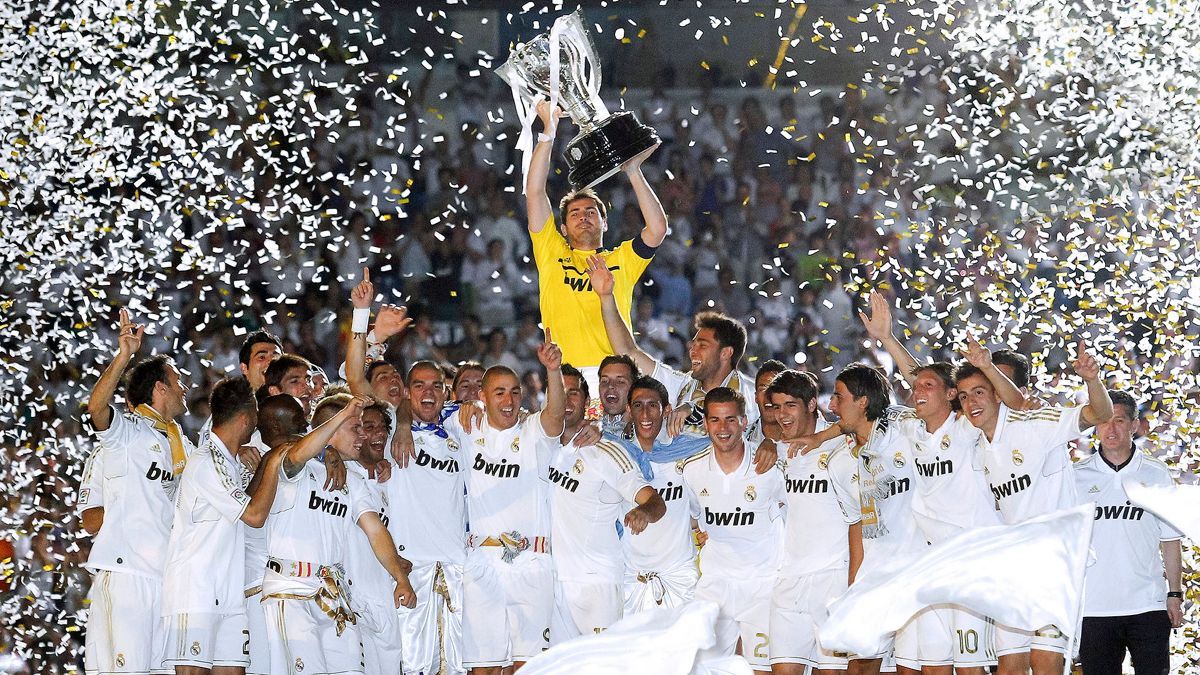
14 years since Real Madrid's 32nd La Liga title
5 hours ago