Is any dugout big enough to hold De Kock and Rickelton?

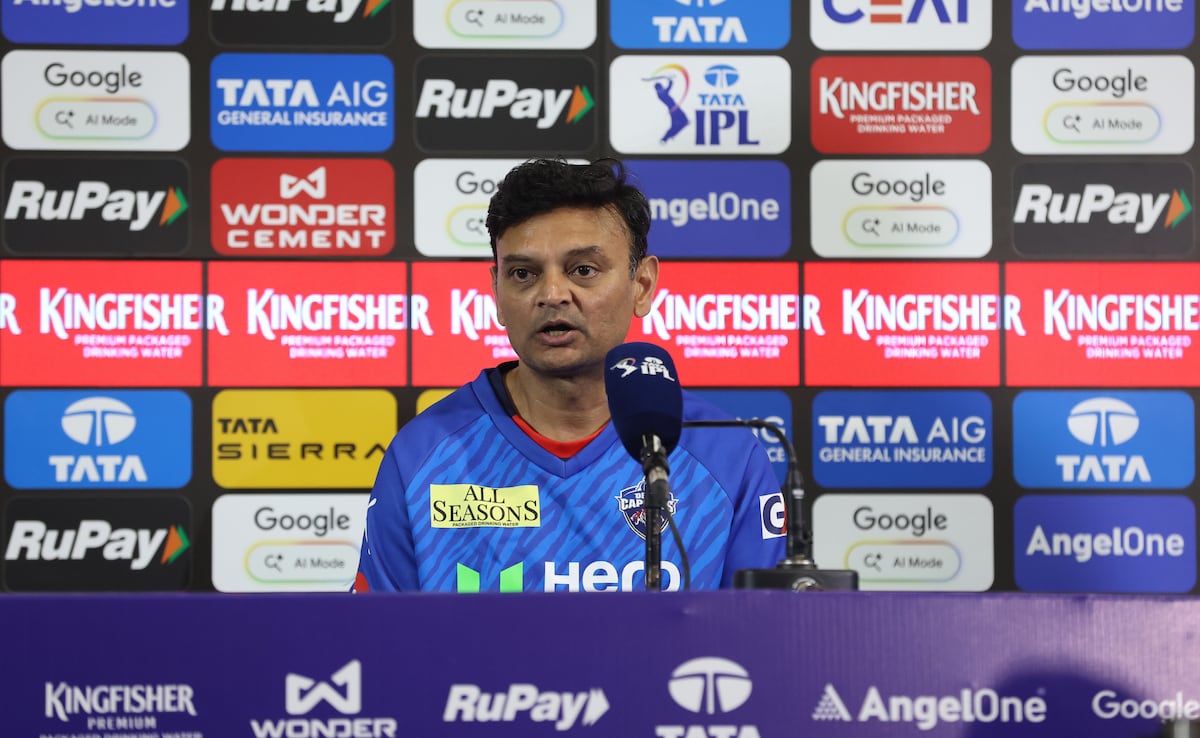
Wicketkeepers tend to be as relentlessly optimistic as Jack Russell terriers. Indeed, Robert Charles Russell was called Jack long before he grew up to play 54 Tests and 40 ODIs behind the stumps for England in the 1980s and '90s.So stumpers will tell you, invariably, that they've made the best cricket career choice because every team needs one of them. No keeper, no team. This is, of course, true.What they won't tell you, or prefer not to think about, or what hasn't entered their relentlessly optimistic minds, is that every team has room for only one of them.Batters? At least six. Seam bowlers? That's dependent on the conditions, but sometimes four. Spinners? Also a question of conditions, but three could get a game together.The equation changes in South Africa, where national teams are expected to include at least six black or brown players. You're the best keeper around but you're white? Could get complicated. Although only in theory it seems: of the 42 keepers South Africa's senior men's teams have fielded across the formats, 38 have been white.The IPL equation is squeezed further because the quota for overseas players in the tournament is four per team. What happens when you have on your books more than one foreign keeper? Not only that, both bat left-handed and are best deployed at the top of the order. And both have scored a century in the current edition of the competition.Rickelton asked the question loud and clear against Lucknow Super Giants at the Wankhede on Monday, when he hammered 83 off 32 to help his team win for only the third time in 10 attempts in this campaign."It's been tricky to have a guy of Quinny's calibre sitting on the bench at the start of the season," Rickelton told a press conference after Monday's match. "It was tricky to manage mentally because maybe you're burning yourself with more pressure to do well because you have a guy who's flipping good sitting behind you and the whole world's screaming to pick him. To try and manage your way through that presents a challenge."The dilemma has been eased by the fact that De Kock last played on April 23 because of what Mumbai management say is a wrist injury. But the situation remains a quandary.Of the two, De Kock has the bigger reputation. But he hasn't reached 50 since his undefeated 112 off 60 against Punjab Kings at the Wankhede on April 16, scoring 20 across two subsequent innings.Rickelton cracked the nod ahead of De Kock for Mumbai's first game, at home against Kolkata Knight Riders on March 29, and scored 81 off 43 in a winning cause. That kept him in the XI for the next three matches. But he couldn't manage more than 54 runs - 37 of them in one innings.The fact that Mumbai lost those three games prompted a change - Rickelton and De Kock walked out to open the innings against Punjab on April 16. They were separated after 13 balls when Rickelton holed out to Arshdeep Singh for two. De Kock's hundred followed, but that didn't affect the result; Mumbai lost.Rickelton was left out when Mumbai beat Gujarat Titans four days later, when De Kock made 13, and when they went down to Chennai Super Kings three days after that, when De Kock scored seven.De Kock, Mumbai say, hurt his wrist warming up to play against Sunrisers Hyderabad on April 29, re-opening the door for Rickelton. He took his chance, launching an undefeated 123 off 55. But, as was the case when De Kock went large, Mumbai lost.As they did to Chennai on Sunday, when Rickelton made 37 off 24. That brings us to his blast on Monday, which powered an opening stand of 143 off 63 with Rohit Sharma. Mumbai would have struggled to win without Rickelton's shimmering batting, but not everyone was satisfied with his performance."I agree with him. The competition between us is always healthy. We're very supportive of each other. He's watched my batting, and he's tweaking things along the way to help."We've got two guys gunning for the same position, both playing nicely. One's Quinton de Kock, which is pressure in its own right. And I am who I am."They're a strange breed, keepers. The modern game seems to think so, begrudging them even their one place per team only if they are able to hold down a place as a frontline batter. It's true that the same goes for bowlers to some extent. But while bowlers who are walking wickets are tolerated, keepers aren't.Given his Test batting average of 27.10, would Russell have played as many internationals as he did if he was out there today? Likewise his mentor, Alan Knott, who averaged 32.75? Or Kiran More, who levelled out at 25.70 runs per innings?Knott scored five Test centuries and Russell two, and More made seven Test half-centuries and as many hundreds at first-class level. That all three could bat is indisputable. As could Syed Kirmani, who took guard at No. 10 against West Indies in Chennai in December 1983 and scored 63 not out in a minute more than three hours at the crease to share a stand of 143 with Sunil Gavaskar that helped India declare with a lead of 138. They were five runs behind when the partnership started.But cricket doesn't care about keepers like that anymore. Because they don't bat like Adam Gilchrist or MS Dhoni. Few could. Besides, Gilchrist earned 10 first-class caps before he was picked as a keeper at that level and went on to revolutionise the role of the wicketkeeper-batter to the extent that they should now be called batter-keepers. Dhoni did indeed make his first-class debut behind the stumps. But that was due to a sharp-eyed cricket coach at his school, Keshav Banerjee, who was impressed by the lightning reflexes of the school's football goalkeeper, one Mahendra Singh Dhoni. The rest is gloves, pads and batter-keeping history.

Most Popular