
Munster GAA CEO gives short shrift to replay calls
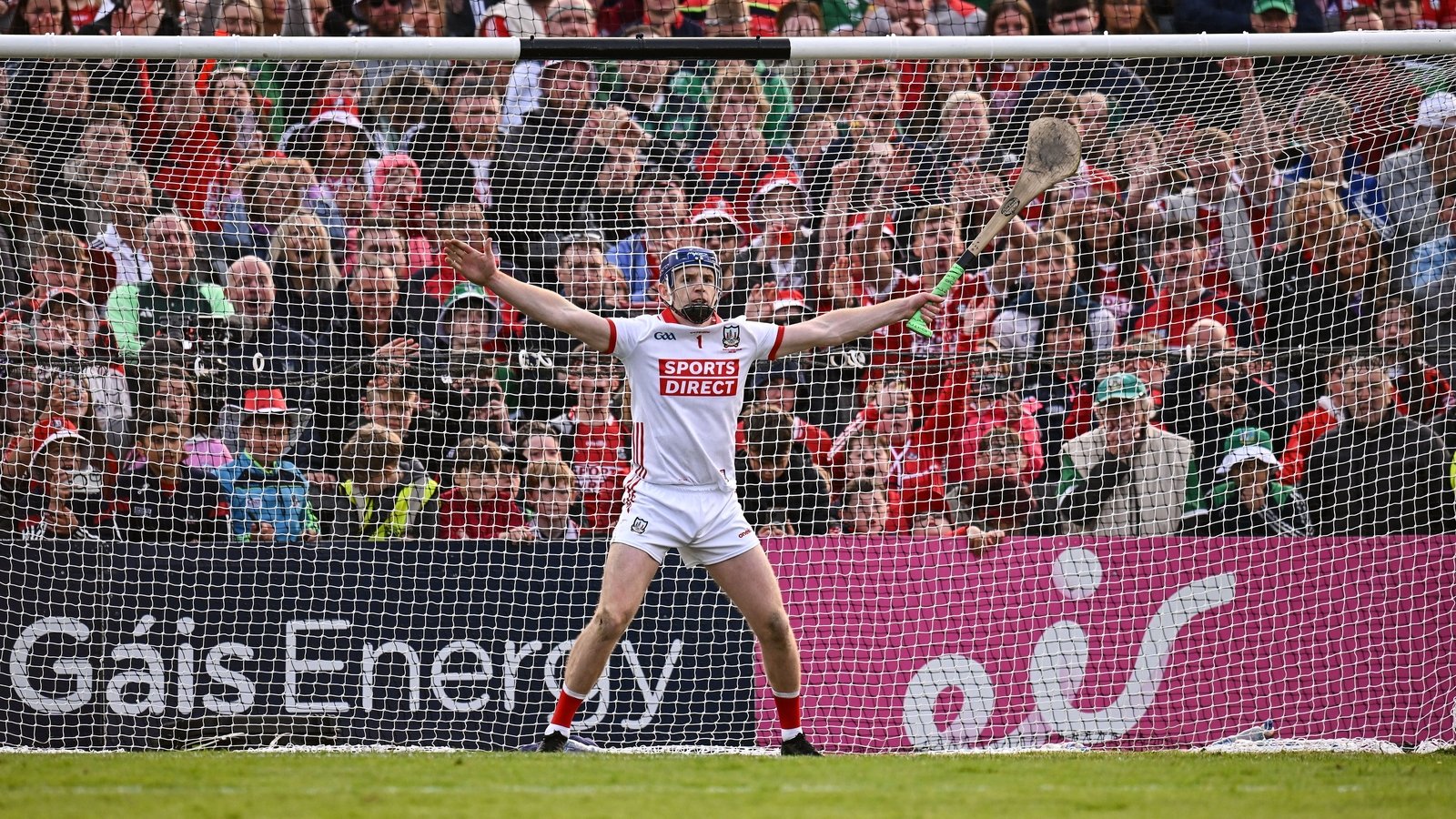
Following criticisms of a penalty shoot-out to decide last year's Munster SHC final, provincial council CEO Kieran Leddy says that a replay would have forced the runner-up to play three consecutive weekends in a row.And he has disagreed with the view that four counties should emerge from each round robin provincial championship.History was made last summer with the first-ever penalty shoot-out in the Munster senior hurling series.Cork claimed a 55th Munster title, and ended Limerick’s incredible run of six titles in a row after a thrilling 90-plus minutes as the sides were inseparable in regulation time.In his report to convention on Friday, Leddy writes that: "No sooner had the Munster senior hurling final concluded when calls were made for replays to be restored in provincial finals."However, it is a case of 'being careful what we wish for’. A replay would have taken place on the following Saturday evening, meaning the runner-up would have been playing the quarter-final the week after the replay and therefore subjected to playing three weeks in a row."I was amazed that very few asked if a replay was a fair situation on the players, which in my view, it is not."If we build in a replay weekend, with the All-Ireland quarter-final two weeks after, then the Munster winner waits for five weeks for the All-Ireland semi-final under the current format, which is also very unfair on the winning team. We need to stop harping back to the days of replays."The landscape has changed dramatically, as the number of championship games being played at club and inter-county level has increased dramatically. Replays in the middle of a season are simply too disruptive. They always were, but knockout championships, or the shorter back door formats, made them possible. That is no longer the case."The CEO also addressed views on that classic final ending with a penalty shoot-out."There was also a focus on the penalty competition as a way of finishing games. It is about finding the fairest way possible to end a game that must finish on the day," he reasons.He dismissed the view that a 'Golden Score' would be the best way to end a match."A ‘Golden Score’ system is not fair. For example, a team with a strong wind in their favour will have an advantage," he said."There is also the complication of a free winning a game, which places enormous pressure on the referee. As I discussed in last year’s report, the use of penalties is fair in that conditions are the same for both teams."We could decide the winner based on which team has scored the most goals if still level after extra time, which in this case would have handed the title to Limerick. This would reduce the number of times that penalties are needed, which it has to be said, is rare anyway."The CEO acknowledged the growth and profile of hurling in Munster after the Liam MacCarthy Cup made its way to Munster for the eight year in a row.He said that the hurling enjoyed a huge profile with 2025 bringing an insatiable ticket demand for many games.Munster Hurling attendances reached 92% of combined stadium capacity in 2025, he revealed, while the seven games RTÉ showed live had a combined viewing figure of 2.7 million.Cork senior hurlers played in seven sold-out games last year across both the Munster and All-Ireland Championships."There is one tweak I would like to see with venues for the hurling quarter finals. I believe the provincial final losing team should have home advantage in the quarter finals. It is important that the provincial final losing teams have some advantage over the team that finished third in their province, and home advantage in a knockout game would provide that," he wrote."There is a suggestion that the hurling championship structure should be altered to allow four teams to qualify from the round robin. In my view, this will do far more harm than good to the profile of hurling. While the championship would gain two quarter-finals with this format, the round robins would become meaningless, with ten games being played to eliminate one team."Therefore, we would lose far more big occasions than the two additional quarter finals that we would gain."The CEO warned that the provincial senior hurling series would become more like a warm-up league than a Championship."We must stop thinking that our Senior Championships are there to develop teams. They are there to pit the best teams against each other and to decide who the best team in the country is."There are several other grades and competitions that have a development purpose."Leddy referenced the controversy during the year when the Council voted to seed its senior football Championship in the future, with the top two performing Munster teams in the leagues gaining automatic entry to the following year’s provincial championship semi-final draw, and both will be on opposite sides of the draw.The proposal, which was passed with a one-year delay clause included, is in place for a three-year period from 2027, but drew resistance from some counties in the province and the Gaelic Players Association."It is designed to try to give the senior football championship a lift that it badly needs, by providing a pathway for the two strongest teams to progress to the final," the CEO adds."We have not had an open draw in Munster for many years now. We have the strongest county in our province, and one of the weakest, so it makes sense that we have had a draw structure that reduces the chances of both those teams meeting in the Championship."Our 2025 final had the poorest attendance of all four provincial finals. Our average attendance for the last 4 finals is 13,000. TV viewing figures are also struggling."Leddy states that in 2025 league fare, Munster will have two teams in Division 4, two in Division 3, and just one each in the top and second tiers."Therefore, under the system that is being replaced, and draw depending, aDivision 4 team could qualify for the final and therefore enter the Sam MaguireChampionship, where they would struggle to compete. At this point in time, football is not as strong as it should be in Munster, but that will change and there are some early indications that football is on the rise again, such as Limerick’s great run in the Tailteann Cup."

Most Popular

Bavarian Football Works
22 hours ago