"Badminton has given me life and I've given it mine. Now I want to give back"
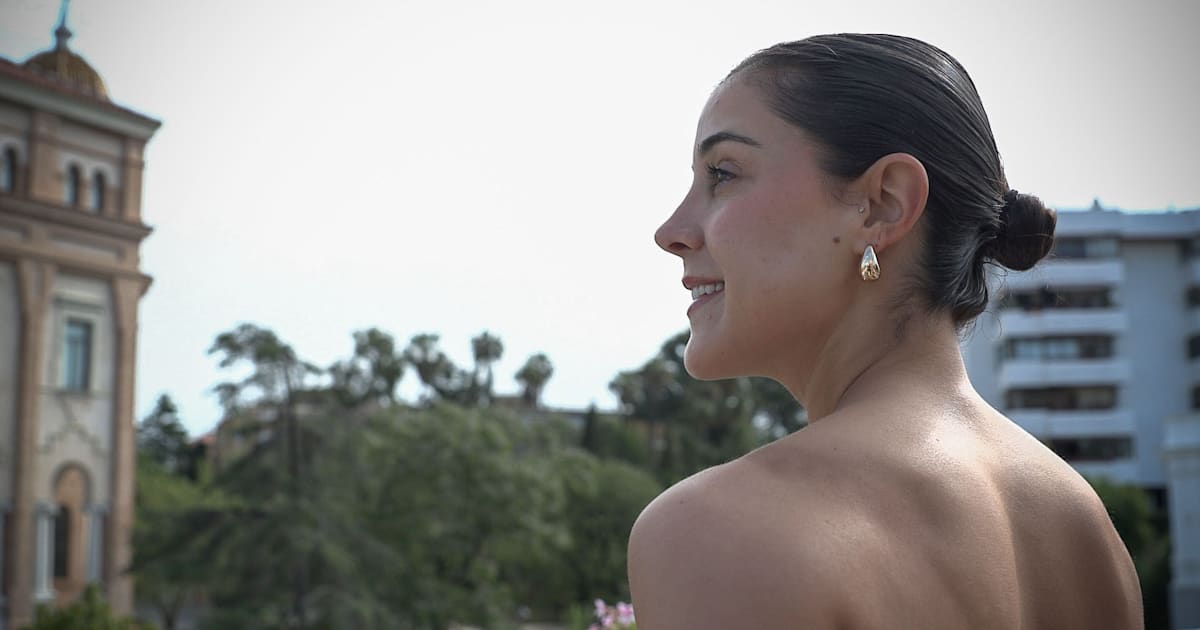
So many things have changed for Carolina Marín since she triumphantly stood atop the Olympic badminton podium at Rio 2016.The Spaniard, the women's singles champion that year, went from one of the highest points of her career to the lows of a serious injury, which caused her to miss Tokyo 2020 in 2021. A comeback followed — and got to a point where she says she was at her "best condition" in Paris 2024 — before another heart-wrenching injury, suffered in the semi-finals in the French capital, ended her dream of a second title.It is that right knee injury, from which she has not fully recovered, which forced Marin to call time on her career at the end of March.This week, as the Badminton Europe Championships 2026 take place in her hometown of Huelva, Spain, at the indoor arena which bears her name — the Palacio de Deportes Carolina Marín — she has been on a journey of reflection, as her native city paid tribute to her with a formal ceremony celebrating her career.Indeed, as she sits down with Olympics.com on Thursday (11 April), she does so having conducted 15 interviews the day prior. "It is what it is," she says with a smile, at peace with everything. "It's a good thing."Nearly single-handedly, Marín raised the profile of her sport in her country over the past decade and longer — there were three world titles and eight European crowns to go with that one special Olympic gold. It's no surprise that the media interest in Spain's golden girl remains strong."I still get emotional, and it's been nearly 10 years," Marín says of that Rio triumph, her voice cracking and her eyes watering, although the tears don't fall.The Carolina Marín of today maintains the same composure she has learned over 24 years of practising her sport. A far cry from the Marín of 24 years ago, who was so temperamental her family nicknamed her "the McEnroe of badminton", after John McEnroe, the male tennis player who famously smashed many of his racquets in anger.All that changed when, at 14, Marin had to mature quickly as she moved to the Spanish capital Madrid to pursue a future in the sport. "I told myself, 'Carolina, this has to change, this image is awful' — and I haven't broken a racquet since."Along the way, triumphs and disappointments have followed, not least of all the three knee surgeries she had to undergo. But her loved ones have always been there for her. Now, her name is synonymous with her sport in Spain. As has, since 2016, that Olympic gold medal.The medal and the Olympic rings are tattooed on her left wrist, the same wrist which has deftly flicked the badminton shuttle across the net so many times throughout her life. In retirement, that medal is part of her sporting legacy — now she hopes to write a new one for the future of badminton in Spain.A version of our interview, translated from the original Spanish and edited for clarity and length, is below. The original interview in Spanish, conducted by Olympics.com's Marta Martín, can be read here.Carolina Marín: Retirement "best decision I've taken in my life"Olympics.com: Olympic champion at Rio 2016, three-time world champion, eight-time European champion. The fans will miss you.Carolina Marín: I don't know if they'll miss me, but of course I'm going to miss them a lot. I'm very calm about the decision that I've taken, although that doesn't mean I don't feel sad. It's been 24 years with a racquet and a shuttle in hand. There have been beautiful, precious, incredible, unforgettable moments. But there have also been very, very difficult and complicated moments.Are you at peace with your decision?Yes, I'm at peace with it, because it's the best decision I've taken in my life. It's true that I've waited until the last moment to see how my knee would respond. (Editor's note: Marín was entered to play at this year's European Championships before she decided to retire.)I had an operation less than two months ago because of an issue with the meniscus, which had caused me intense pain for three or four months, and it definitely wasn't healthy. I was very uncomfortable; I could barely walk, I would get up and go to bed limping, and I kept saying, 'This isn't life, this isn't what I want.' So I made that decision, and it was definitely the right one. Right now, I'm healthy. I don't have any pain in my knee.What will be the hardest thing for you to let go of?It's a combination of many things. The training, the routine, competition — everything that comes with competing and preparing to compete. The nerves and the adrenaline. I'm going to miss all of that a lot, of course. But I think there are other things that I'll do in my life in which I'll try to find a similar feeling, although of course it won't be the same because nothing will be the same as what I had before.Do you have clear plans for the future?I don't want to close any doors. But as of today, I'm certain that I want to live in the present. We're always thinking about tomorrow, about the future, and now more than ever, I want to remind myself that I want to enjoy the moment I'm in right now. I want to go home more, be with my family, and enjoy time with them more. I've spent nearly 20 years away from home, and they're my priority now.Carolina Marín's Olympic Games highs and lowsWhat do the Olympic Games mean to you? From your debut at London 2012 to the gold medal in Rio, then missing out on Tokyo because of your second knee injury and then what happened in the semi-finals at Paris 2024 — which, unbeknownst to you at the time, would be your last professional match?The Olympic Games will always be a dream come true for me. When I first went to the Games in London, I was 19, and just to be there was a dream. I made a promise to myself to get the Olympic rings tattooed on my arm — on my playing wrist.In Rio, you became the first women's Olympic champion from outside Asia.That was a dream come true. I went there with the aim of winning gold, and I did just that. I'll never forget that moment, not just because I'd achieved my biggest dream, which was the Olympic gold, but also because I was able to celebrate it with my team. I celebrated it with the people who suffered with me day in and day out, and also with my parents. I'm getting emotional!It still gets you a little emotional even after 10 years.Enjoying that incredible and unforgettable moment with them, I'll truly cherish it in my heart, that's why I still get emotional.But then Tokyo 2020 came around [in 2021], and you missed it because you'd injured your knee again a few months earlier.I was in my best shape for Tokyo, both physically and mentally, but just two months before the Games, I tripped and injured my knee for a second time. That forced me to miss the Games.But you did make it to Paris 2024.That was another dream come true. After eight years of waiting, I arrived in my best condition, much better than I'd been in Rio, much more prepared and also mentally more ready to face any adversity that I'd face. And well, everyone knows what happened in the semi-final when I was just 11 points away from reaching the Olympic Games final.I knew from that very moment that I'd torn my knee ligaments, but I refused the wheelchair. Now I think that's crazy because I knew I'd injured myself, but I wanted to leave the court on my own two feet.After such a roller-coaster career with the Olympic Games, how do you look back at them?Despite that bad memory, the Olympic Games is something that you experience. Every day, the atmosphere, being in the Olympic Village surrounded by the best athletes, is truly something I'm always going to cherish as a beautiful memory."I don't want to, and I can't, detach myself from badminton"For many fans, because of your story, you represent resilience. But would you rather have won more than be this face of overcoming adversity?You have to deal with whatever life throws at you. I wish I could've chosen not to have any knee injuries, nor go under the knife so many times in surgery, but if life puts something bad in your way, you take it and handle it in the best way possible and learn from it. You have to keep moving forward after all, that's most importantWhat does it mean to you to be a role model — not just in promoting badminton, but also in social issues like helping children, as well as women's representation?I want to give back to sport everything it's given me. I am who I am thanks to sport and thanks to badminton — it's given me life, and I've given it mine. So now I want to, in whatever way, focus on helping others through many things. I obviously can't, and don't want to,I want to help others through motivational speeches, and I want to find various ways of giving back to people all the love they've shown me through all these years.What's your legacy? How do you want your career to be remembered?I'd love it if Carolina Marín was remembered for both her values on court as an athlete as well as off the court as a person. That's most important to me: not just the titles or prizes or medals that Carolina Marín has won, but the true values she represents.



Most Popular