How the sports memoir has become more than just a life story
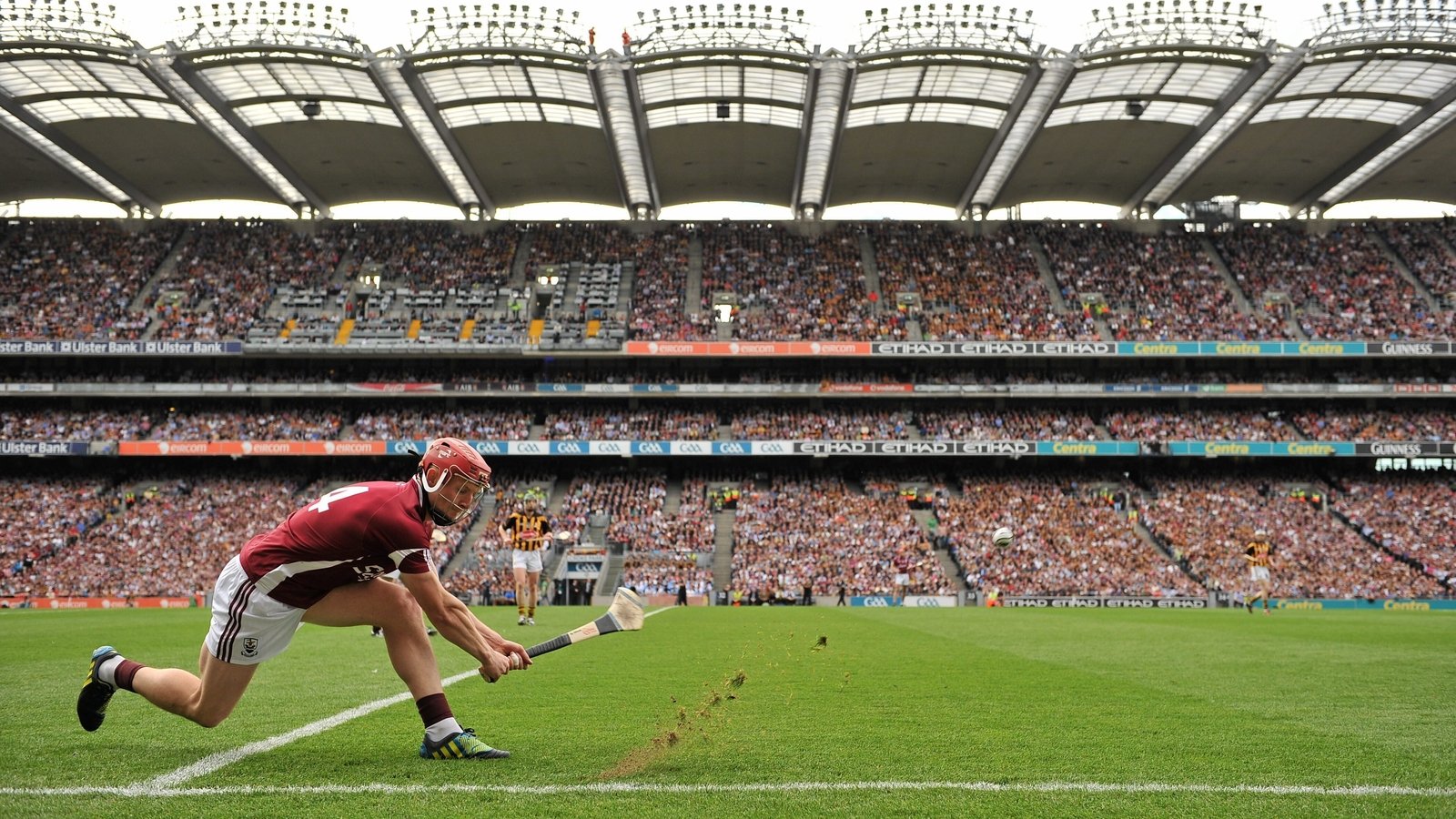
Analysis: Besides the highs and lows of the subject's personal journey, good sports memoirs can also highlight issues away from the pitch, track or courtSports memoirs routinely feature across the bookshelves of our local retailers. From rugby to boxing, GAA to soccer, the biggest names in Irish and international sport have a story to tell. What makes that story unique, and worth listening to, is the athlete's own personal journey – through challenges, sacrifice, doubts, as well as the highs and lows of a life in sport. As readers, what can we learn and what new perspective into the athlete’s mindset can we discover away from the noise of the track or court?Over recent decades, greater professionalisation and commercialisation of sport has deepened its global reach, fuelled by media streamers, TV rights, and social media presence. The sports memoir genre has also undergone change in recent times. The format traditionally wavered little from the staid formula of 'childhood-to-sporting-retirement’.Recent sports memoirs have increased focus on the athlete’s personal psychological journey, emotional development, and social conditions, as much as on their performance. Here, in these more unguarded and intimate accounts we meet a different side of the athlete, one often removed from the results-driven and pressurised world of elite sport.We need your consent to load this rte-player contentWe use rte-player to manage extra content that can set cookies on your device and collect data about your activity. Please review their details and accept them to load the content.Manage PreferencesFrom RTÉ Radio 1's More Than A Game, Damien O'Meara and guests delve into the art of creating a memorable sports bookIn the world of Gaelic games, still amateur in a high-performance world, the expectations and pressures on athletes are still very real. Joe Canning's My Story, written with Vincent Hogan, is particularly revealing for its honest insights into the experiences of arguably the most scrutinised GAA player of the modern era (pre-David Clifford that is).Since his mid-teens, Canning was singled out for hurling greatness. His book outlines how he came of age in that whirlwind of attention and scoring prowess on the field during the peak of the social media age. With sporting fame Canning also received the attention of major sponsors, and with it also some green-eyed cynicism from fans and some team-mates. One story by Canning recounts a media event where a journalist was less interested in genuine questions and more about extracting a provocative sound bite. You learn fast off the field too.Zak Moradi's memoir, Life Begins in Leitrim carries the tagline of ‘From Kurdistan to Croke Park’ – a journey seldom taken by GAA fans or players. Here, we find a different type of GAA memoir. Yes, it recounts Moradi’s personal journey with the game, but the story begins in Kurdistan. We learn of Moradi's family life and upbringing in the Kurdistan region of Iraq, of daily life under the dictatorial regime of Saddam Hussain, and the uncertainty surrounding the arduous trek to Ireland to begin a new life in Co. Leitrim and later in Dublin.We need your consent to load this rte-player contentWe use rte-player to manage extra content that can set cookies on your device and collect data about your activity. Please review their details and accept them to load the content.Manage PreferencesFrom RTÉ 2FM's Game On, Leitrim hurler Zak Moradi talks about Becoming Irish, the RTÉ Player documentary in which he featuresThe resilience in the story, of real-life experience of brutal regimes, can make sport seem less significant but also reminds of its importance to our communities. Moradi’s journey to victory in Croke Park in the colours of the Leitrim hurlers was a fitting reward.Mayo footballer Cora Staunton's aptly titled Game Changer, written with Mary White, was the first Gaelic games memoir by a female player. Staunton’s senior intercounty career began as the scarcely believable age of thirteen, a feat unthinkable today. The book shares Staunton’s personal journey (including the death of her mother when Cora was just 16) as well as the sporting challenges she and her teammates faced in a sporting world which saw women’s games hugely under-resourced.Recently, the four-time All-Ireland winner was part of the management of Mayo men’s senior club champions, Ballina Stephenites. Staunton has recently stated she believes women taking on men’s senior inter-county management is a next step. There may well be a second volume to Game Changer needed.We need your consent to load this rte-player contentWe use rte-player to manage extra content that can set cookies on your device and collect data about your activity. Please review their details and accept them to load the content.Manage PreferencesFrom RTÉ Radio 1's Inside Sport, Joe Canning and Cora Staunton on life in the public eye as an inter-county player.Away from GAA, ample amount of sporting memoirs focus on personal resilience and persistence in the professional arena and in the often cruelly results-driven world of high-performance sport. Fight or Flight by Ireland and Munster rugby player Keith Earls is unflinchingly open about his private battle with self-doubts and mental health while publicly maintaining a world-class on-pitch performance: "The game has brought me to some very dark places. It has affected my mental health, at times badly... I’ve played nearly my whole career struggling with the stuff going on in my head."Conor Niland's The Racket brings us into the largely lesser-known world of Irish tennis. Ireland’s most successful male tennis player, Niland peaked at 124 in the world – a remarkable achievement, yet there are ‘sliding doors’ moments in the book. From being the junior teen player who trained with Serena Williams and who beat a young Roger Federer, Niland’s career pathway could have led to life-changing financial and sporting success, but it didn’t.Instead, we read of a life on a gruelling weekly travel from the lower-tier tours where ranking points are craved to secure access to higher rankings, better paying tournaments, and eventually main draws in coveted Grand Slams. Niland’s story lifts the curtain on the hustle of the pro tennis tour, its ego and celebrity, and the starkly different experience of the other 99% who don’t scale the career heights of a Williams or a Federer.We need your consent to load this rte-player contentWe use rte-player to manage extra content that can set cookies on your device and collect data about your activity. Please review their details and accept them to load the content.Manage PreferencesFrom RTÉ 2FM The Laura Fox Show, former Irish tennis pro Conor Niland talks about his new book The RacketIrish sprinter and RTÉ sports reporter David Gillick once held European titles and knew the highs of representing Ireland on a global stage, as well as the lows. In sporting retirement comes the added insecurity of separating your identity as a sportsperson from your private self. By 2014, despite describing his relationship with running as "toxic", Gillick recounts in his book The Race how: "I couldn’t let it go. Couldn’t escape it. If I wasn’t David Gillick, the Athlete, then who was I?" Today, his track-side post-race interviews are essential viewing as his real empathy for the athlete, who was literarally just competed, rings true as they discuss their own race to the finish line.Kellie Harrington's Kellie, written with Roddy Doyle, tells of the future double Olympic gold medallist beginning in a sport when she was turned away as a young girl from joining a local boxing club. Harrington’s story builds from the ground up, with success at nationals to world championships, all the while the wheel turned slowly, too slowly, for acceptance for women’s boxing and for elite supports offered to male Irish boxers, until change had to happen: "The women were being taken seriously. People had finally realised that the quality of women’s boxing in Ireland – and outside Ireland – was very high", Harrington wrote.In The Grass Ceiling: On Being a Woman in Sport, Eimear Ryan succinctly put it that "to be a girl within Gaelic games is to grow up with a sort of dual consciousness. We are hurlers but we are also women and have to navigate a sporting landscape that sometimes treats those identities as a contradiction".We need your consent to load this rte-player contentWe use rte-player to manage extra content that can set cookies on your device and collect data about your activity. Please review their details and accept them to load the content.Manage PreferencesFrom RTÉ Radio 1's Inside Sport, soccer player Stephanie Roche, rugby player Nora Stapleton and ladies' Gaelic football and hurling coach Cliodhna O'Connor share their experience of coaching in Ireland.With that in mind, one question lingers: why is there still a dearth of sporting memoirs by women athletes? From funding to equipment, media coverage, payment and prize money, the gap between what is offered to men and women athletes has narrowed but is still a long way from sealed.These memoirs also highlight social issues for athletes. Class, race, and gender-based exclusion in sport are not past problems. Access to adequate training facilities, high performance supports from nutrition to coaching, tailored medical care for women and for men that recognise the varying physical and biological needs of athletes, the importance of business and education supports, are all facets that require continual investment and progression.The measure of an athlete, as often outlined in their own words, is marked through capacity to persevere - mentally, physically, and emotionally - through moments of high success and also through the punishing lows. We cannot know the athlete in those moments without them allowing us to hear those thoughts and to listen to their story in their own words.Follow RTÉ Brainstorm on WhatsApp and Instagram for more stories and updates



Most Popular