Forde Minutes: Everything You Need to Know About Men’s March Madness
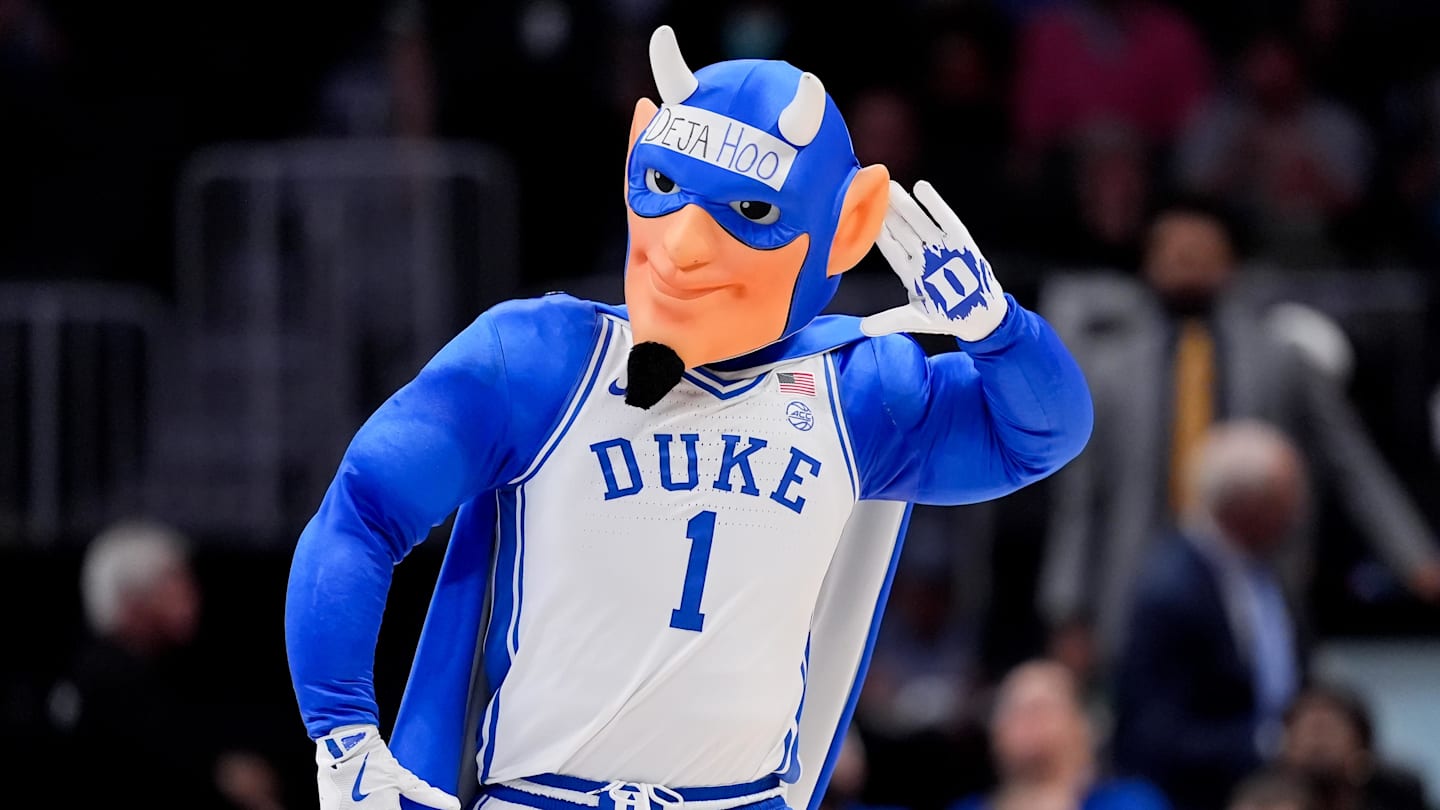
Forty names, games, teams and minutiae making news in the NCAA men’s basketball tournament, where some luckless schlub is going to have tickets directly behind massive Carlos Boozer, who stands up all game watching his sons play:The bracket is live, launching the best three weeks in sports. Don’t let the many forced Capital One buddy commercials and adrenaline-sapping replay reviews drag you down; embrace the madness. It’s time to seize the joy, win your bracket pool and forever establish your Ball Knower credentials.Forde Minutes is here to help you differentiate your ABCs (Aday Mara, Brayden Burries, Chris Cenac), from your XYZs (Xaivian Lee, Yaxel Lendeborg, Zuby Ejiofor).It’s time to know your fish (Long Island Sharks) from your fowl (Kennesaw State Owls, Lehigh Mountain Hawks, Kansas Jayhawks, Iowa Hawkeyes—but, for the first time since 1995, no Eagles). Your violent weather disturbances (Iowa State Cyclones) from the more serene (Hawai’i Rainbow Warriors). Your Saints (Louis, John’s, Mary’s, Siena) from sinners (at least six coaches in the field have been fired, suspended or had wins vacated). Your Quakers (Penn) from your fakers (three-point shooters will be flopping for fouls all tourney).And you have to keep your Miamis straight (Hurricanes from South Florida, RedHawks from Southwest Ohio).Let’s dance our way through 40 things you need to know about the 2026 NCAA men’s tournament:Young Guns vs. Old TeamsIf you want a leading storyline, try this one: fresh faces taking on grizzled lineups. Which wins, high-end talent or less-talented experience?On its way to the NBA draft lottery, one of the best freshman classes ever is swaggering into the Big Dance. Unlike the pre-NIL era, they’re not all clustered in one or two places, like Kentucky, Duke and Kansas. They’re spread out, with at least nine prominent tourney teams led by first-year players:Cameron Boozer (1), Duke. The consensus national player of the year is trying to do what Cooper Flagg, Zion Williamson and Paolo Banchero couldn’t in the last decade—take the Blue Devils all the way as a freshman. He’s been a production machine for the ACC regular-season and tournament champions, leading them in scoring (22.5 points), rebounds (10.2) and assists (4.2) per game while showcasing a basketball IQ beyond his years. The weakness is foul shooting: just 56.5%. Boozer’s twin brother, Cayden, is also an increasingly important freshman, starting in the ACC tourney after a foot injury to guard Caleb Foster and playing well in those three games (13.7 points).Brayden Burries, Koa Peat and Ivan Kharchenkov (2), Arizona. The Wildcats have several veterans, including Big 12 Player of the Year Jaden Bradley, but these three have started all season and played key roles. Guard Burries and forward Peat are 1-2 in scoring at 15.9 and 13.6 points per game, respectively, while wing Kharchenkov chips in 10.1 ppg. At varying points, all of them were vital to Arizona winning its first Big 12 tournament title in Kansas City.Kingston Flemings and Chris Cenac (3), Houston. The Cougars’ rise to national power status has been built the Kelvin Sampson way, reliant on older, hard-edged players. This season’s team is a little different, with Flemings (16.4 points per game) the first freshman to average more than 15 per game under Sampson since Eric Gordon at Indiana in 2008. Cenac is the leading rebounder at 7.5 per game, and had a monster double-double in the Big 12 tournament blowout of Kansas with 17 points and 14 rebounds.Darius Acuff Jr. (4), Arkansas. It’s certainly not unusual to see a freshman star for John Calipari, but not many have put up numbers like Acuff—he leads the SEC in scoring (22.7 points per game), assists (6.4 per game) and assist-to-turnover ratio (3.1). His 49-point eruption against Alabama was the second-highest scoring total in the nation this season. The guard from Detroit hasn’t scored fewer than 17 points in a game since before Thanksgiving. (The Razorbacks have another freshman of note in Meleek Thomas, second on the team in scoring at 15.6 points per game.)Keaton Wagler (5), Illinois. He’s been the biggest revelation of the season, rising from mid-major prospect late in the recruiting process to a certain Top 10 pick. The 6' 6" guard is very nearly a 40-50-80 guy, shooting 40.2% from 3-point range, 48.7% inside the arc and 80.5% from the foul line. He’s skinny but deceptively tough, willing to take the ball inside and absorb contact. He’s been less productive from outside in the past month, making just 8-of-33 threes in the last seven games.AJ Dybantsa (6), BYU. Sampson has been around long enough to recognize a natural scorer, and he sees one in Dybantsa, who leads the nation at 25.6 per game: “Some [players] just have the bucket gene, I don’t think you can teach it. He’s got the gene. Watch the ball roll off his fingers and the free throw line, you can tell he’s an elite shooter.” The 6' 9" Dybantsa was both fearless and spectacular at the Big 12 tourney, making jaw-dropping plays and welcoming the challenge of physical defenders.Darryn Peterson (7), Kansas. The projected No. 1 NBA draft pick has largely answered the one lingering question—his durability. After missing 11 of the Jayhawks’ first 24 games, he’s played in nine straight, averaging 29.3 minutes in that span. He wasn’t great in a blowout Big 12 semifinal loss to Houston, but neither were any of his teammates. The 6' 6" guard’s scoring talent is such that when he’s in attack mode, there is no college defender capable of stopping him.Nate Ament (8), Tennessee. The 6' 10" Ament has bounced back well from a late-February ankle sprain that took him out of the lineup for most of three games. He hung 27 points, eight rebounds, four assists and three blocks on Auburn in his first game back, showcasing his versatility by making four threes. He’s struggled a bit inside lately, making just 10 of his last 41 shots from two-point range, but should benefit in getting away from the brass-knuckle defense in the SEC.Mikel Brown Jr. (9), Louisville. Is he going to play in the tournament? That’s to be determined. Brown has missed the Cardinals’ last four games, and 12 on the season, due to back issues. He’s had some spectacular performances when in the lineup, including a 45-point effort against North Carolina State that tied Wes Unseld’s 59-year-old school scoring record. In addition to durability concerns, Brown is also not a great defensive player and occasionally turnover prone. But in an offense predicated on guard play and perimeter scoring, he greatly elevates Louisville’s ceiling.As good as these guys are, they’re attempting to buck history. Only three teams have won national championships with freshmen-led lineups—Syracuse in 2003, Kentucky in ’12 and Duke in ’15. The more recent trend is to get old and stay old, and we have several elite teams doing exactly that:Gonzaga (10) is the sixth-most experienced team in the nation, according to KenPom’s numbers. Center Graham Ike, age 23, has played 152 college games. Guard Adam Miller has played 150. Guard Tyon Grant-Foster, who played in junior college and is now on his fourth Division I team, recently turned 26.Iowa State (11) is the 11th-most experienced team. The Cyclones have a couple of freshmen in their rotation, but also a core of five veterans who have all played 99 or more Division I games.UCLA (12) is the 14th-most experienced team, with only one freshman seeing any appreciable action.Purdue (13) is the 16th-most experienced team, with a senior guard tandem of Braden Smith and Fletcher Loyer that has been together longer than many marriages—they have started every game for four years on the same team, an extreme rarity in the modern era. Post players Trey Kaufman-Renn and Oscar Cluff are 23 and 24, respectively.Vanderbilt (14) sophomore Tyler Tanner is the star of the 18th-most experienced team in the country, but the rest of the starting lineup is comprised of seniors 22 and older. Guard Duke Miles is a 24-year-old in his sixth college season and on his fourth team.Utah State (15) is the 19th-most experienced team. Leading scoring Mason Falslev is a 24-year-old junior who served a Mormon mission after high school. Drake Allen is also 24 and on his fourth Utah school—Snow Junior College, Southern Utah, Utah Valley and now Utah State. Guard MJ Collins is 23.Of the nine teams with superstar freshmen, The Minutes believes five can win it all—Duke, Arizona, Houston, Arkansas and Illinois. Of the notably old teams, only Iowa State and maybe Purdue can. The others with greatest cut-down-the-nets potential: Michigan, Florida, Wisconsin, Connecticut, St. John’s.Can the Big Ten Finally Win One?Michigan (16) has a No. 1 seed and represents the Big Ten’s best chance in years to break its perplexing, 26-year national title drought. The long, relentless Wolverines are one of three teams ahead of everyone else, alongside Duke and Arizona.Since Michigan State (17) brought home the hardware in 2000, the conference title breakdown is as follows (by league membership at the time): ACC eight; Big East seven; SEC four; Big 12 two, American two.While it’s been an eternity since the Flintstones triumphed, it’s not like the Big Ten has been a deficient league. If anything, it has simply had the bad luck of repeatedly having the second-best team in the country. Seven times and with six different schools, the Big Ten has put a team in the championship game and lost:Purdue was a No. 1 seed in 2024, but the Connecticut (18) repeat wagon was rolling and, as expected, turned out to be unstoppable.Michigan in 2018 was no match for a juggernaut Villanova (19) team in the title game, and lost a close one to Louisville (20) in ’13.An excellent Wisconsin team did the hard work of slaying the undefeated Kentucky (21) dragon in the semifinals in 2015, then ran out of gas against Duke in the championship.Despite a fortuitous location, Michigan State was run out of Ford Field by Tyler Hansbrough and North Carolina (22) in ’09.Ohio State, with one-and-done freshmen Greg Oden and Mike Conley, couldn’t hang with the Florida (23) repeat champions in ’07.Illinois ’05 was one of the best non-title teams of the century, losing a battle in St. Louis to North Carolina.And Indiana ’02 was in just-happy-to-be-there mode against Maryland (24) in ’02. Little did the Hoosiers know then, in the early aftermath of the Bob Knight era, that they would become a football school by 2024.Beyond the Wolverines, the Big Ten has a handful of teams that look like Final Four contenders this year: Wisconsin, with its explosive backcourt; Illinois, which has the nation’s most efficient offense according to KenPom; Michigan State, which has institutional knowledge of how to win at this time of year; and Purdue, which has defensive shortcomings but showed renewed life at the Big Ten tournament. Beyond them, UCLA and Ohio State seemed to discover something late in the season and have star guards who could lead a run (Donovan Dent for the Bruins, Bruce Thornton for the Buckeyes).Coaches Who Need to Finish WellThere are plenty of successful coaches in the field who are in need of a better March Madness ending. Only one can win it all, but several would love to go out better than they have in recent appearances. The list:Jon Scheyer (25), Duke. At age 38 and a head coach for three seasons, he’s already reached a Final Four and an elite eight. Pretty damn good, right? But this is Duke, and he’s the handpicked heir to Mike Krzyzewski, and the elimination games have been ugly. The Blue Devils frittered away a 14-point lead in the final eight minutes of the national semifinal against Houston last year. They were shocked by No. 11 seed North Carolina State in the regional final in 2024. They were punked by Tennessee in the second round in ’23. Scheyer will nail the ending eventually; this would be a great year to do it.Scheyer’s ceiling in this tournament: national championship. Floor: With the No. 1 overall seed, anything less than a Final Four would be disappointing.Tommy Lloyd (26), Arizona. Like Scheyer, there is nothing not to love about Lloyd’s five-year head coaching tenure to date—except the elimination games. Last year was the first time Lloyd was beaten in the tournament by a team with a better seed—No. 1 Duke—after three seasons of upset losses. There was a 2024 defeat in the Sweet 16 as a No. 2 seed by No. 6 Clemson; a ghastly first-round loss as a No. 2 against No. 15 Princeton in ’23; and a 12-point loss to No. 5 seed Houston in ’22 as a No. 1 seed.Lloyd’s ceiling in this tournament: national championship. Floor: Arizona’s first Final Four since 2001 is the expectation.Greg Gard (27), Wisconsin. In seven previous NCAA tourneys, Gard has never gotten the Badgers past the Sweet 16—and not since 2017 have they advanced farther than the second round. Last year Wisconsin lost as a No. 3 seed to No. 6 BYU; in ’24 it was the victim of a foreseeable No. 5 vs. No. 12 knockout by James Madison; and in ’22 the Badgers lost another No. 3 vs. No. 6 second-round game, that time to Iowa State.Gard’s ceiling in this tournament: Final Four. Floor: This team should reach the Sweet 16, at minimum.John Calipari (28), Arkansas. Making the Sweet 16 with a No. 10 seed last year was great, but losing a 13-point lead in the final five minutes to Texas Tech was pretty brutal. Prior to that, Cal had a well-documented run of Big Dance horrors in his final years at Kentucky, lowlighted by first-round losses to No. 14 seed Oakland and No. 15 Saint Peter’s. His last regional final was 2017 and his last Final Four was ’15.Calipari’s ceiling in this tournament: Final Four. Floor: A team with Acuff shouldn’t lose before the Sweet 16.Rick Pitino (29), St. John’s. He’s one of the greats of March, but last year’s second-round flameout as a No. 2 seed, against nemesis Calipari, was an all-timer. It was so bad that Pitino scapegoated star player RJ Luis Jr. by benching him for the final five minutes.Pitino’s ceiling this tournament: Final Four. Floor: Sweet 16 at least.Fred Hoiberg (30), Nebraska. Nebraska’s NCAA tourney futility certainly predates Hoiberg—the school is winless in eight previous trips. But he did contribute a 15-point first-round loss to Texas A&M as a No. 8 seed two years ago, giving up 98 points. Worse, though, was Hoiberg’s last NCAA appearance before that, as the coach at Iowa State in 2015. The second-seeded Cyclones were shocked by No. 15 UAB in the first round.Hoiberg’s ceiling this tournament: Elite Eight. Floor: Make history by winning the first game. With the best seeding in program annals, another early exit would be ignominious.Beware the Mid-Major War HorsesA notable aspect of this year’s bracket: Many of the mid-major representatives are coaches not by up-and-comers, but by veterans who have settled in at that level and built powerful programs. The partial list of wily coaches who could be pulling early upsets:Ben Jacobson (31), Northern Iowa. Time served as head coach at the school: 20th season. NCAA experience: fifth bid. Jacobson was the coach in one of the great no-no-YES moments in March Madness history, in 2010, when UNI guard Ali Farokhmanesh pulled up at the arc to stick a dagger in Kansas. This is the Panthers’ first bid in a decade, but they won’t walk in scared and will play the kind of defense that makes life uncomfortable for the favorite.Herb Sendek (32), Santa Clara. Time served as head coach at the school: 10th season. NCAA experience: ninth bid at four different schools, but his first at Santa Clara. Sendek has won 600 games in his career, including long tenures at North Carolina State and Arizona State. He’s had six 20-win seasons with the Broncos but couldn’t get past Gonzaga and Saint Mary’s, keeping them just on the wrong side of the bubble until this season. With a high-functioning offense, Santa Clara will be dangerous.John Groce (33), Akron. Time served as head coach at the school: ninth season. NCAA experience: fourth bid at Akron, seventh overall at three schools. Groce has proven to be the king of clutch in the MAC, or else he’s just living right—Akron’s three straight tournament titles have come by the following margins: one (2024), two (2025) and three (2026) points. The current Zips are fast, fearless and excellent shooters, with five rotation players making at least 38% of their threes.Scott Cross (34), Troy. Time served as head coach at the school: seventh season. NCAA experience: second straight bid with the Trojans, plus one at UT Arlington. Cross is succeeding with a largely organic roster—all but one of his primary rotation players has spent his entire college career at the school. This team guards the three-point line and crashes the glass with abandon, with a little more frontcourt size and strength than the average Sun Belt team.Dave Richman (35), North Dakota State, 12th season, third bid. He’s had six 20-win seasons, but the current 27 is a career high and the most in the school’s Division I history. When you’re in Fargo, you’ve got to recruit all over the place; this team has players from Canada, Germany, Bulgaria and the Republic of Central Africa.Other mid-major vets with multiple NCAA bids on their résumés: Bob Richey at Furman; Kenny Blakeney at Howard; Eran Ganot at Hawai’i; Byron Smith at Prairie View A&M.State of the GameBasketball hotbed Indiana (36), site of the Final Four, is bleak. It has just one team dancing (Purdue), the same number as Idaho and North Dakota.The state of California (37) earned zero automatic bids. Its three representatives—UCLA, Santa Clara and Saint Mary’s—got in via at-large selections.New York (38) has no Syracuse in the field, yet again. But it does have Hofstra, Siena and Long Island, in addition to St. John’s.In a well-dispersed field covering more than 30 states and stretching from Hawai’i to New England, Texas (39) is the only state with more than four teams in the bracket.Buzzer BeaterWhen hungry and thirsty in the Final Four city of Indianapolis, The Minutes strongly recommends a visit to Beer Church, also known as St. Joseph Brewery (40). The games will be on. The beer will be good. So is the food. Check it out and thank The Minutes later.More March Madness from Sports Illustrated


Most Popular

The warriors of Israeli beach volleyball
18 hours ago