Babar Azam fighting to stay relevant in format that favours big hitting

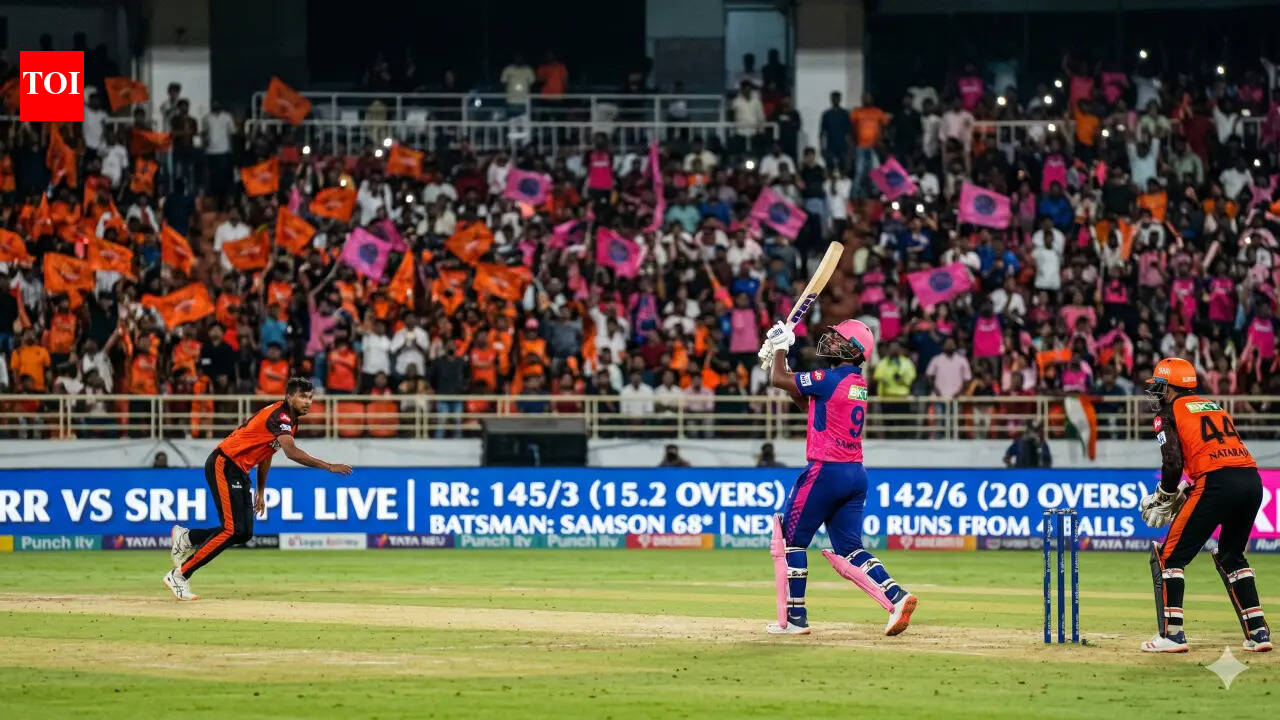
The three best resourced teams, India, Australia and England, have geared their sides towards specialists for T20. In this tournament, England’s only first-choice all-format players are Harry Brook, Jacob Bethell and Jofra Archer; having ignored Yashasvi Jaiswal and Shubman Gill, India have a batting line-up that would look completely different in Tests and ODIs, and for Australia, only Travis Head and Cameron Green cross over between their Ashes and present T20 teams.In that sense, Babar is something of an outlier. He is a batsman, now in his thirties, reared as much on Test and 50-over cricket as short-form, intent on continuing to play T20 but struggling to find a settled role. This is an era of T20 when the traditional anchor role has been made less relevant because of increased strike rates in domestic competitions and a change in rules, such as the Impact Player rule in the Indian Premier League, that have combined to increase scores notably.For a long time Babar was the mainstay at the top of the order alongside Muhammad Rizwan, but has been moved to a role in the middle order, as he and Pakistan try to adapt to a fast-changing landscape in T20 cricket. Dropped for the Asia Cup last year, it looked as though he might not be selected for this World Cup, but was brought back and transitioned into a middle-order spot on account of his sluggish strike rate as an opener in the powerplay.He has had little success thus far in this tournament. In the three matches in which he has batted, his strike rate has been a pedestrian 115 for an average of 22. Against Namibia, in the final group-stage game, others were deemed better suited to the explosive death overs. Debates about Babar’s role in the side are a constant; before the tournament, the captain Salman Ali Agha said he wished he could get through a press conference without being asked a question about him.Babar has taken a number of blows to the ego of late. As well as being left out of the side for the Asia Cup, he was the subject of much debate in the Big Bash. Partnering Smith at the top of the order in a match for the Sydney Sixers against Sydney Thunder, Smith turned down an obvious single to farm the strike from Babar, taking 32 off the next over. Babar did not take the indignity well but it highlighted his hitting limitations.A number of factors complicate the conversation and the debate around whether an anchor-style player — Babar, in Pakistan’s case; Root, as some would like to have in England’s — is necessary. This debate sets the acceleration of strike rates in modern T20 cricket and the essential requirement to hit sixes against tournament play in global events, where scores tend to be lower, as they have been in this World Cup. England have moved on in T20 from Root (rightly, in my view); Pakistan are hanging on to Babar.Faf du Plessis, the former South African captain, framed the debate intelligently recently on a video segment on ESPNcricinfo. He made it clear that a strike rate of about 120 runs per 100 balls is no longer quick enough in the opening powerplay, where the demands require top-order players to score at a strike rate of 160 or more. Phil Salt of England is among that breed of rapid starters.“The game of T20 cricket has moved so fast-forward and towards strike rates that he [Babar] has found himself a little behind in terms of strike rate. On spinning pitches that is where someone like him is worth his weight in gold. He can minimise the dot balls and rotate strike.” Du Plessis went on to reiterate that these anchor roles are increasingly redundant on good pitches, but can still be useful in lower-scoring contests.What tempo awaits England’s second Super Eight game against Pakistan on Tuesday in Pallekele remains to be seen. It is a day-night rather than day game and when Sri Lanka played Australia here under lights, scoring was noticeably higher; Pallekele, by reputation, is a higher-scoring ground than the ones in Colombo and the suspicion remains that both England and Sri Lanka’s batsmen made the pitch on Sunday look worse than it was.A spin-heavy contest is likely again, though. Against India, 18 of the 20 overs Pakistan bowled were sent down by spinners. Pakistan’s most prolific bowlers in this competition have been Abrar Ahmed, the mystery spinner; Usman Tariq, of the pause; Mohammad Nawaz, the left-armer; and Shadab Khan, the leg spinner. With eight wickets, an economy rate under nine runs per over and a method and action that is unique, Tariq is the main threat.England will counter with their own quartet of Adil Rashid, Liam Dawson, Will Jacks and, possibly, Bethell. Into this mix, in the middle overs, will stride Babar: 31 years old and something of a throwback. He is a classicist in a T20 game increasingly dominated by power, determined to show that there is a place for him, still — and that he is only momentarily out of touch rather than out of time.England v Pakistan




Most Popular



Men’s Tennis Seeds Set for ACC Championship
10 hours ago