
Friday briefing: How the boom in running culture is reflected in the London Marathon
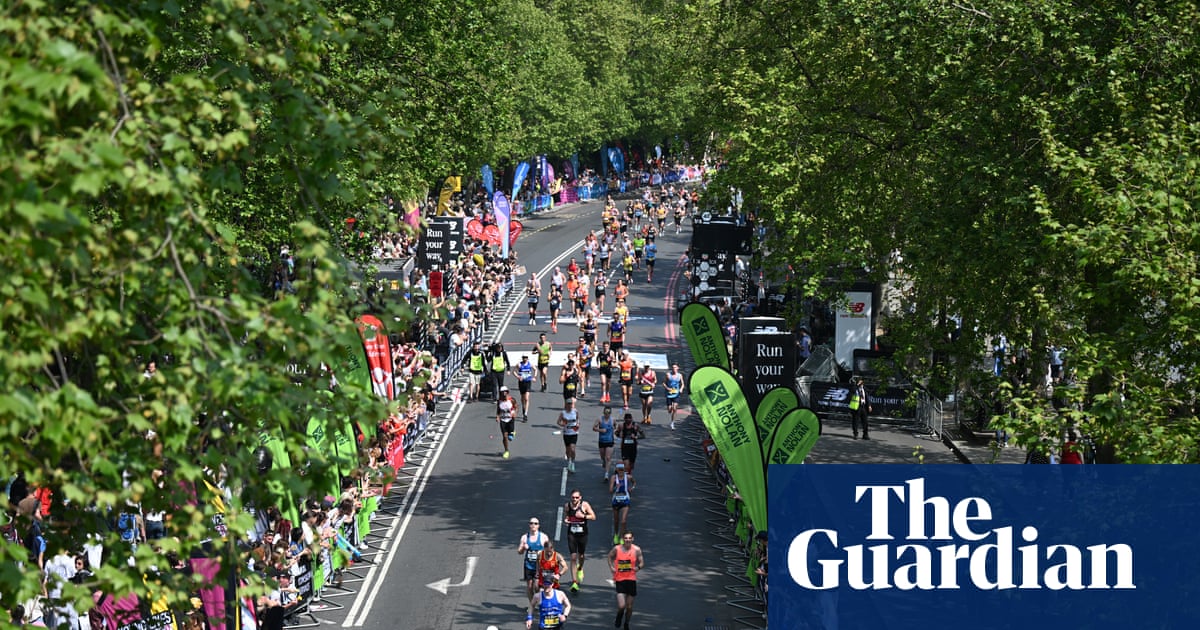
Good morning. Britain is experiencing a running boom – and it is being driven by gen Z women. More than a million people applied to be on the London Marathon start line this Sunday, including about 850,000 British runners. A third of those were aged between 18 and 29, and the majority in this category were female, according to event organisers.For a sport stereotypically dominated by spindly men in tight shorts, it is a remarkable transformation.For today’s First Edition, I speak with the Guardian’s chief sports reporter Sean Ingle about the London Marathon’s remarkable popularity – and why it could even become a two-day event. But first, the headlines.Five big storiesUK politics | Cat Little, the lead official in the Cabinet Office, had to get a summary of Peter Mandelson’s file directly from UK security vetting (UKSV) after Olly Robbins, the subsequently sacked Foreign Office head, refused to provide it, Little has told a Commons committee.Middle East | Britain is prepared to deploy a squadron of RAF Typhoons based in Qatar to patrol over the strait of Hormuz as part of a multinational mission to keep open the strategic waterway once the Iran war comes to an end.Ukraine | EU leaders have welcomed the end of diplomatic deadlock over a long-awaited €90bn (£78bn) loan for Ukraine, after the bloc finalised the agreement along with a package of sanctions against Russia.Economics | Confidence in the UK economy has fallen sharply amid the mounting fallout from the Iran war, as businesses prepare to raise their prices and consumers brace for a fresh cost of living shock.UK news | Russell Brand said he had “exploitative” consensual sex with a 16-year-old girl at the height of his fame.In depth: ‘A celebration of what’s good in humanity’For anyone who has watched the London Marathon, it is obvious that it is more than just a running race. Each of the 59,000 participants has their own story about why they are there. Many have endured cold, wet training sessions through the miserable British winter to complete the 26.2 miles. In the process, they raise huge sums of money for charity. Runners often hold photos of friends and family members who they are running in memory of. It can be profoundly emotional to observe.Sean, who gets to cover some of the biggest sporting events in the world for the Guardian, says it is one of the most special days in the sporting calendar.“I am fortunate enough to cover the Olympics, Wimbledon finals, the Open – whatever. The London Marathon is right up there. It’s not seeing elite men and women go off at the sort of speeds that if you and I were trying to keep up with them, you would last maybe 100 metres. My favourite part is the end of the day,” he says.“I usually finish writing around six or seven in the evening and that’s when those who are finishing in seven, eight hours are crossing the line. They can barely walk but they’ve got the biggest smile. Their friends and family are there, the spectators are cheering. It’s really a celebration of what’s good in humanity, people doing great things and raising money for all sorts of charities,” he says.Runners of all ages are taking part on Sunday. The youngest are running on their 18th birthday. The oldest is 88-year-old Harry Newton, who will be running his 22nd London Marathon and only started marathon running in his late 50s.“It’s extraordinary”, says Sean.A new running boomThe explosion of interest in running among young women is one of the big stories in UK sport in recent years. Figures compiled by Sports England found that there were 349,000 more runners in 2024 compared to the previous year – and they were nearly all women. This has been reflected in applications for the London Marathon, particularly for younger age groups.Social media is a big factor. Influencers like Phily Bowden, who is documenting her efforts to make the GB team for the 2028 Olympics, and Mary McCarthy, whose tagline is #beattheboys, have helped make running fashionable. Elite athletes like Eilish McColgan, Georgia Hunter Bell and Keely Hodgkinson all regularly record their training on Instagram and TikTok. Meanwhile, big fashion brands have all rapidly responded to the interest on social media.“We are in the midst of a third great running boom,” says Sean. “In the 70s, it was skinny men in tight shorts. Then you had another boom when Paula Radcliffe was breaking the world record. But both of these were among serious runners who cover themselves in Vaseline and run fast. What’s different this time is that it’s not just fast runners, it’s medium and slow too. It’s different ethnicities, different demographics, and it’s largely fuelled by women.”The role of social run clubsMany theorise that the rise of social run clubs, which make running not just fun, but safer for women, may also be behind the surge in popularity.“If you want to run fast, you join an athletics club. But there is a club for everyone these days. I was speaking with a woman at one of these clubs earlier and they do their runs at a 7 minute per kilometre pace, which is not fast at all. They go for a chat and a coffee afterwards. It is also much safer. If you are going out in January and it’s freezing and dark, a bunch of you running together makes you feel more protected,” he says.A future, expanded London MarathonLondon Marathon organisers are looking to capitalise on the popularity. Last month, Sean revealed that the race is in advanced talks about staging a two-day event in 2027, allowing tens of thousands more runners to take part. It has not yet been approved and would be a one off – for now – but race organisers say that the expanded event would raise more than £130m for charity and bring in £400m in social and economic benefits.“I think it will happen because the London mayor’s for it,” says Sean. “The organisers are insisting it would be a one off event in 2027 which I think eases the fears of the police who have the FA Cup and other events to contend with. That said, if it’s a roaring success, you wouldn’t be shocked if in five years’ time it is a regular thing.”For now, all that is left to say is a big good luck to the thousands of runners in central London on Sunday, especially to the Guardian’s Patrick Barkham, who is running the race dressed as a badger. Rest up, drink water and enjoy some big bowls of pasta in the meantime. I will be there with thousands of others to cheer you on.What else we’ve been readingLuke Oppenheimer went on a short assignment to photograph a remote village of shepherds in Kyrgyzstan, where wolves prey on livestock, and ended up staying for four years. Here are some of his pictures. MartinHarry Sword spoke with the heavy metal band Iron Maiden on more than 50 years of success and hard living. PatrickExperts remain divided on radiation’s long-term effects in Chornobyl, but Jonathan Watts discovers there is broader agreement that excluding humans has – unexpectedly – benefited wildlife and ecosystems. MartinI thought Zoe Williams summed up perfectly what we should really find shocking about Shabana Mahmood’s f-bomb moment. Poppy Noor, acting editor, newslettersThe latest instalment of Sam Wollaston’s series on abandoned buildings in Britain takes in a Welsh church claimed by spiders and ivy, and examines what its decay means for the community. MartinSportFootball | The Italian sports minister has described a proposal for his country to replace Iran at the World Cup as “not appropriate”, rejecting any idea that the Azzurri will be granted a last-minute berth.Football | Tony Parkes dies aged 76 as tributes are paid to ‘Mr Blackburn Rovers’ who served the club from 1970 until 2004.Tennis | A White House photo celebrating the University of Georgia women’s tennis team has drawn backlash due to Donald Trump and a group of men overshadowing the female athletes by lining up in front of them.Something for the weekendOur critics’ roundup of the best things to watch, read, play and listen to right nowFilmAgon | ★★★★☆Here is a fascinatingly experimental debut feature from Italian film-maker Giulio Bertelli, son of fashion designer Miuccia Prada; a machine-tooled movie, intensely designed and controlled. It’s a kind of Martian’s-eye-view documentary about something that doesn’t actually exist; it is ice-cold and detached, almost without dialogue in the conventionally dramatic sense, other than the subdued exchanges which we, as audience, overhear rather than listen to. It accumulates its own kind of desolate force. Bertelli’s film intuits the military roots of three Olympic sports: judo, fencing and shooting, as three female Italian athletes are shown taking part in a (fictional) competition called Ludoj 2024. Peter BradshawTVStranger Things: Tales from ’85 | ★★★☆☆The original Netflix series plonked us in a fantasy past where kids in small American towns rode bikes, chewed gum, listened to cassettes and played Dungeons and Dragons in their friend’s basement; or, if you weren’t American, it reminded you of movies you’d seen where that was the vibe. Either way, it was access to an era before the internet, 9/11, the banking crash, the pandemic and Trump, when life seemed easier. The cartoon spin-off, Tales from ’85, does something similar for Stranger Things itself. It rewinds to a happy, straightforward time, namely between seasons two and three. In that moment, the world of Hawkins, Indiana had been established, but we were yet to endure the show’s bumpy late period. Jack SealeTheatreThe Resistible Rise of Arturo Ui, Swan theatre, Stratford-Upon-Avon | ★★★★★Bertolt Brecht’s comic grotesque parable on Hitler’s rise to power has been compared to Charlie Chaplin’s The Great Dictator, and there is something distinctly Chaplinesque in Mark Gatiss’s cartoon gangster. He is initially tragicomic as Arturo Ui, with his tramp-like clothing, powdered face and melancholy eyes. But he turns truly terrifying as Seán Linnen’s production for the Royal Shakespeare Company takes us through his thuggish ascendancy, Gatiss proving his ability to transform in a way that renders him almost unrecognisable here: part Hitler (signature moustache and hair), part Scrooge and part ghoul. Arifa AkbarMusicNoah Kahan: The Great Divide | ★★★☆☆Noah Kahan, who used to introduce himself on stage as “the Jewish Ed Sheeran”, has a thing for the stomp-clap rhythms of Mumford & Sons and stirs a little heartland rock – Springsteen via Sam Fender – into his sound. His fourth album, The Great Divide, is a record that deals in consolidation rather than development. The National’s Aaron Dessner co-produces – you can spot his touch immediately, in the opening lambent piano figure and misty ambience – but it sticks pretty close to the musical blueprint established on its predecessor. Alexis PetridisThe front pages“Foreign Office shuts unit tracking potential law breaches by Israel” – a Guardian exclusive is the splash in our print edition. The i paper has “‘Shoot and kill’ – Trump’s new orders to US navy in Gulf, as Iran peace talks stall”. The Telegraph leads with “Hermer’s ‘excessive’ fee for Iraq witch-hunt”. “Heckler tells potty mouth Mahmood … Get it #!!*@* right, I’m not even white!” is the colourful front-page lead in the Metro.The Financial Times’ headline was written by a human: “US accuses China of industrial-scale theft from AI labs in tech arms race”. The Times has “Call to stop sharing data with China after breach”. The Mail offers “Farage: I’ll wage ‘war’ on benefits culture”. The Express campaigns on assisted dying with “There is one last chance” and a full-page photo of Esther Rantzen. “Infected by a monsters” – the Mirror reports on the “HIV predator jailed for life”.Today in FocusWill the backlash against AI turn violent?An attack on the home of OpenAI’s CEO Sam Altman – and on the company’s headquarters – has led to concerns the backlash against AI could become violent. Guardian journalist Nick Robins-Early and researcher Sean Fleming discussCartoon of the day | Ben JenningsThe UpsideA bit of good news to remind you that the world’s not all badA rare axolotl found injured in a Welsh river is now recovering – thanks to a sharp-eyed 10-year-old. Evie Hill spotted the unusual creature under a mat and said: “I was like: ‘That’s an axolotl.’” Despite being told it couldn’t be, she “went back in the water anyway … and caught it”. The salamander, nicknamed Dippy, is now being cared for at home after likely being abandoned. Wild axolotls, which resemble a cross between a fish and a lizard, are found only in Lake Xochimilco near Mexico City and are considered critically endangered. The species’ popularity as pets, however, has exploded in recent years owing to their exposure on TikTok, Instagram and Minecraft.Sign up here for a weekly roundup of The Upside, sent to you every SundayBored at work?And finally, the Guardian’s puzzles are here to keep you entertained throughout the day. Until tomorrow.




Most Popular






Steelers select Iheanachor in first round
3 hours ago