Batsmen playing like golfers and dead tracks are hurting IPL with thousands cuts, and killing Tests
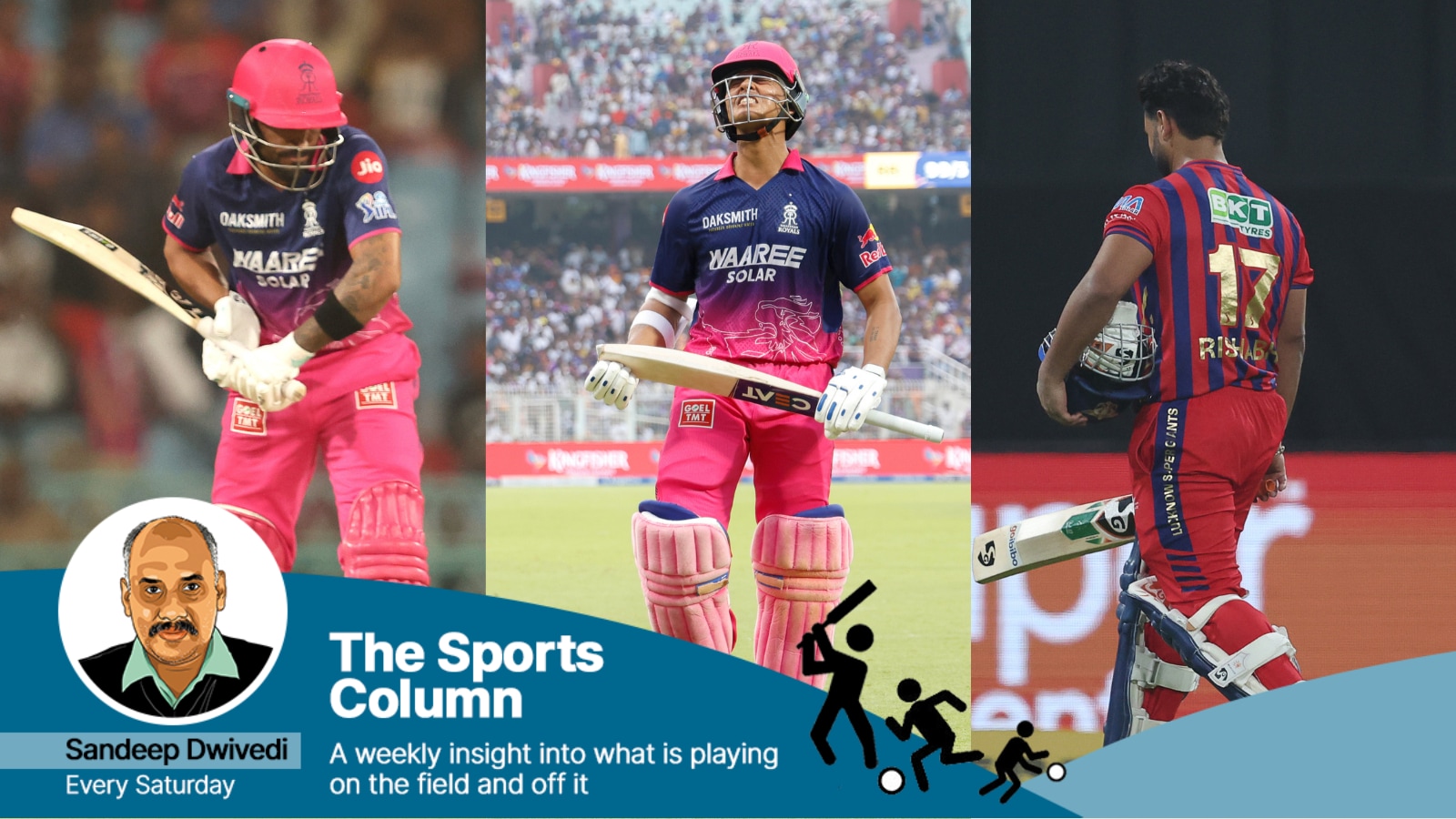
Actually, that much-praised Shami delivery is a bread-and-butter ball for Test match pacers. On most days, batsmen negotiate them without much fuss. They either stride forward to defend or leave. But this is IPL, here, you do none of the above. Just like Jurel. In T20s, you don’t move your feet and allowing the ball to go to the wicket-keeper would result in instant aura-loss.Shami also got Yashasvi Jaiswal with a ball that the opener would be facing in the months ahead – namely during the away series in New Zealand and when the Aussies come here for the Border-Gavaskar Trophy. Sixth on the WTC table, owing to the two recent draws at home against New Zealand and South Africa, India can’t afford any slip-ups now if they have ambitions to reach the final.Against Jaiswal, Shami began with a couple of short ones. Both would be dispatched outside the square boundary. This was followed by an effort ball from Shami that also had a bit of finger work. This one had extra spice, it also cut in from his leg-middle line and climbed to the batsman’s forehead. Jaiswal tried to hook it but gloved it behind. You might be in the form of your life, you are young with razor-sharp reflexes, but respecting a great ball is a format-agnostic cricketing principle. But then in IPL, you don’t duck. Again, it would result in instant aura-loss.ALSO READ | Samastipur ka Lara, Najafgarh ka Nawab, God’s Bandra home: Cricketers change a place’s identityIn the LSG innings, Rishabh Pant would walk in to bat in the second over. He would be facing the burly, broad-shouldered RR pacer from South Africa, Nandre Burger. Pant’s second ball was a mean short ball well outside the off-stump. The India wicket-keeper, heavily trolled for irresponsible stroke-play in India’s recent Test loss against South Africa, would attempt to cart the ball to the other side of the pitch. The ball had more bounce and pace than he expected. The faint edge would carry to the keeper. Batsmen generally take a couple of balls to assess situations. But this was IPL, caution means instant aura-loss.Story continues below this adCan the Lucknow pitch be blamed for these batting failures? LSG coach, the Aussie Justin Langer, did try to float that narrative. He suggested that it was like playing like the “old WACA (Perth) pitch”. Langer was born in Perth, played 10 Tests and even hit a couple of hundreds there. His WACA comparison might work as a coach’s excuse to a demanding franchise but not for those who are aware about Perth’s history. At WACA, Jeff Thomson once bowled a bouncer that crossed the boundary after just one bounce. Lucknow was certainly not Perth, and the short-comings of batsmen can’t be hidden by exaggerating the conditions.India’s Test set-up doesn’t need to believe Langer’s words. In the past, too, the IPL impact has dented India’s Test hopes but this is crisis-time. The age-old Indian home advantage, the erstwhile final frontier, is now a thing of the past. Indian Test bowlers are capable of taking 20 wickets but does the team have the batsmen to play for time, leave balls and use their feet?The recent IPL trend, explained in detail by all-time great Kapil Dev to this newspaper, is about batsmen taking a leaf from golf’s guide. Like on the greens, on the cricket pitch too, it is the high back-lift and the swing that is helping them hit the ball long.Coaches these days are advocating the golf approach. They stress that batsmen need to have a strong base as it gives better control of the swing. Talk of footwork is missing from T20 coaching. Range hitting is the new trend. At the net sessions, the batsmen stand with their bat parallel to the body and behind the head. It’s easy to confuse them for baseball hitters. The coaches lob soft full tosses at them and the batsmen swing the bats to send the ball into the stands. Footwork isn’t needed. In IPL, it is so yesterday, so part of a longer format, that footwork is on its last legs.Story continues below this adApparently, this was the reason six-smasher Sanju Samson was preferred over the more correct Shubman Gill in the World T20 team. “The problem with Gill is his footwork. He brings his front-foot out and caresses the ball through covers. On the other hand, Sanju stands in the crease and swings … he can hit more sixes,” an expert said.Everybody loves sixes, starting with the broadcaster. There have been whispers that TV dictates pitch preparation. But is the six-fest really working for TV?


Most Popular