Quietly fades Jos: England's new era leaves no room for Buttler
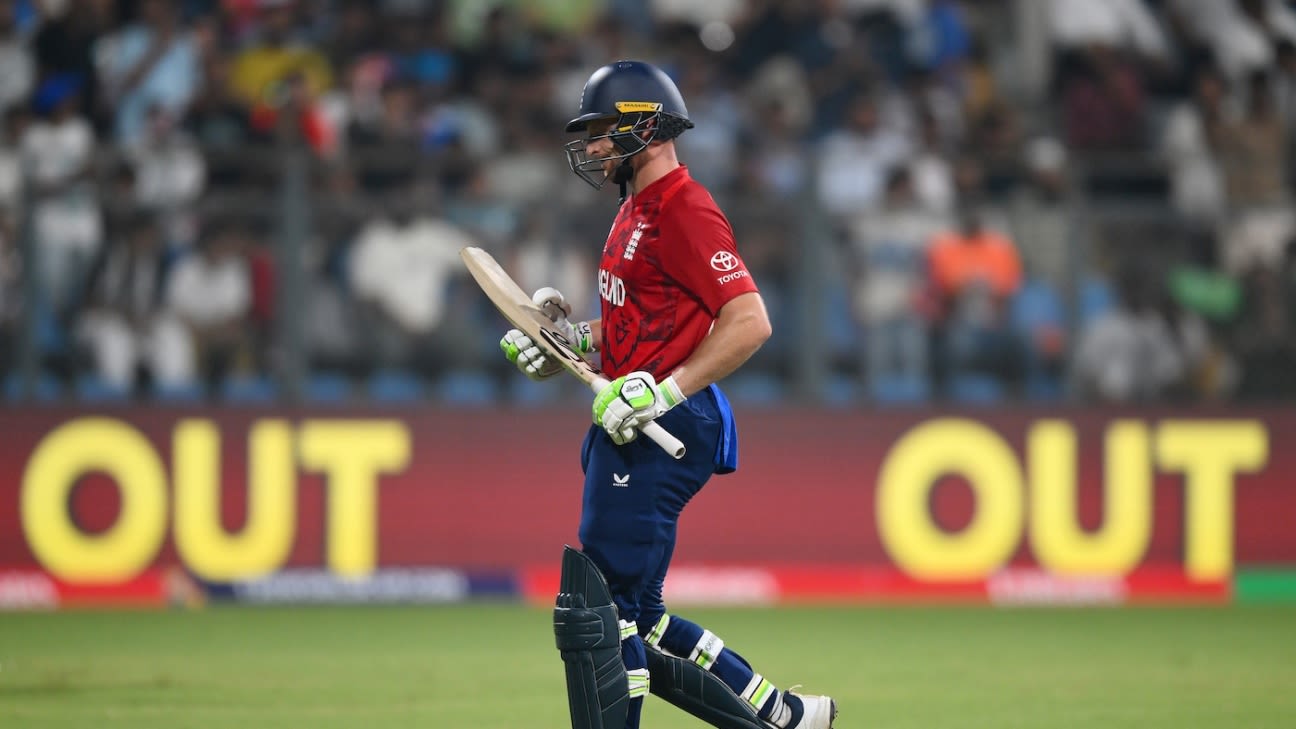
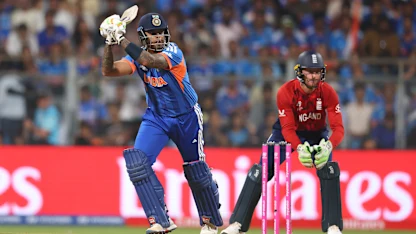
A scratchy semi-final innings highlighted the widening gap between England's new T20 identity and their former talisman's declining formMatt RollerPublished: Mar 6, 2026, 2:42 PM (5 hrs ago)In the early days of his international career, Jos Buttler's middle-order brilliance prompted an unusual feeling for England fans: willing their own team to lose a wicket if it meant getting Buttler in sooner. On Thursday night in Mumbai, the feeling returned with a difference. Once again, an England wicket brought some relief, or even liberation - only this time, it was Buttler's.Buttler's dismissal for 25 off 17 balls - bowled heaving wildly at a Varun Chakravarthy googly - was accompanied by a sense of finality. Buttler may yet play for England again - he is under contract for another 18 months - but this was an end in itself, a line drawn under the aura of invincibility that he once carried in T20 cricket.Allowing for extras, England needed their batters to score at a collective strike rate of around 200 through their chase - a tall task, but one that they very nearly achieved. Yet Buttler faced 17 balls - all in the powerplay, none from Jasprit Bumrah - and struck at just 147.05, chewing up ten dot balls along the way. In a game decided by a seven-run margin, this was a costly innings.RelatedButtler 'frustrated' by World Cup form but won't rein himself inButtler hits rock-bottom, as England plough on despite himButtler 'in a rut' but gets Brook's backing for semi-finalsIt was a reminder of the fundamental differences between T20 and the other international formats, particularly when conditions are so extreme. Buttler's struggles were not down to a lack of attacking intent, but he was so out of sorts that there was a legitimate case for India to keep him in as long as possible, thereby minimising Tom Banton and Will Jacks' opportunities.T20 is the cruellest format for struggling batters. As Buttler himself observed midway through this World Cup, in a podcast appearance that only emphasised his vulnerability, there is simply no opportunity to rediscover tempo without playing in a manner that is detrimental to your team. Even as his training sessions grew longer and longer, Buttler appeared no closer to finding his rhythm again.Perhaps it is unwise to read too much into a single run of low scores, however miserable Buttler's has been. But it is not as though this is a single bad tournament: his only half-century in his past four ICC events came against the United States at the 2024 T20 World Cup, while his only fifty in 25 innings across formats this winter came in the SA20.Buttler's batting has always relied heavily on his preternatural hand-eye co-ordination and the fear is that, at 35, that attribute has declined just enough that he is no longer the player he once was. He has played and missed with uncomfortable regularity at this World Cup: in Thursday's semi-final, he failed to lay a bat on seven of the 17 balls that he faced, over 40%.Those included an attempted scoop off Hardik Pandya - itself a desperate follow-up after an air-swipe while charging down - which resulted only in a leg-bye as the ball dribbled away off his body. It stood in clear contrast to the outrageous innovation of Jacob Bethell, reverse-lapping at will during a 45-ball hundred that felt reminiscent of Buttler's younger self.Buttler alone did not cost England this semi-final - the seven-run margin flattered them to an extent, with three late sixes once the game was lost - nor was he their only player to underperform at this World Cup. But his return to the ranks after ceding the captaincy to Harry Brook has not worked, and his struggles were only emphasised by the success of England's next generation.Brook has built a genuine sense of identity in England's T20 team: they have 16 wins out of 19 since last June, and were worthy semi-finalists at this World Cup. Their spin-heavy set-up was better suited to Sri Lanka, where they won all three Super Eight matches, than India, where they lost to both Full Member opponents they faced, but also reflected England's talent pool.England have consistently backed a core of players, and Brook's strategic calls - using Will Jacks as a finisher, picking Tom Banton in the middle order, and backing Liam Dawson as a second spinner - largely paid off. But in a batting line-up that has now completely refreshed since Eoin Morgan's golden generation, Buttler looks like an outlier.What happens next? Buttler will be back in India before long to play for Gujarat Titans, and it would be a surprise if he does not pile on the runs as usual. But for all the IPL's merits, it is a step down in terms of both pressure and quality from the latter stages of a T20 World Cup, and Buttler will know that he has a decision to make.England's white-ball focus now shifts to the 50-over World Cup in southern Africa in 18 months' time, and Buttler's struggles have not been isolated to T20. His most recent ODI hundred came in February 2023, and he has averaged a shade under 30 in the last three years; since Bethell's promotion last summer, he has been demoted back down to No. 6.The complication is that Buttler has no incentive to call time on his international career beyond personal pride. Not for the first time since Rob Key introduced multi-year central contracts, England are in an awkward spot: Buttler signed an extension last year which means his deal has 18 months left to run, until the end of September 2027.It leaves Key - or a potential successor - facing an unenviable decision: should they drop Buttler, and thereby pay him not to play cricket, or hope that blind faith can prompt one of England's white-ball greats to rediscover his best at the age of 35? The best outcome would be for Buttler to do what he has done so often through his career, and dig England out of a hole himself.Matt Roller is a senior correspondent at ESPNcricinfo. @mroller98

Most Popular


3rd National Para Games to begin March 26 in Abuja
18 hours ago