Frank sacked by Spurs after meeting 'shocked' new signings amid Arsenal obsession and star's 'preferential treatment'
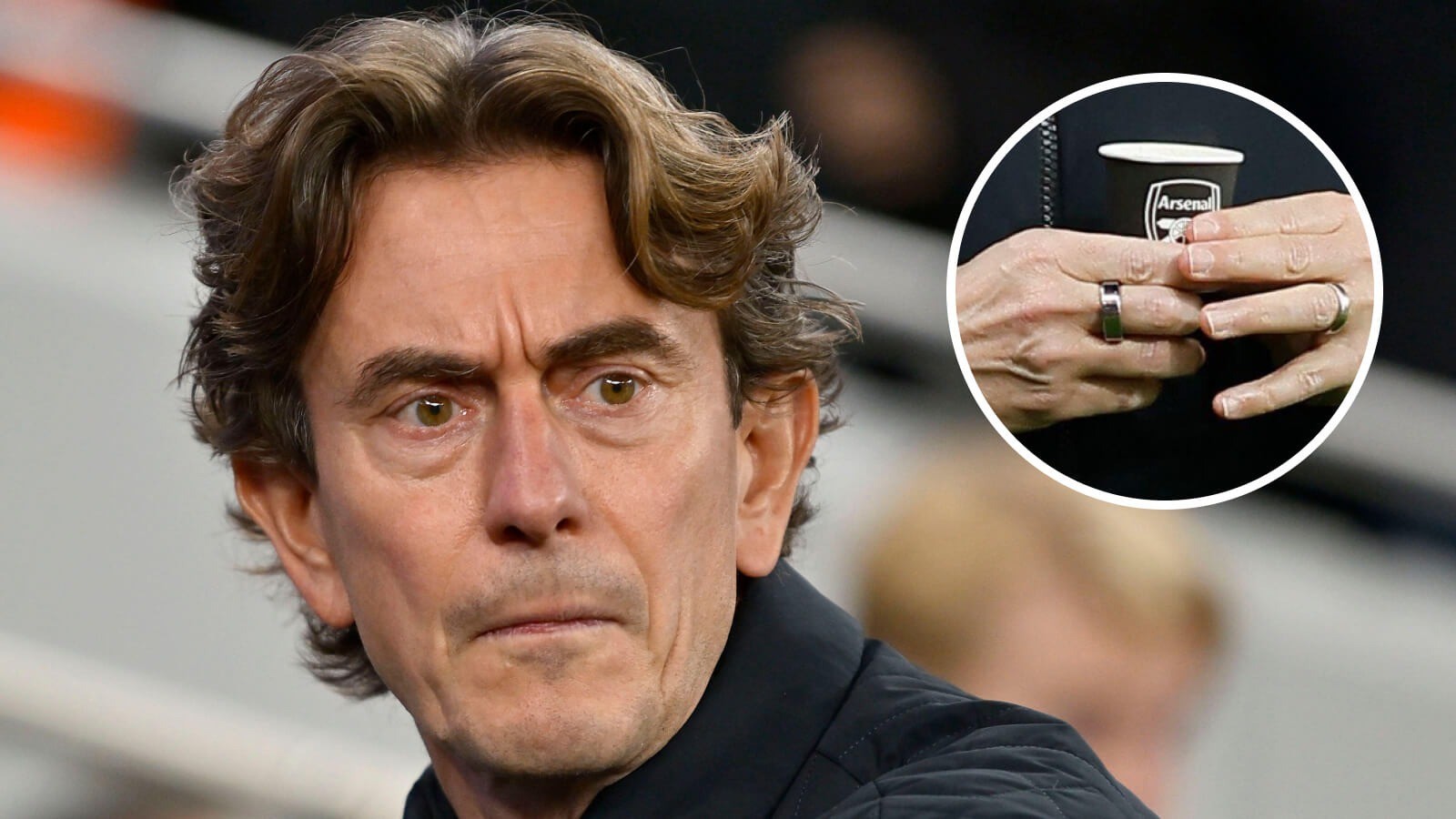
The reasons Spurs finally felt ‘forced’ to sack Thomas Frank have been revealed, from his Arsenal obsession to a meeting which ‘shocked’ new signings.Frank has finally gone after a few miserable months in north London – not that it will solve all the issues which continue to plague Spurs.With help from a great many journalists with contacts in and around the Spurs cheese room, here are the best bits of the inside stories of Frank’s sacking.A rocky relationship with the playersThe lack of public reaction from the Spurs dressing room to Frank’s exit feels instructive, suggesting a disconnect between a manager and his squad.Pedro Porro and Joao Palhinha had taken to social media to thank the Dane within the first 24 or so hours of his sacking; Cristian Romero is yet to post on Instagram about how ‘disgraceful’ it all is.The well-connected Alasdair Gold of Football.London says Frank ultimately ‘lost the confidence of the dressing room’ and ‘put his faith in a small core leadership group of players’, with the rest potentially going ‘days without getting barely a word from him on an individual basis’.The Daily Telegraph’s Matt Law explains that Frank encountered issues implementing the same “no d***heads” policy which underpinned his success at Brentford.‘The cultural problems he encountered were not confined to his players, with issues existing and presenting themselves in other areas of the club,’ he rather cryptically writes.It is added that ‘time-keeping was an issue for players, young and old, under Frank’. One specific case is cited: that of Yves Bissouma, dropped from the Super Cup squad against PSG in August ‘following repeated incidents’.Bissouma was then largely ostracised (and injured) before suddenly returning (in an injury crisis) for the fateful home defeat to West Ham in January. He has played a part in the last five Premier League games, which Law points to as one of many cases of Frank ‘undermining his own authority’.But Sami Mokbel of BBC Sport reports that Frank ‘put his players before his own agendas,’ which ‘certain members of the squad certainly appreciated’.However, many ‘found Frank indecisive’ from early on, especially as ‘they were used to’ Ange Postecoglou’s ‘big personality’.Mate.The Romero problemA defeat to Manchester United in which he was sent off after half an hour having publicly chastised the club for a lack of January transfer window reinforcements which left what few fit and available players who remained painfully exposed, was a fitting final game under Frank for captain Romero.He was the root of another issue which plagued Frank.Gold reveals a suggestion ‘inside the club that he will get away with things that others might not’, with Mokbel corroborating that perceived ‘preferential treatment’.Law goes further, disclosing a belief in some quarters that Romero ‘is granted privileges not afforded to others’ and ‘is not somebody who sets standards with the way he behaves’.Mokbel outright claims Romero was ‘more difficult to manage around the club’s training centre’ than others.There’s your character reference, Manchester United.Why did Frank have to go now?Frank struggled to connect with the players or the fans – most of the inside stories refer to his opening press conference quip of “one thing is 100% sure, we will lose football matches” as indicative of his PR problems – couldn’t handle his captain properly and had won one of his final 11 Premier League games to send Spurs spiralling down to 16th and into a genuine relegation fight.So why make the call now when things have been miserable for some time?Kaveh Solhekol of Sky Sports sums the decision up succinctly: “The reason they’ve decided to do it now is they’ve got a small window of opportunity until their next game.”The 12 days between Frank’s demise and Spurs’ next game, a home north London derby, is described as “a small window of opportunity”. Now Harry Redknapp or Jurgen Klinsmann just need to crash through it.That “tiny bit of breathing space” is all Spurs needed to act when relegation became an awkward, unavoidable and active situation for the hierarchy to step in on.Solhekol reports that Spurs risk ‘losing hundreds of millions of pounds’ if they go down, which was eventually enough to trigger his departure.Kat Lucas, Football News Editor for The i Paper, corroborates those growing concerns over ‘the financial implications’ of dropping into the Championship, which ‘forced a decision’.But there is said to be ‘some sympathy’ for Frank within the club based on the injuries he has had to deal with in a ‘transitional season’.When else could Frank have been sacked?An 11th defeat of the Premier League season, and seventh at home, triggered the latest bout of “sacked in the morning” chants from a fanbase which finally got it right.The Newcastle loss was the final straw, but both Gold and the Daily Mail’s Matt Barlow refer to the goalless Brentford draw as ‘the beginning of the end’.It did underline the fundamental problems in Frank’s appointment.But he lasted well over a month in the job after that, despite a couple of other reign-defining flashpoints.Mokbel actually writes that ‘one leading executive recommended the Dane should be sacked after the 2-1 home defeat by Fulham on 29 November’, after which Frank hit out at Spurs fans who booed Guglielmo Vicario for his role in what turned out to be the winning goal.Earlier that month, Spurs fell to the most uninspired defeat imaginable against Chelsea.The game is perhaps best remembered for its aftermath, when both Micky van de Ven and Djed Spence ignored Frank’s request for them to applaud the home supporters.But some players were ‘shocked’ during a subsequent team meeting, according to Law:‘As exclusively reported by Telegraph Sport, players discussed their relationship with the fans in a team meeting after the defeat. It can now be revealed that players who had arrived in the summer were shocked to hear longer serving players articulate their strong feelings on what they believed was a long-standing disconnect.’But Frank remained, sustained largely by strong Champions League performances and results, until mid-February.A point of no return was seemingly reached with the home loss against West Ham on January 17.Law says ‘the vehemence of the chanting against Frank’ then ‘forced Tottenham’s Lewis family owners and Vinai Venkatesham to consider their options’.Tom Allnut of The Times says that game ‘raised serious concerns about the team’s performances and Frank’s relationship with the fans’. But a managerial change was deemed sub-optimal due to a lack of feasible replacements.Lucas endorses the belief that ‘contingency plans were first made’ after the West Ham game, which marked ‘the first indication that it had been accepted the appointment had not worked out’.Both Lucas and Mokbel point to how senior managing director Vivienne Lewis was ‘confronted’ by ‘an irate fan’ near the hospitality section after that match.It was then, according to Mokbel, when ‘the foundations of Tottenham’s faith in Frank were irreparably shaken’.The gap to West Ham was ten points and three teams for Spurs then. Four games later, only five points and managerless Nottingham Forest are between them.Trouble with Tommy’s tacticsThere might be some surprise to learn that Frank deployed actual tactics at Tottenham, so disjointed were the majority of performances under him.Lucas says ‘players were left baffled’ by his ideas towards the end, ‘did not always understand what they were being asked to do’ and ‘were left confused by a negative approach in what they perceived as winnable games’.Tom Barclay of The Sun feels Frank developed a ‘habit of abandoning a planned approach, sometimes just before matches and at other times early on in game,’ which understandably led to the squad becoming ‘confused’.Mokbel reports on the ‘concerns’ that Frank ‘was not assertive enough in matches and was too focused on adapting to the opposition rather than imposing Spurs’ own strengths’.That is echoed by Law, who quotes one source as saying: “Most of the work was on what to do out of possession and how to nullify the opposition, rather than working on how they could hurt opponents.”Frank had been small-timing his big job for months and it showed.Five transfers which haunted SpursSpurs were arguably the biggest losers of the January transfer window, during which they added Conor Gallagher and Souza but ultimately emerged with a weaker hand than they went in with.Barlow says the early sale of Europa League hero Brennan Johnson to Crystal Palace ‘had left its mark on players’.‘Those who had been told when signing or in contract talks that the new post-Levy regime were serious about investing saw the first window start with a significant sale,’ he writes.But the transfer problems for Frank started in the summer.Jay Harris of The Athletic details how a number of targets slipped away due to reasons largely out of Frank’s control.‘The uncertainty over whether they would be competing in the Champions League this season or have no European football at all impacted their ability to act swiftly in the summer transfer market,’ he claims, adding: ‘Taking two weeks before deciding to sack Postecoglou only truncated this.’That feels like a far bigger problem, considering Manchester United, the team Spurs beat in the Europa League final to condemn to a season out of continental competition altogether, snared Frank’s first target before he could even act.‘Frank wanted to sign Bryan Mbeumo from Brentford but, by the time he had been appointed in mid-June, Mbeumo had decided he wanted to join Manchester United,’ Harris says.Antoine Semenyo was considered by Spurs ‘baulked at the £70m asking price’ before moving on to Mohammed Kudus instead.Then came the Morgan Gibbs-White fiasco, before Spurs ‘mishandled negotiations’ over Eberechi Eze, who eventually joined Arsenal after a good old-fashioned hijacking.The Arsenal boys, we’re on a bender, Thomas Frank is a silver memberArsenal supporters have certainly enjoyed the extent to which the actual Spurs manager has gone to painstaking lengths to apparently reveal his inner Gooner.The Telegraph’s Law says it became a genuine issue for Frank behind the scenes.The Dane ‘is said to have regularly referenced the strengths’ of Arsenal, ‘much to the frustration of some players’.Some were ‘surprised by his reverence to the Premier League leaders’ and the squad was ‘just as dismayed as supporters’ to see him holding an Arsenal-branded coffee cup before the defeat to Bournemouth in early January.David Hytner of The Guardian describes Frank’s seeming obsession as ‘a complex’, while The Sun’s Barclay calls it ‘a strange, almost involuntary habit of bringing up Spurs’ arch-rivals in glowing terms’.Law quotes one source thus:“He was constantly going on to the players about Arsenal and they quickly got sick of it. Even before and after the game at the Emirates, he was telling them how good Arsenal were. The feeling among some was very much ‘just shut up about Arsenal’.”It is unknown whether Frank will be in the away end when his favourite team visit Spurs on February 22.Who will Spurs turn to next?The candidates to replace Frank are sensationally eclectic, ranging from Roberto De Zerbi to John Heitinga, Robbie Keane and Tim Sherwood.But Graeme Bailey of TEAMtalk presents the nuclear option:‘In a surprising development, we can reveal that Sir Gareth Southgate has admirers within the Spurs structure. Some senior figures believe the former England manager’s leadership, calmness and player‑management skills could steady a fractious dressing room.’Yes please. Although Sean Dyche is now available too.



Most Popular