
Talking Tactics: Did Lionel Messi's Inter Miami make a $15 million mistake in signing German Berterame?
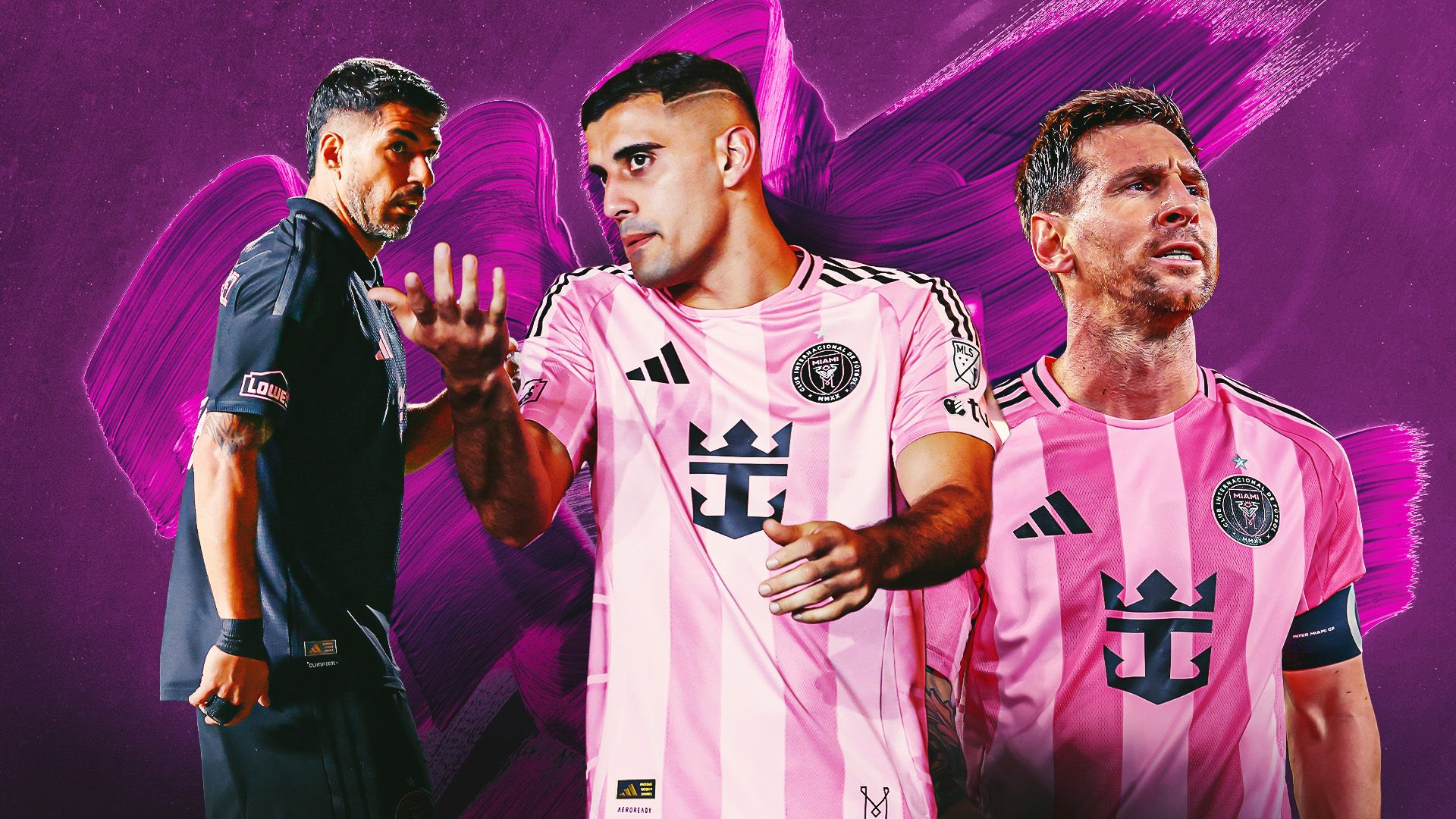
This starts and ends, of course, with Messi. How much of an influence he has on Miami's transfer business isn't clear (though it is a pretty hefty coincidence that the Herons have largely gone after Argentinian talent). Still, his preferences are likely strongly considered when factoring key decisions around the team - especially in on-pitch matters.Messi's former Barcelona teammate Javier Mascherano was appointed head coach, despite having limited managerial credentials. Jordi Alba and Sergio Busquets openly said they wanted to play with Messi one more time before they retired. Rodrigo De Paul was nicknamed "Messi's bodyguard" for his hard-nosed performances for the Argentina national team. That Berterame was born in Argentina, then, is of little surprise.But whether Messi is calling the shots or Miami's hierarchy made the call in signing the Mexico international, Berterame has to be able to function with the Argentine. That, as a bare minimum, is puzzling. Messi, in general, has never been his best playing alongside a central striker. Remember the ill-fated Zlatan Ibrahimovic era at Barcelona? Or the fact that even the great Thierry Henry needed time to jell. Save for two years in Luis Enrique's highly-switchable Barcelona side, the eight-time Ballon d'Or winner has always been most effective as a false 9 - especially as he has aged. Late-era Suarez, perhaps, serves as an exception given his prior experience at Barcelona.And let's be honest, at Miami, the only true responsibility is to make moves for Messi. Players must go where Messi doesn't, make runs that he refuses to, and press when Messi needs to save his legs. That's why traditionally central strikers tend to be ineffective.That is why, for example, both Allende and Mateo Silvetti have been so effective for Miami. Neither is a center forward, and both are willing to put in the hard yards. In effect, they have enjoyed their goal-scoring moments by means of reward. They get open, Messi can create, and they will benefit. This is the cycle that tends to work. The more space Messi has to create, the better.Berterame, meanwhile, figures to get in the way a bit. There would be a pretty compelling argument to be made for his inclusion if he were markedly versatile. Indeed, if he could offer minutes off the left or drop into midfield, then he might be a true Swiss Army Knife for the Herons. Across his final two seasons in Liga MX, Berterame made 64 starts as a center forward in a 4-3-3, and three as a left winger in a three-back system.In effect, Berterame in recent years, hasn't played consistent football in anywhere but through the middle. His tactical fit, then, in abstract, is strange.It would be forgivable, perhaps, if Berterame were particularly elite in one area. And on paper, some of the numbers look good. He scored 68 in 153 games across four years in Monterrey. And although the split-season format can skew stats based on the fact that Liga MX effectively becomes two "tournaments," he has consistently been among the best scorers in the league. There are a lot of good footballers in Mexico. Being a top 10 striker, there is, objectively, a pretty hard thing to do. Berterame is also a Mexican international, which no doubt helps his resume. He is very much in the running to make the World Cup squad.So, it comes down to the other stuff. If Berterame is an agreeable goalscorer, not a true marksman, a hefty investment would make sense if he were elite in other areas. In truth, he's something of a mixed bag. His passing stats - although at reasonably low volume - are solid without being elite: his pass completion percentage is in the 78th percentile among strikers. He's not a particularly good crosser, either, finishing in the 67th percentile for successful deliveries.Defensively, some of the numbers make for good reading. His interception numbers are high. Yet his ball recovery stats - more indicative of his ability to work out of possession - are in the 22nd percentile.Surely, though, this is modern football. Signings are made for a purpose, with specific roles in mind. Miami would not have spent so big for a player if they didn't believe he had some kind of a role to play. He is on Designated Player money, too. In short, the Herons have handicapped themselves financially by bringing this guy in.For one, there is something to be said for pedigree. Miami need goals, and scoring a few in Liga MX is a good indication that a footballer might be able to do the same in MLS. Berterame may not be a generational marksman, but the chances are he can still bag a few. It is true, too, that he possesses some vital traits that make a good MLS player. He was reportedly coveted by FC Cincinnati and the Portland Timbers in the past, but he turned those two teams down.And on the pitch, he has a scrappiness about him. With Messi around, he will certainly get a few good looks on goal. It's a risky move to spend so big on a player that isn't a guaranteed fit, but Miami are one of the few clubs that can go big for a player and see if it works.Perhaps more broadly, Miami need bodies and could have gone after another Designated Player. They are playing in three competitions this season, and will be expected to win all of them. Co-owner Jorge Mas has gone public with his desire - if not expectation - to win the CONCACAF Champions Cup. Crucial in that format is a sense of depth. Miami need to be able to bring quality off the bench. And even if Berterame is an imperfect fit, he is equipped to play against a Liga MX club. If he scores, say, 10 goals, then the Herons can justify his signing.What they might have done, then, is signed an excellent role player. Berterame will find the net. He will score in some situations. But whether the Mexican brings them any closer to winning the MLS Cup has every right to be questioned.



Most Popular

Sanju Samson Sums up Jasprit Bumrah With 2 Words
11 hours ago

Bangladesh squad named for Pakistan ODI Series
21 hours ago

Arsenal, Chelsea aim to avoid FA Cup upsets
21 hours ago

No. 1 Buckeyes Topped by No. 10 Baylor 4-2
21 hours ago