
The Corinthians women's football team who defied ban on the sport
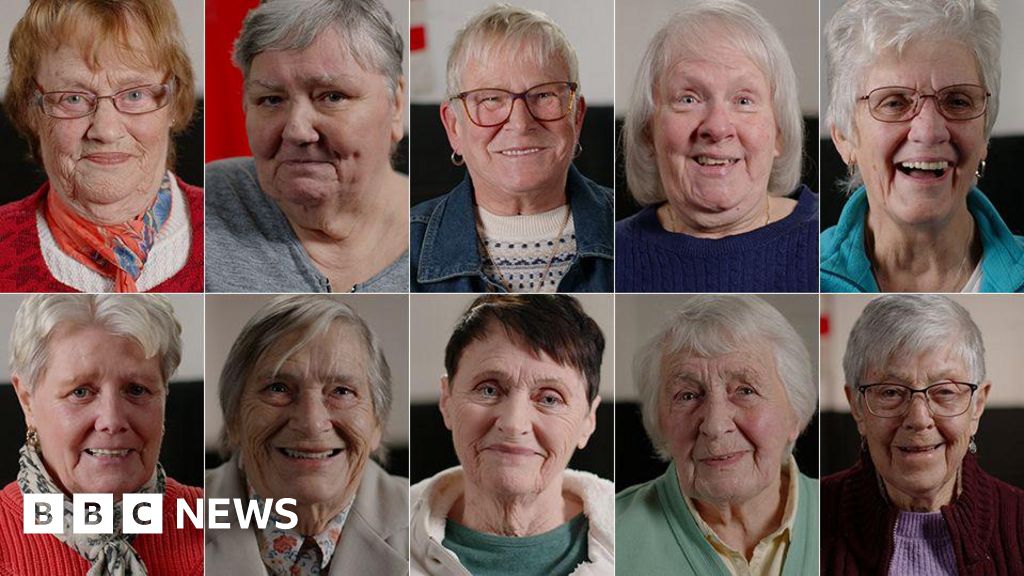
'Rules are there to be broken': The women's team who defied football ban3 hours agoMairead SmythandLauren Hirst ,North WestAt the height of a ban on women's football, a group of women would meet on a muddy field in a park in Manchester to play the beautiful game, because "rules are there to be broken".It was 1949 - 28 years since the FA had ruled that women were banned from playing matches on FA-affiliated football grounds.The team - known as The Corinthians - were determined to play the game they loved."We didn't bother about the rules," said 90-year-old Myra Lypnyckyj, who joined the team when she was 18 years old."You know what they say about rules, they're there to be broken, and we did."During World War One, women's football had enjoyed a surge in popularity with some matches drawing in crowds of more than 50,000 fans.At the time, any man fit enough to play football had been sent to fight on the front line.Back home, women not only took on their jobs but also their places on the pitch.Women had been encouraged to play the sport to improve their health and well-being while working in factories, but it was a different story once the war had ended.On 5 December 1921, the FA claimed football was "quite unsuitable for females and ought not to be encouraged".It called on clubs belonging to the association "to refuse the use of their grounds for such matches"."We had paper cuttings saying that we weren't built to play football, that we should think about knitting and sewing and feminine things like that," said Anne Grimes, who joined the team after seeing an advert in her local paper for players when she was 17 years old.The ban changed the course of the women's game forever.It meant the women's game was side-lined to being played in public parks for 50 years until the ban was overturned in 1971.The Corinthians was set up by Percy Ashley, who was a scout for Bolton Wanderers and a well-known referee in the local area.He wanted to create a team where his daughter Doris, who was deaf, could play in Manchester.Despite training on a field on Fog Lane Park in Didsbury with no facilities, the team went on to draw in huge crowds in massive stadiums including Sporting Lisbon.They defied the rules to win silverware from across the world, becoming one of the founding teams of the Women's FA.The team beat Germany to an unofficial European Cup in 1957, became the first women's team to tour South America in 1960 and triumphed over Juventus to bag a cup in Europe in 1970.They were named as "one of the most successful women's teams the UK ever had" by the National Football Museum."I just loved every minute of it," said Myra."I've got memories of playing in Portugal in front of 50,000 people and being asked for my autograph and being mobbed every time you went out."The Corinthians' resilience was instrumental in beating the ban, as their popularity and success led to other women's teams being formed around the world.Their story is the focus of a new documentary titled The Corinthians: We Were The Champions.It features interviews with its 10 surviving players, who are now aged 70 to 90.Myra and Anne along with Pauline Hulme, Marlene Cook, Freda Ashton, Monica Curran, Margaret 'Whit' Whitworth, Jean Wilson, Jan Lyons and Margaret 'Tiny' Shepherd tell their story in their own words."The film really makes me see how what we did was a cornerstone for developing women's football," said Monica."It's a story that needs to be told because people just don't know that women played football even when it was banned," she said.Listen to the best of BBC Radio Manchester on Sounds and follow BBC Manchester on Facebook, X, and Instagram. You can also send story ideas via Whatsapp to 0808 100 2230.



Most Popular

Somerset CCC Chair
10 hours ago


University of Tennessee Athletics
19 hours ago