Uli Hoeneß could have prevented the worst: how a legendary row at FC Bayern spiralled out of control - and continues to reverberate to this day
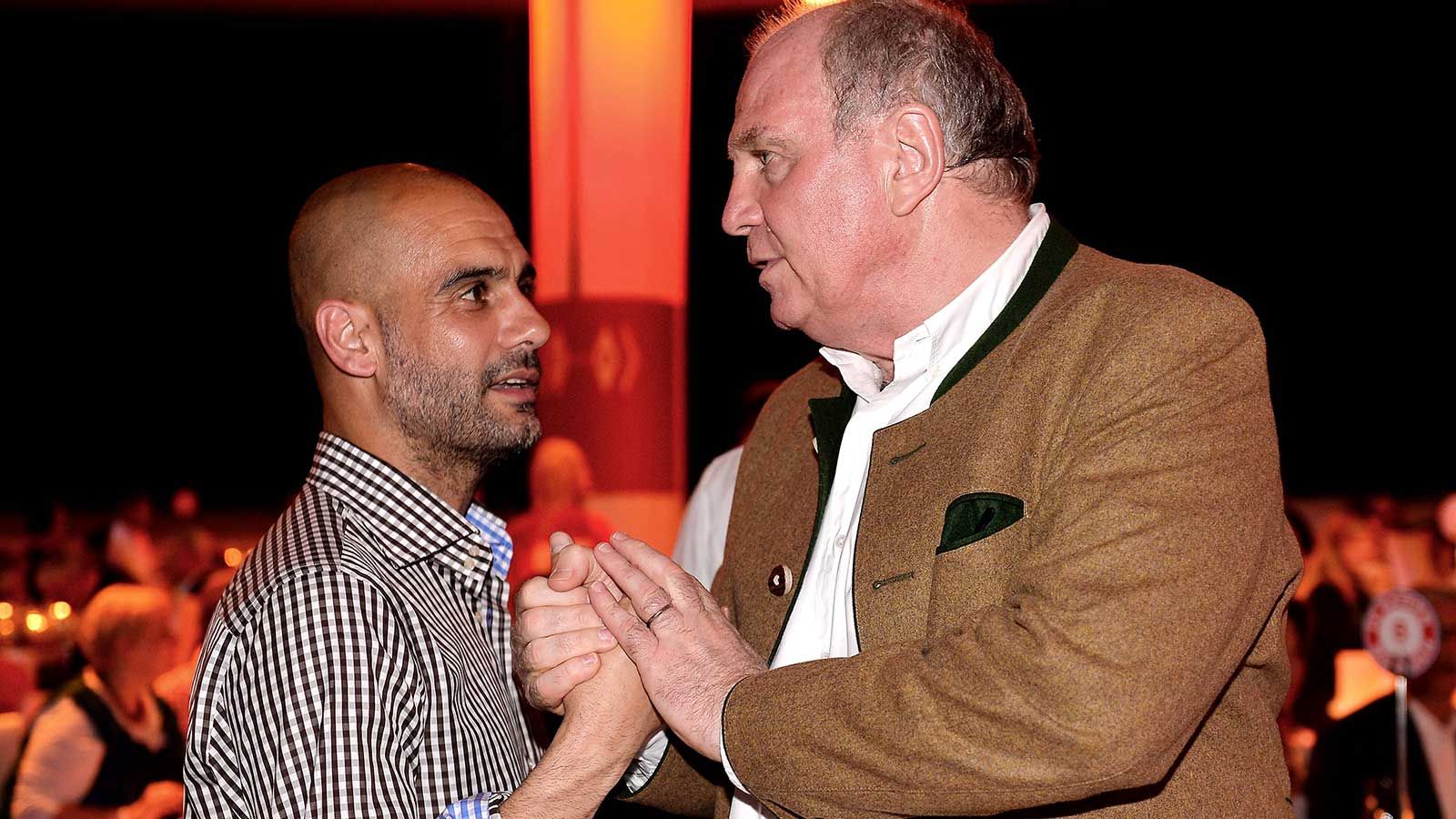
"I was blamed for the defeat in front of the whole team in the changing room," the 83-year-old recounts once again in *Der Spiegel*: "They said we had too many injured players in the squad and that I was keeping players out of action for too long. Utterly absurd. I wasn’t going to accept that."What happened next has been well documented for years. "For the first time in all those years, I raised my voice," Müller-Wohlfahrt recalled in his autobiography, published in 2019, referring to the falling-out with Guardiola in the spring of eleven years ago. The day after the defeat in Porto, the rift became definitive."Guardiola and I sat down at the large table where the players have breakfast in the morning; the crockery was still on it. It was supposed to be a discussion – and it turned into a row," recounted the legendary FC Bayern team doctor in his biography: "I completely lost my temper, shouted at Guardiola and then banged my fist on the table so hard that the plates and cups rattled."Shortly afterwards, after 38 years at FC Bayern, Müller-Wohlfahrt announced his departure with immediate effect without prior consultation with the club’s management. His medical colleagues Peter Ueblacker, Lutz Hänsel and his son Kilian Müller-Wohlfahrt also left the club.In the sports physician’s view today, the fact that things came to this in the end was due to the absence of club president Uli Hoeneß, who was serving a prison sentence for tax evasion at the time. “Had he been at the club, it would not have come to a rift with Guardiola; of that I am certain,” Müller-Wohlfahrt made clear once again.Guardiola did not comment publicly on the incident, saying at the time only that he had “great respect” for Müller-Wohlfahrt’s decision to resign.Almost immediately after his arrival in the summer of 2013, a battle began between the manager and the team doctor over who had the final say on injuries and treatment. “The first day was fine, the second too,” Müller-Wohlfahrt recalled years ago, “but on the third day, Guardiola came up to me and snapped at me out of the blue: ‘What on earth is going on here? I thought I was coming to the best medical department in the world, and we have two players with chronic injuries who should have been fit long ago. What on earth is this?’ He said it in an aggressive, accusatory tone.”Guardiola didn’t like the fact that Müller-Wohlfahrt wasn’t permanently on the club’s premises, but mainly at his practice in the city centre. Nor did he like the fact that FC Bayern wasn’t Müller-Wohlfahrt’s sole focus in life; that he, for example, also travelled the world with the German national team or treated Jamaican athletes such as Usain Bolt.At the same time, according to Müller-Wohlfahrt’s account, Guardiola is said to have reproached him for the fact that injuries in Germany took two-thirds longer to heal than he was used to from his former club, FC Barcelona. In short: there was a fundamental lack of trust. “I couldn’t understand how a manager who had spent as many years of his life as I had spent working at Bayern could pay no heed whatsoever to me and my experience.”The first major controversy arose over Guardiola’s favourite player, Thiago, who had suffered a partial tear of the medial collateral ligament in the spring of 2014. Initially, the talk was of a break of no more than two months, but that wasn’t quick enough for Thiago and Guardiola. Without Müller-Wohlfahrt’s permission, Thiago had the Spanish doctor Ramon Cugat inject cortisone and growth factors into his medial collateral ligament.However, this did not speed up his recovery; instead, Thiago injured himself again in the same place. Even Guardiola later admitted that Cugat’s treatment had “perhaps been a big mistake”. Thiago was ultimately sidelined for just under a year – and the next controversy arose in the second match after his return.April 2015, DFB Cup quarter-final against Bayer Leverkusen. When Benatia sustained a muscle injury, Guardiola turned towards the bench and clapped, presumably sarcastically, in the direction of the medical team. After the match, he described the injury situation as “critical, very critical”. The following week, FC Bayern travelled to Porto for a Champions League match; it was to be Müller-Wohlfahrt’s last away trip for the time being.At the request of Jupp Heynckes, Müller-Wohlfahrt returned to the German record champions in 2017 and left for good three years later without much recognition or a proper send-off from the club. That had been “disappointing on a personal level”, as he only admitted last year. He said he had fallen into a slump afterwards; the manner of his departure had “hit him hard”.“The world of the football business had become increasingly alien to me, with the astronomical salaries and transfer fees that are now being paid. Professional sport has become colder and more impersonal. There is less camaraderie,” he says today of his motivations at the time."In the past", FC Bayern had functioned "like a family". He simply no longer had that feeling back then. However, he spoke favourably of current developments, particularly in his assessment of Guardiola’s "protégé" Vincent Kompany. Under him, "fortunately, things are a bit more like a family again, I’ve heard. That makes me happy."


Most Popular
Vlaeminck set for return after long injury recovery
13 hours ago