NZ Cricket board under fire from own staff after CEO Scott Weenink’s departure as it considers critical decision over future T20 summer league

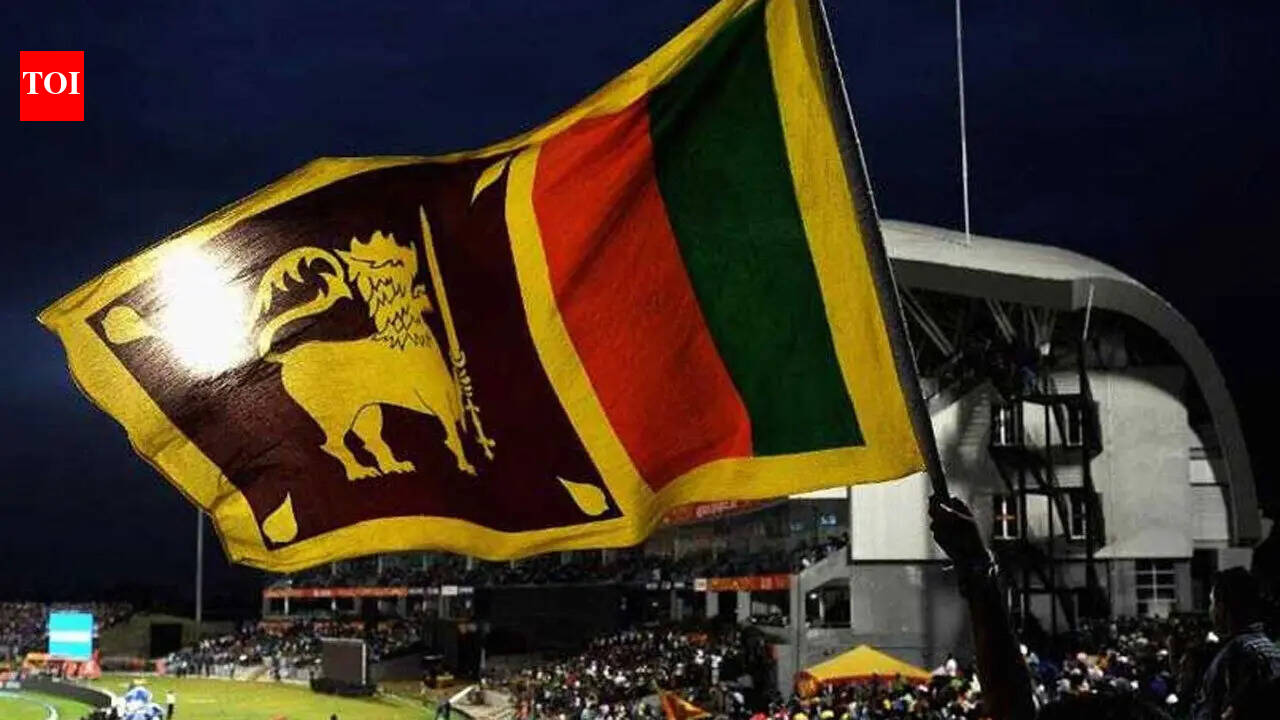
The board has now received a highly anticipated review from independent consultants Deloitte, which has analysed four options for the future of the game’s top summer league, including the private T20 league called NZ20; a New Zealand team entering the Australian Big Bash League; a revamped version of the existing Super Smash; or the status quo.The Herald understands the eight-member board could be broadly split on whether to approve the private-franchise NZ20 league, with the casting vote possibly destined to fall to chair Diana Puketapu-Lyndon.At stake is the future shape of the game in New Zealand and questions over the impact that the private league, if approved, might have on the Black Caps’ international schedule.One immediate question is what would happen to Sri Lanka’s scheduled tour of New Zealand in January/February - two tests, three one-day matches and three T20 games - if NZ20 were to be signed off.The NZ20 league needs a clear, four-week window so that it has New Zealand’s top players on its roster – and January is seen as the optimum month.Staff surveyThe Herald has obtained the results of an internal NZC staff “feedback survey” in January, which was focused on “Scott’s resignation”.Weenink was effectively chased from the role after a falling out with NZC’s six major associations (Northern Districts, Auckland, Central Districts, Wellington, Canterbury and Otago) and the New Zealand Cricket Players Association, specifically over their push and support for the breakout, private franchise T20 competition.The saga has caused tumult within NZC as well as at the sport’s domestic level and even internationally, and it ultimately cost Weenink his job.NZC has about 100 staff, three-quarters of whom – 76 people – completed the survey.According to the survey results, 82% of respondents viewed Weenink’s resignation negatively, 16% as neither positive nor negative, and 3% as positive (percentages were rounded up).A summary accompanying those results said: “A significant portion of staff believe Scott was not supported by the board and was effectively forced out due to external pressure from parts of the network (major associations, cricket players association, NZ20 stakeholders). Many comments explicitly state he ‘did not want to resign’ and was ‘left with no alternative’.”There was a strong sense that the process was “unfair, poorly managed, misaligned, or lacked transparency, leading to disappointment, anger and erosion of trust”.To a question, “I feel confident about the organisation’s direction moving forward”, 55% were unfavourable, 31% neutral, and 14% favourable.Negative sentiment included a “deep loss of trust in the board, including perceptions of weak governance, poor decision-making, and heavy susceptibility to external influence”.There was a belief that the board was “prioritising” the major associations’ and cricket player association’s agendas “over NZC’s strategic interests and may continue to do so”.There were dozens of individual comments in the survey, many of them disparaging of the board.Some staff were said to be “in tears”, “visibly upset”, and “deeply unsettled”.“There have been no actions from the board to give me confidence in the organisation’s direction in the short to medium term. I am fully supportive of the SLT [senior leadership team] but am very disappointed in a weak board,” said one staff member.Another said: “Why would I feel any confidence – my job could be next on the list to be hung out to dry!!”Some respondents were concerned about NZC’s interactions with the NZ Cricket Players Association (NZCPA). One staff member called these “completely inappropriate and needs addressing urgently”.Citing names, another staff member believed NZC could not move forward with some board members.Another staff member shared their own view that the chair and deputy chair had lost respect and trust at the highest levels of NZC. The same staff member said they could not work with or support those directors.One said that “putting a fullstop behind Scott isn’t the end of this”.In another comment, a staff member said the board’s “involvement in the move to push a high-performing and successful CEO from his post under the guise of ‘resignation’ is a stain on the integrity and reputation of everyone who works here”.There were also a couple of comments in support of what had happened, presumably from the two people (3%) who viewed the CEO change positively.One person said they felt for Weenink, “but also understand that this is what is best for NZC”.Another said: “I’m confident in the organisation and believe it’s a very exciting time for cricket within New Zealand and around the world. The only concern is the relationship between NZC, the board and the NZCPA.”Senior leaders’ letter of supportThe Herald has also obtained a letter that NZC senior leaders sent to the then NZC president, Lesley Murdoch, and the board in November, outlining their own support for Weenink.The letter expressed “concern regarding recent accusations directed at and actions taken against” Weenink.“Specifically, we understand that aspects of his management style and approach have been called into question by some.”The November 10 letter from nine senior leaders, including all of Weenink’s direct reports, described their then-boss as a “logical, reasoned and principled” leader.“The NZC chief executive role is uniquely challenging, balancing the often-competing interests of multiple stakeholders, including NZC’s member associations. Difficult decisions are a constant reality; it is inevitable that not all stakeholders will agree with every outcome.“We are aware that suggestions have been made that Scott’s management style or personal approach may have contributed to relationship challenges. This is inconsistent with our collective experience of working closely with him.”The executives and senior leaders said Weenink engaged constructively, listened to differing views and adjusted his position when evidence supported it.“He treats his colleagues with dignity and respect, while maintaining high expectations of performance. We have consistently found him to be fair, even-tempered and committed to fostering a healthy and accountable workplace culture.”They said Weenink had “strengthened NZC’s cohesion, built respect with the ICC, and developed constructive relationships with international partners, including the BCCI”.They said they had full confidence in him.The letter was signed – in alphabetical order – by public affairs manager Richard Boock, chief people officer Agge Burt, chief cricket operations officer Catherine Campbell, chief marketing and commercial officer Glenn Critchley, chief high performance officer Daryl Gibson, chief strategy and financial officer Ben Kay, chief venues and events officer Graham Parks (who is now the organisation’s interim chief executive), head of corporate support Nicki Russell, and chief community cricket officer Kent Stead.NZ Cricket respondsAn NZC source said the board had had meetings with staff to discuss the survey results, and they were confident that relations between the parties would be repaired after what had been an emotional period.Puketapu-Lyndon declined a request to be interviewed by the Herald, and deputy chair Kevin Malloy did not wish to comment.The Herald put to Puketapu-Lyndon over email some of the specific, strongest criticisms of her and the board in the staff survey and letter from senior leaders.“We’re not comfortable discussing documents that were never intended for public discourse, and will therefore decline to elaborate on your questions regarding staff surveys or private correspondence,” she said in a statement.“Regarding the consideration of the domestic T20 league, progress continues at pace, with Deloitte’s independent review on all options to be presented to the NZC board shortly, after which a period of consultation with key stakeholders will begin.“This is in line with the timelines agreed by all parties at the start of the process.”The Herald understands the NZC board has received the Deloitte review.Board members met briefly yesterday on a Zoom call; they are expected to fully consider the Deloitte report in the coming weeks.Do you know more? Please email Shayne Currie in confidence - shayne.currie@nzme.co.nzScott Weenink’s departureIn a statement announcing his resignation in December, Weenink said: “After careful consideration, it has become clear that I hold a different view from several member associations, and the CPA, on the future priorities for NZC, including the long-term direction of the game and the best role for T20 cricket in New Zealand.“Given these differences, I believe it is in the best interests of the organisation that new leadership takes NZC forward from here.”Approached this week, Weenink said he was unable to comment.There were telling signs last year of a growing rift between Weenink and his board.Before Weenink resigned, NZC felt obliged to write a letter to the ICC in November, reassuring the international body that it was not being subject to a hostile takeover by players.NZC’s letter said it was not being held ransom by a “rebel” T20 league’s plans, that “players have not taken over cricket in New Zealand”; and that “the World Cricketers Association is ‘not coming for us’”.The letter was signed by chair Puketapu-Lyndon, board member Roger Twose and the major associations but – tellingly – not Weenink.Cricket players association’s positionThe NZ Cricket Players Association (NZCPA) also declined to comment to the Herald on the NZC staff survey.The Herald has obtained an NZCPA position paper to NZC, dated February 26, in which it presents its case for the NZ20 league.The paper says the decision between entering Australia’s Big Bash League (BBL), or establishing the NZ20 league in New Zealand, is “fundamentally a choice between minority participation in another country’s cricket asset, or creation of our own nationally anchored asset platform”.The association said that the BBL option was “vastly inferior” and that it would not support it.It listed various advantages of the establishment of a T20 league in New Zealand, including “maintaining NZC’s institutional independence and global relevance”; increased fan engagement; more third-party investment in cricket facilities; more development pathways and “global cricket connectivity” for players, coaches, support staff and administrators; and enhanced player retention through more money.It would also “encourage our best players (and other international stars) to play in NZ in January (with associated fan engagement, broadcast partner and commercial partner benefits)”.There are arguments that the existing Super Smash competition is a pivotal development league for the Black Caps and NZC.There have also been concerns that the Black Caps’ programme might suffer with the introduction of a private league.One source cited leagues in Sri Lanka, the West Indies, Bangladesh, and South Africa as growing at the expense of their national teams. “When the West Indies started the recent ICC T20 World Cup... they didn’t even have a jersey sponsor (ie, a main commercial partner),” said the source.But the NZCPA is confident about the returns for the sport in New Zealand and states in its position paper: “What has been clear for many years now is that most of the new capital coming into the sport has flowed through privatised T20 leagues and this is where the majority of cricket’s growth in revenue, innovation and most importantly fan engagement is occurring.“We also know that New Zealand is the only major cricket-playing country without some form of privatised T20 franchise league, and these are also growing in non-traditional cricket-playing countries.“In recent years, there has been unprecedented demand from investors for cricket assets in franchise leagues, and we currently reside at a moment in time where demand for investment in New Zealand-based franchise cricket teams will be significant, given New Zealand’s place in the game and the attractiveness of the country to potential investors.”The paper says the NZCPA “will not support the proposal for one New Zealand team entering the Big Bash competitions”.“However, we remain committed to constructive engagement with NZC and the six MAs to develop a NZ20 model that secures the long-term success and relevance of cricket in New Zealand for the players, the fans and the community game.”If a T20 league is approved, what happens to the Sri Lankan tour?Sri Lanka is due to tour New Zealand next January, to play two tests, three one-day matches and three T20 games.But if the private NZ20 league is eventually signed off by NZC, one of the biggest questions is the future international schedule.It is understood the NZ20 league needs a clear four-week window in January, the same time as Sri Lanka is scheduled to tour.This question plays to concerns that the tail will start wagging the dog – a claim that has been dismissed by NZ20 supporters.Several NZC partners could be disrupted by a rescheduled or even postponed tour – primarily Sky TV, which has just won back the broadcast rights to Black Caps and White Ferns games in New Zealand from next summer.Because no one has snapped up domestic competition rights (such as the existing Super Smash), the rights to the NZ20 league, if approved, would be open to the likes of Sky TV and TVNZ for bidding.Sky TV effectively ran for the hills this week when asked specific questions about the Sri Lankan tour. It said it was looking forward to the Indian tour of New Zealand in October and November.“On your other questions – we’ll communicate details of specific competitions and matches closer to the time, in collaboration with our partner NZC,” said Sky spokeswoman Chris Major.A new chief executiveAs NZC picks up the pieces, a hunt for a new chief executive is underway.That person faces a massive challenge – now seemingly having to repair relationships internally as much as guide the organisation through a challenging and potentially fractious new period.In the interim, Parks is filling the role.“In terms of appointing a new CEO, our process is progressing well, and we expect to start interviewing prospective candidates over the next few weeks,” said Puketapu-Lyndon in her statement.



Most Popular

Helmot steps down as Melbourne Renegades WBBL coach
18 hours ago



Santner suffers grade three ACL shoulder injury
13 hours ago