Were you listening, Jose Mourinho? Vincent Kompany’s 12-minute monologue on Vinicius Junior and racism

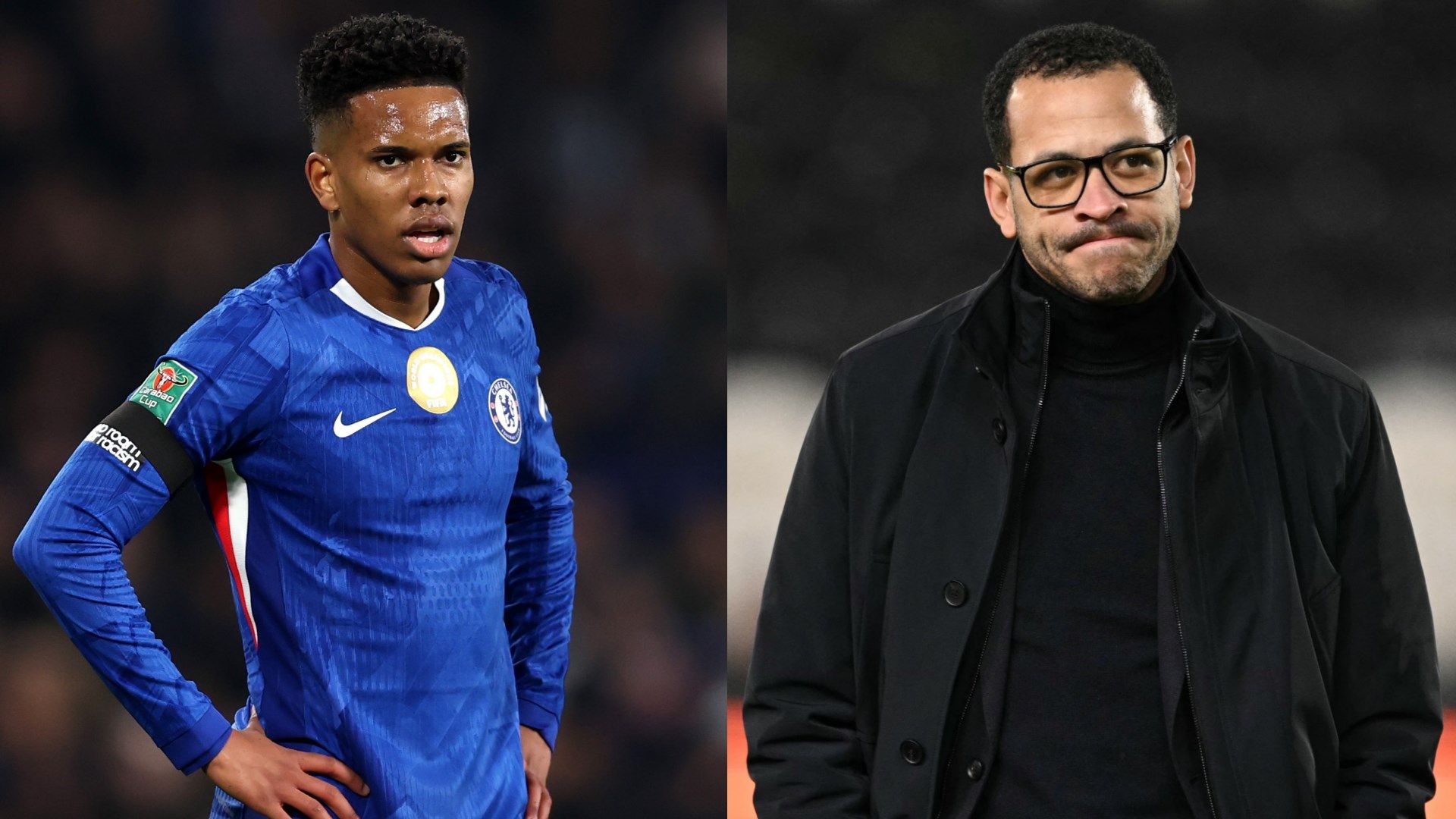
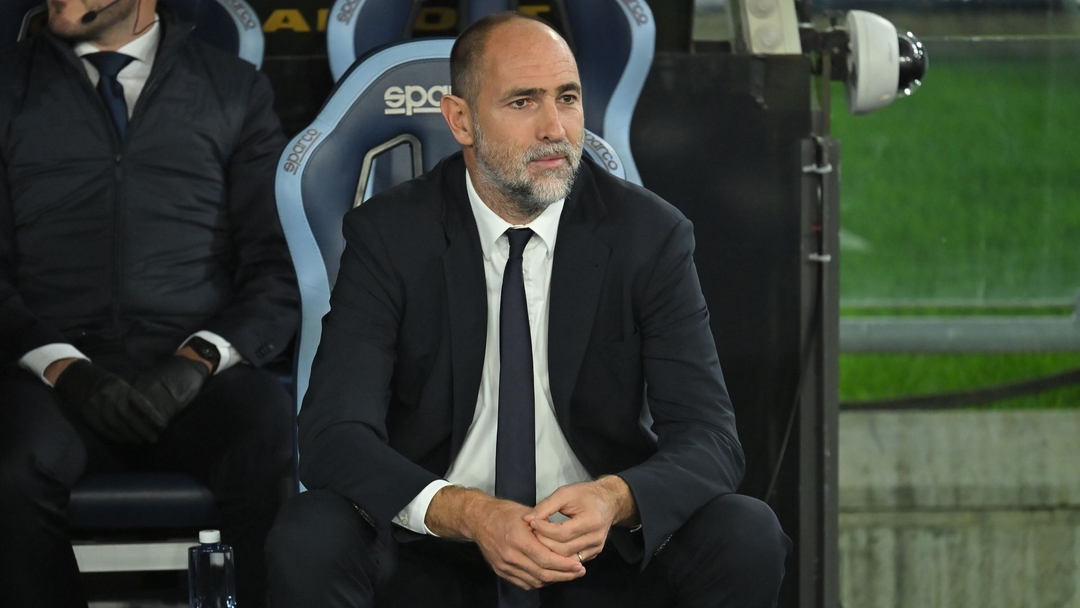
From start to finish, it lasted 11 minutes, 57 seconds. Calm, lucid, striking to the absolute heart of the matter. Were you watching, Jose Mourinho? Because you might have learned something.Vincent Kompany, the head coach of Bayern Munich, had just been asked about the sequence of events that led to Vinicius Junior alleging racial abuse during Real Madrid’s Champions League play-off against Benfica on Tuesday and the sideshow of Jose Mourinho, at his inflammatory worst, branding him a troublemaker and serial complainer.What followed from Kompany, unbroken and uninterrupted, was a reminder that there are at least some people in high positions who are prepared to stand up for right over wrong and, in this case, not be cowed into silence just because of Mourinho’s reputation as one of the doyens of his profession.Some managers might not have wanted to embroil themselves in the politics of publicly challenging Mourinho. Some might have considered it not worth the hassle to fight someone else’s battle. Kompany, thankfully, is among those who understand this should, in fact, be everyone’s battle.Along the way, he exposed Mourinho’s hypocrisies without ever feeling the need to call him a hypocrite. No, that was the beauty of this long, impassioned, and articulate monologue. Kompany never had to resort to name-calling, or sarcasm, or insults, and talked glowingly at times about how so many of Mourinho’s former players still revered him.But it was still quite something to see a man with Kompany’s eloquence dismantle Mourinho’s allegations while making the wider point that in football, or society as a whole, it should never be the whistleblower, the victim, the abused, who is held responsible when racism is reported.“It’s a difficult topic… in this day, these topics are even more difficult to discuss, it seems, than in the past,” Kompany began. “It’s a difficult thing for me to speak about because, to be honest, in many ways I don’t actually fit in with what I see today in the world. Personally, I don’t see my place in a lot of the things happening in today’s world — I really don’t.”Difficult or not, the former Manchester City captain tackled it anyway. He had watched the game, he explained, and saw the incident when Benfica’s Argentine winger Gianluca Prestianni pulled his shirt over his mouth to cover up whatever he was saying after Vinicius Jr’s 50th-minute goal. Prestianni denies the allegation, made public by Real Madrid’s Kylian Mbappe, that he called the Brazilian a monkey five times.But that, Kompany said, was just one part of the reason why he had decided to speak out.He also wanted to talk about Mourinho and, specifically, the two points raised by the Benfica coach directly after the match. One, that racism could not happen in the stadium where Eusebio, the Black striker who starred for Portugal in the 60s and 70s, was once a hero. And, secondly, that Vinicius Jr had incited the Benfica fans and players because of his goal celebration, dancing by the corner flag.“His reaction cannot be faked,” said Kompany, of the player in question. “You can see it — it’s an emotional reaction. I don’t see any benefit for him to go to the referee and put all this misery on his shoulders. There’s absolutely no reason for Vinicius Jr to do this. He does it because, in his mind, it was the right thing to do.“Next thing we have Kylian Mbappe, who normally stays quite diplomatic. Mbappe is really clear about what he heard and saw. He was even more clear when he spoke about it after the game.“Then, of course, there’s a player who is hiding what he’s saying under his shirt. You have a player complaining, you have a player who says he didn’t do it, and unless the player himself (Prestianni) comes forward (to admit it), it’s a difficult case.“In the background, you can see people (in the crowd) doing monkey signs. It’s happening, you can see it in the video. So, on one side, you have the altercation between the players, and on the other side, what’s happening in the stadium. Then, even worse, is what happens after the game.“After the game, you have the leader of an organisation, Jose Mourinho, who attacks the character of Vinicius Jr by bringing up his type of celebration, to discredit what Vinicius is doing (his complaint to the referee). For me, in terms of leadership, it’s a huge mistake and it’s something we should not accept.“On top of this, he mentions the name of Eusebio to say that Benfica cannot be racist because the best player in the history of Benfica is Eusebio.“Do you know what Black players had to go through in the 1960s? Was he (Mourinho) there to travel with Eusebio to every away game?“My dad is another Black person from the 1960s and at the time the only option they had was to be quiet, to say nothing, to be above it, to be 10 times better and get a little bit of credit where people say, ‘actually, he’s good.’ That was Eusebio’s life, probably, and today (it’s wrong) to use his name to make a point about Vinicius Jr, who’s finally in a situation where he can say something about it.“There are a lot of players in different leagues in Europe who don’t have a voice. There are players in Hungary and Bulgaria and Serbia – if something happens to them and they are Black, they have zero chance to have any kind of support. Vinicius Jr is at least in a situation where it is possible for him to take this moment and protest.”Kompany had begun this monologue by explaining that he would like to answer in English because, even though he is multilingual, it is the language in which the former Belgium international, the son of a Congolese politician who became Belgium’s first Black major in 2018, feels most confident expressing himself in detail.“My dream, if it’s true that the player from Benfica has said something as bad as what has been said, is that I would love the situation where there is still a room where someone can apologise. ‘I’m sorry, I made a mistake.’ This should have an impact on the sentence, as well.“The sentence should be A or B, but if you admit that you’ve made a mistake, there should be an opportunity to say that, ‘Hey, nobody’s perfect.’ But we are taking away all these options because we are creating left or right, black and white, and you have to be on one side or the other side.“Actually, the one thing you can’t do is punish someone unfairly. And the one thing you can’t do is dismiss a person and attack the character of a person who is complaining about something that he has experienced and that must be very painful for him.”It was here that Kompany recalled some of the moments in Mourinho’s career that opened the two-time Champions League-winning manager to accusations of double standards. What about, he asked, the touchline celebration “doing that knee-slide at Old Trafford” on the night in 2004 when Porto knocked Manchester United out of the Champions League?“Or the (2010) semi-final, Inter Milan against Barcelona, when he goes in front of the Barcelona fans and does his celebration. Or when he played against Seville with AS Roma (in the 2023 Europa League final) and was fighting with the referees, and the referees had to go under protection and leave the country under protection.“In that moment, if someone was racist to Mourinho, I would have hoped that all of us would say: ‘Stop, his celebration doesn’t matter — let’s listen to what he has to say and let’s defend some simple, core things.’”On Thursday, Mark Clattenburg, the former Premier League referee, issued an apology for his analysis, as part of Amazon Prime’s match coverage, when he complained, among other things, that Vinicius Jr had “not helped himself” against Benfica with his celebration and “made this very, very difficult for the referee”.From Mourinho, however, there has been no suggestion that he regrets his choice of words, lecturing Vinicius Jr on the pitch and then labelling him, publicly, as the creator of his own problems.“I told him that when you score a goal like that, you just celebrate and walk back,” Mourinho had complained. “When he was arguing about racism, I told him that the biggest person in the history of this club is Black. This club, the last thing that it is, is racist. If, in his mind, there was something racist – this is Benfica. There is something wrong because it happens in every stadium. Every stadium where Vinicius Jr plays, something happens. Always.”Yesterday, Mourinho gave a four-minute interview to Benfica’s in-house media team ahead of Saturday’s match against AVS. He did not directly address the incident with Vinicius Jr or speak about his comments afterwards. There was no apology for what he said on Tuesday night.“Until the 50th minute it was a great game of the highest intensity, from a physical point of view, a tactical point of view, and the concentration you need to play a game of that level,” he said. “But after that, we can’t fail to recognise that after the 51st minute, until now — and it’s not going to end with this conversation — it hasn’t been easy to manage our emotions about what has happened and what is continuing to happen.”Kompany’s response came as a Black man who had experienced racism in his own football career, as both a player and a manager, without anything being done about it. He brought up those incidents, too, to explain how upsetting it was. But he was talking, first and foremost, as someone who cares deeply about human beings and football as a whole.“It happened to Samuel Eto’o. It happened to Mario Balotelli, so many times,” he pointed out. “OK, so was it their celebration, as well?”His own experiences included a Champions League tie for Anderlecht in 2005 when he and Ivory Coast international Cheick Tiote — “an unbelievable person, a heart of gold” — were targeted by a section of Real Betis fans inside the Estadio Benito Villamarín, Seville. They were 19 years old.“We go to this game and you have the Betis fans on the fences singing about the Ku Klux Klan and doing monkey chants and imitating monkeys,” said Kompany. “We played the game, and I was happy to score a goal (Anderlecht won 1-0) because of this. So, was it my celebration back then? What did I do?”It was, he added, also “one of the most beautiful moments in my career, because the Betis fans around the stadium started to boo the ultras. So, you had a fight within the stadium between the fans who were not happy that the ultras were doing these things. And I found this beautiful because you know the world is not perfect, but at least you have people from the same club fighting because they don’t accept this.”The Athletic approached Real Betis for comment.“But then you fast-forward to when I was a coach (at Anderlecht) and I went to Club Brugge (in 2021),” Kompany continued. “I played for the national team, I was captain of the national team. And me and my staff get called ‘brown monkeys’ and so on. After I complained, I saw all the politics to kill the story — no consequences, nothing. And I have a voice. What do you think (happens) for the people without a voice?”At the time, the Brugge manager Philippe Clement apologised to him on behalf of the club, saying: “Club Brugge and I, as a person, will always condemn the behaviour of those individuals.”Ten minutes in to Kompany’s speech on Friday, the point he was trying to make was that he knew from personal experience what it was like to be in Vinicius Jr’s shoes, to report racism and feel like the complaint was not being treated as it should. And Mourinho, he said, had made it even more difficult for somebody in that position to be heard.“What you see, and what you feel, when you grow up with these issues, is that it translates into a lack of opportunity. You get pushed further away. You get branded, more and more.“Actually, what needs to be done to grow closer together takes a lot of time and a lot of effort. But what happens is the contrary: you get pigeonholed into one group, the others get pigeonholed into another group, and you grow further apart.“My thought on this — and I’ll finish on this, because you’ve opened up something in me here — is that, in the end, I’m not saying go left and kill, or go right and kill.“I’ve met 100 people who have worked with Jose Mourinho. I’ve never heard any person say anything bad about Jose. All the players who played with him, they love him.“I understand the person he is, and I understand he’s fighting for his team. He’s fighting for his club, and he’s made that decision. You cannot be a bad person and have all the ex-players talk so positively about you. I know he’s a good person; I don’t need to judge him as a person.“But I know what I’ve heard (from him).“I understand what he’s done, but he’s made a mistake and it’s something that hopefully in the future won’t happen again, and we can move forward and grow, and hopefully look at the things we can do together, rather than the things that constantly separate us.“Thank you.”As Kompany got up from his seat, you wondered whether Mourinho would appreciate a younger member of his profession lecturing him in this way. Knowing him, absolutely not. And Mourinho, being Mourinho, there will probably be some payback for Kompany further down the line. Some carefully prepared barbs, some pointed references to Kompany’s managerial CV not being worth a dime compared to his own achievements. We know how it works with Jose.But Kompany said it anyway, and you would have to hope that the man once known as the Special One has 12 minutes free to watch it back. You would hope he knows, in his heart of hearts, that playing the blame game was hard-faced and hypocritical and that the references to Eusebio were crass and illogical.You would also hope he has seen the wider reaction — the criticisms of Thierry Henry and Clarence Seedorf, to name just two — and realises that it is not a personal attack.It goes deeper than that. He needs to acknowledge that publicly and, if he cannot accept he was wrong, then maybe we will just have to add what Kompany says to the growing pile of evidence that there are various words to describe Jose Mourinho these days, and ‘special’ is not one of them.
.jpg)


Most Popular