
‘I blew it’: Ilia Malinin and what happens when you fall short on the biggest sporting stage

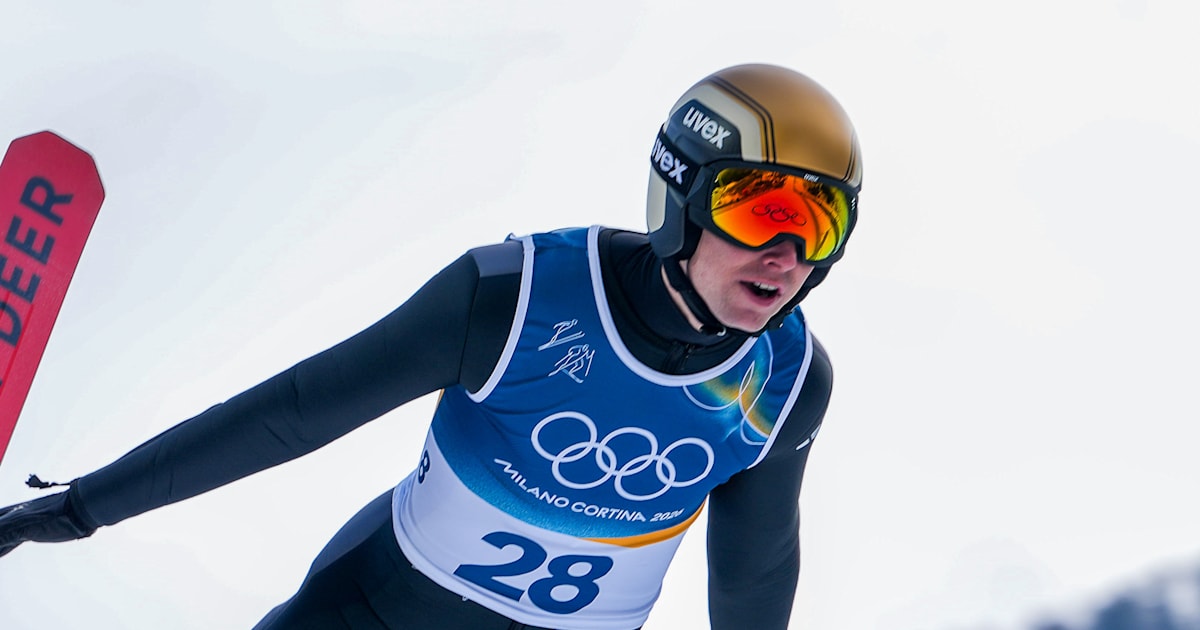
When Ilia Malinin stepped onto the ice inside the Milano Ice Skating Arena on Friday, the 21-year-old American was the overwhelming favorite to win men’s figure skating gold.Six days earlier, the four-time world champion had performed under intense pressure to help secure gold for the United States in the team event. But this time, with individual honours on the line, the weight of expectation proved too much.As Malinin took his starting pose for his Olympic free skate on Friday — the last of 24 skaters to perform — his mind raced. All of the ups and downs of his life were suddenly replaying in his head. It was loud. Overwhelming. Even so, once the music started, instinct kicked in and he nailed the first big jump of his routine: a quad flip.Then, the cracks started to show. A planned quad axel was reduced to a single and from there: disaster. Two rare falls epitomised the suddenly crumbling confidence of the man they call ‘Quad God’; a skater who had gone more than two years without losing a competition. When the music stopped, he buried his face in his hands. For another four years, the dream was over, with Kazakhstan’s Mikhail Shaidorov claiming the title instead.“I blew it,” Malinin said. “That’s honestly the first thing that came to my mind.”For figure skaters, there is no competition bigger than the Olympic Games. No stage grander. In Milan, Malinin was experiencing what that feels like for the first time. Now he knows. “The pressure of the Olympics really gets you,” he said, trying to make sense of it all. “The pressure is unreal. It’s really not easy.”Perceived failure in front of the world’s eyes is not easy, either. Malinin joins a lengthy list of athletes who have stepped onto a global stage and left it with the same look of shock and sadness that remained etched across his face for hours after he left the ice.What comes next? For some, it’s retribution, whether swift or painfully delayed. For others, it’s a lifetime of pain and regret.Olympic snowboarding champion Lindsey Jacobellis is one of those for whom retribution took its sweet time.At the 2006 Games in Turin, Italy, she was one of the hottest stars in snowboard cross, a high-octane race between four riders down a course lined with banked turns, jumps, berms and drops. Then 20 years old, Jacobellis was the face of several Olympic advertising campaigns in the lead-up to those Games and the favorite to win the first Olympic women’s snowboard cross race.For much of the women’s final, it looked as though that would happen. With 100 yards of the race to go, Jacobellis had a lead of 50 yards on her closest competitor.“It’s a lap of honour for Jacobellis!” cried the commentators.Except, on the second-to-last jump, she grabbed the back of her board while in midair and angled it to the right — a snowboarding move called a Method. It was a skill she’d executed a million times before but this time, it went horribly wrong. As Jacobellis landed, she lost her edge and was sent tumbling into the snow, leaving Tanja Frieden of Switzerland to speed past and turn what had looked like a guaranteed silver medal into gold.Jacobellis got up and crossed the finish line in second place. She had won silver, but her story inevitably became about losing the gold.In the immediate aftermath, she seemed to have processed it impressively well. But why add in an unnecessary aerial manoeuvre when you’re so close to victory? “I was caught up in the moment,” Jacobellis explained on a conference call a few hours later. “I didn’t even think twice. I was having fun, and that’s what snowboarding is. I was ahead. I wanted to share with the crowd my enthusiasm. I messed up. It happens.”She didn’t know it at the time, but what happened in Turin would dominate Jacobellis’ life for many, many years. She was labelled a “show-off”, criticized for what some deemed to be celebrating early or showboating. Others were angered that she was not more overtly disappointed or even ashamed by her actions. Hate mail was sent to her home.“I was reminded of my mistake on a daily basis – on some days, on an hourly basis,” Jacobellis, now 40, wrote in her book, ‘Unforgiving: Lessons from The Fall’, published in 2023. She describes how going into those Olympics with the tags of “gold medal favorite” and “America’s sweetheart” led to a feeling of having let everyone down; a feeling compounded by being dropped by a few of her sponsors. One even withheld the silver-medal prize money that had been part of her deal, she said.“Forget how much I’d let myself down,” she wrote. “What killed me in the aftermath of that race was how people seemed to want to remind me how much I’d let them down.”Four years later, at the 2010 Olympics in Vancouver, Canada, Jacobellis swerved off course in a semifinal heat and missed the final. At the next Games in 2014 in Sochi, Russia, she was leading her semifinal race when she crashed and never made it to the finish line. The narrative was now set: Jacobellis and Olympic gold were destined never to meet.“She made a mistake in a given venue and it took her a long time to be able to perform in that venue again,” says Denise Shull, a performance coach whose main focus is working with people who make market decisions — particularly Wall Street investment professionals. She has also worked with Olympic and professional athletes, and in 2016 was called upon by Peter Foley, the former United States snowboard cross head coach, to help Jacobellis overcome the mental block she had with the Olympics.Shull sees value in the so-called “negative emotions” and says she sits down with athletes to work out how they can use that energy to aid future performance.The pair spoke weekly and, in 2018, Shull spent three or four days with Jacobellis before she reached her first Olympic final since Turin, finishing fourth in Pyeongchang, South Korea. Shull believes that Jacobellis could have won that year.Four years later though, in 2022, she finally got her gold — after she finally decided she was going to do things her way, says Shull. In the lead-up to the Games in Beijing, China, Jacobellis traveled to a race in Austria but chose not to compete given the imminent arrival of a storm system and poor visibility. Once in Beijing, Shull says Jacobellis told the U.S. team that she would not be doing media the week before the race.“She stood up for herself and tried to put herself in the best position to perform, which she was able to do as a result of our work together,” says Shull, “and my helping her to be able to see that she wasn’t some screw-up who let her country down, which is what people wanted her to believe.”Former Liverpool captain Steven Gerrard will likely never escape the memory of ‘The Slip’ that occurred during a game against Chelsea in April 2014. With three matches of the Premier League season left, Liverpool were leading the title race and on a run of 16 games unbeaten when Jose Mourinho’s Chelsea side arrived at Anfield.But towards the end of the first half, Gerrard miscontrolled a pass and then slipped inside his own half, allowing Demba Ba to run unchallenged and calmly slot the ball past goalkeeper Simon Mignolet to give Chelsea the lead.Mourinho’s side went on to beat Liverpool 2-0, Manchester City won the league (by two points) and Gerrard’s slip became enshrined in the annals of Premier League history as the moment that effectively cost Liverpool a first league title for 24 years.“It was cruel for me personally,” Gerrard said in an interview with former England team-mate Rio Ferdinand for UK broadcaster BT Sport in 2015. “There’s not a day that goes by that I don’t think about what if that didn’t happen. Would things have been different?“I’m not scared of any criticism or any cruelty. I understand the moment and impact it had, and it kills me. Don’t get me wrong, inside it kills me and it will do for a long time. I’ve got good memories that will live with me forever but that is one moment that will always hurt me until the day I go.”Cricketer Simon Kerrigan, once of Lancashire, Northamptonshire and, briefly, England’s national team, retired in 2023 at the age of 34, having never truly recovered from what turned out to be his only appearance at Test match level — the pinnacle of his sport.It came at The Oval in London in 2013, in the final match of an Ashes series against arch-rivals Australia, when Kerrigan was selected as the team’s second spin bowler, alongside Graeme Swann. His first two overs put him face-to-face with an uncompromising Shane Watson, who smacked him around the park for 28 runs. The 24-year-old was then kept out of view until the end of the afternoon session but his next two overs offered nothing better. By the day’s end, he’d bowled eight overs that cost 53 runs.Kerrigan was not given another chance to bowl in the match by captain Alastair Cook and did not play for England again.“Since that day, bowling has never been the same,” he said in an interview with former England captain Michael Atherton after his retirement in 2023. “A lot of my thoughts have been around how people perceive me — even when I’ve been playing club cricket.”He came close to playing for England again, against India in the summer of 2014, when he was called up under new head coach Peter Moores and earned himself a place in the squad for the second Test at Lord’s.The squad was announced during the lunch interval of a county game he was playing in. Almost immediately, the increased media presence sent Kerrigan’s anxieties into overdrive. The drive to Lord’s in central London only gave them more time to thrive.After meetings with the selectors, coaches and sports psychologists, he didn’t feel able to go through with it.“I felt that if, at that point, I had another similar experience, my reputation would be completely ruined and I wouldn’t be able to come back from it,” he told Atherton. “That was my last real involvement with England.”Asked whether he ever wishes his one England appearance had never happened, Kerrigan says: “It’s double-edged. People always say, ‘They can’t take the cap away from you, and you should be proud of it.’ A little part of me feels I wish they could.”Others have been able to come back from very public disasters in far quicker fashion.Take golfer Bernhard Langer. In 1991, the German was part of Team Europe in a Ryder Cup that became known as The War on the Shore, thanks to the hostilities of the week.The fiercely competitive tie at the Kiawah Island course in South Carolina saw the teams enter the final day tied 8-8. Europe took the early advantage but the momentum soon swung and the 29th Ryder Cup would come down to the last singles match between Langer and Hale Irwin. Europe were trailing 14-13 and Langer was two down against Irwin with four holes to play. If he could turn things around and win their match, the teams would finish level and holders Europe would retain the trophy.For a time, it looked as though it might just happen. Langer won the 15th, halved the 16th and then levelled the match by winning the 17th. Going down the 18th, the scores were even. The Ryder Cup would be decided on the final hole of the final match of the weekend.Langer soon found himself standing over a six-foot putt for a par that would defeat Irwin and secure the Ryder Cup.As he watched the ball brush the right lip of the hole and roll away, Langer’s knees buckled and his mouth dropped open in anguish. The American crowd roared in delight; their team had won the Ryder Cup for the first time since 1983.At the time, many people wondered whether Langer would ever recover from such a catastrophic disappointment. They did not have to wonder for long. The following Sunday, he won the German Masters. On the tournament’s last hole, he faced a 15-foot putt to get into a playoff and his mind immediately went back to that fateful day in the States a week earlier.In an interview some 25 years later, Langer recalled, “My first thought was, ‘You just missed a six-footer a week ago.’ So I walked around for a moment and said to myself, ‘Don’t go there. Don’t think about that. Let’s focus on this.’ I was able to make the putt and I won the playoff.”For Langer, that putt is now just something that “comes back to me when people ask me about it in interviews!”Tennis player Amanda Anisimova was thrashed 6-0, 6-0 by Iga Świątek in the 2025 Wimbledon final. Yet 53 days later, she beat the same opponent in the quarterfinals of the U.S. Open.A clue to her comeback can be found in her words after becoming just the second player in Grand Slam history to lose a final 6-0, 6-0: “When I got back to the locker room, I kind of had that switch in my mind of, ‘You know what, this is probably going to make you stronger in the end,'” Anisimova told media after the Wimbledon final. “And to not really put myself down after today, and just try and focus on how I can come out stronger.“I think it’s like a fork in the road. It’s whatever direction you want to go in. I’m going to choose the path of working towards my goals and to try and keep improving.”After her victory over Świątek in New York, Anisimova spoke about her ability to put that defeat into perspective, recalling her mindset in 2023 when she took an indefinite break from tennis, citing burnout and concerns for her mental health. “At the end of the day, to me it was just tennis,” she said of her Wimbledon final defeat.“Looking back at that, it’s not the most important thing to me. It’s what happened that day, and really it’s just a tennis match at the end of the day, so I kind of just look at it like that.”According to performance coach and sports psychologist Sarah Murray, who spent nine years overseeing performance psychology at a Premier League soccer club, Anisimova’s ability to separate what happens on the tennis court from the rest of her life is a crucial one when it comes to moving on from failure.“Perceived failure on the world stage is public and permanent and it can feel identity threatening for athletes,” says Murray. “The really important thing in order to come back from failure is the separation of that sense of personal failure from personal worth, and that’s often a very difficult thing.”Following the initial emotional response to a perceived failure, Murray says there will often come a reframing of it into a usable narrative. How can it help the athlete moving forward? What are the things they’ve learned from it? For a temporary period afterwards, success might be redefined for them.“The work will be done quietly, in the background, either with the athlete’s organisation or trusted mentors,” says Murray. “People who will help to manage that identity piece — that what you do is what you do, it’s not the entirety of who you are. When we can separate that, athletes come back and in very similar situations their body language and their emotional control will be totally different to the day that they perceivably failed.”Processing failure looks different for every athlete. Some will do it quickly, as Anisimova did. Others will take more time. Either way, the processing of it is important, says Murray, who talks about leaning “into emotion, to allow the shame, the disappointment, the grief, to happen”.“Recovery is often delayed when athletes rush on from it too quickly without spending time leaning into it a little bit,” she adds. “It tends to bite them on the backside.”



Most Popular


England beat Italy to enter Super 8
9 hours ago