Saudi sports sector could surpass $22bn by 2030, expert says
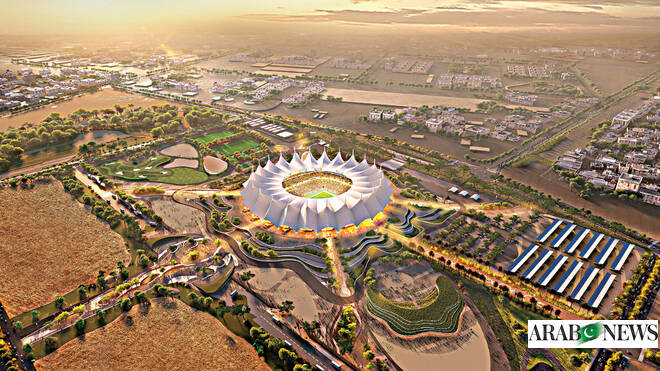
RIYADH: Saudi Arabia’s sports sector could surpass its projected $22.4 billion end-of-decade value as institutional expansion, infrastructure investment and private sector participation accelerate under Vision 2030, according to sports law expert Francesca Petriccione.The Kingdom’s sports industry is currently estimated at roughly SR32 billion ($8.52 billion), with projections suggesting it could contribute around $16.5 billion annually to the gross domestic product by the end of the decade, driven by large-scale infrastructure projects, professional league development and growing participation rates.According to a report released in December 2024 by SURJ Sports Investments, a company under the Public Investment Fund, the sector could be valued at above $22billion by 2030.Petriccione is bullish over that figure, and said: “For me, we can go also beyond that number.”She added that Saudi Arabia’s sports economy is expanding beyond elite football and major tournaments into a broader commercial ecosystem spanning media rights, tourism, infrastructure and human capital.Petriccione, an international mergers and acquisitions lawyer specializing in sports law — as well as a professor of international law at the University of Milan — advises leading international football clubs on strategic expansion projects in the Middle East, particularly in Saudi Arabia.According to the interview, structural growth across the sports ecosystem has been significant in recent years.The number of sports federations in the Kingdom increased to 98 in 2024 from 32 in 2015, while the number of multi-sport clubs rose to 126 in 2024 from nine in 2019.Petriccione said the expansion reflects a deliberate government policy aimed at embedding sports more deeply within the national economy and society.“Sport is no longer treated merely as entertainment,” she said, describing it instead as a strategic sector capable of supporting economic diversification and international partnerships.Participation levels have also increased significantly, with about 48 percent of Saudis now engaging in weekly sports or physical activity, a shift Petriccione said is critical to building a sustainable sports industry.Beyond grassroots participation, privatization initiatives are expected to play a key role in attracting capital into the sector.The ongoing privatization of football clubs, she said, is introducing new ownership structures that could bring long-term investment and more commercially driven management models.Modern stadiums are financially stronger when they function as experience and events platforms rather than simply football grounds.Francesca Petriccione, Sports law expertSports infrastructure development is another major component of the sector’s expansion. Saudi Arabia is building a portfolio of stadiums and venues designed not only for football matches but also for concerts, conferences and large-scale entertainment events.“Modern stadiums are financially stronger when they function as experience and events platforms rather than simply football grounds,” Petriccione said.She also highlighted a shift toward private sector participation in the operation of sports facilities, with the government increasingly offering opportunities for companies to manage and operate venues.“The value is not only in construction,” she said. “It is also in operations, facility management, venue technology, hospitality, naming rights, premium seating and non-match-day monetization.”As Saudi Arabia prepares to host more international sporting events and expand its domestic leagues, Petriccione said the sector’s economic impact could continue to exceed current forecasts.Another key driver of growth is the Kingdom’s push to attract international investment into the sports ecosystem through structural reforms and privatization initiatives.Petriccione said the ongoing privatization of professional football clubs represents one of the most significant institutional changes shaping the future of Saudi sports.“Privatization fundamentally changes the economic logic of football governance,” she said, noting that under traditional models many clubs functioned primarily as publicly supported institutions.Introducing professional ownership structures allows clubs to operate as economic assets capable of attracting long-term capital and implementing sustainable financial strategies.For international investors, Saudi football presents a relatively early-stage market with significant growth potential.Governance frameworks, commercial strategies and club valuations are still evolving, creating opportunities for investors to participate in the formation of a rapidly expanding sports market.Petriccione said Saudi clubs are increasingly positioned as “platform assets” that connect football with broader sectors of the economy, including tourism, media, entertainment and urban development.This integration is expected to create diversified revenue streams and strengthen the commercial sustainability of sports organizations in the Kingdom.Recent deals also illustrate the growing investment momentum in the sector. Petriccione pointed to the acquisition of Al-Qadsiah Club by Saudi Aramco as an example of how large national companies are becoming involved in the development of professional sports assets.At the same time, the Kingdom’s expanding calendar of international sporting events is helping introduce global investors to the Saudi market. Major tournaments and competitions allow investors to visit the country, better understand the ecosystem and explore partnership opportunities.According to Petriccione, Saudi Arabia is now moving into a new phase of development in which large-scale events are complemented by long-term infrastructure and institutional reforms.“There has been a shift,” she said, explaining that the Kingdom initially focused on establishing its presence in the global sports arena but is now building the infrastructure and operational capacity needed to host the world’s largest sporting events.She added that the combination of infrastructure investment, privatization and international events is gradually positioning Saudi Arabia as a major hub for global sports business.

.png)

Most Popular