
Why ICC Is Facing Criticism Over T20 World Cup Super 8 Format
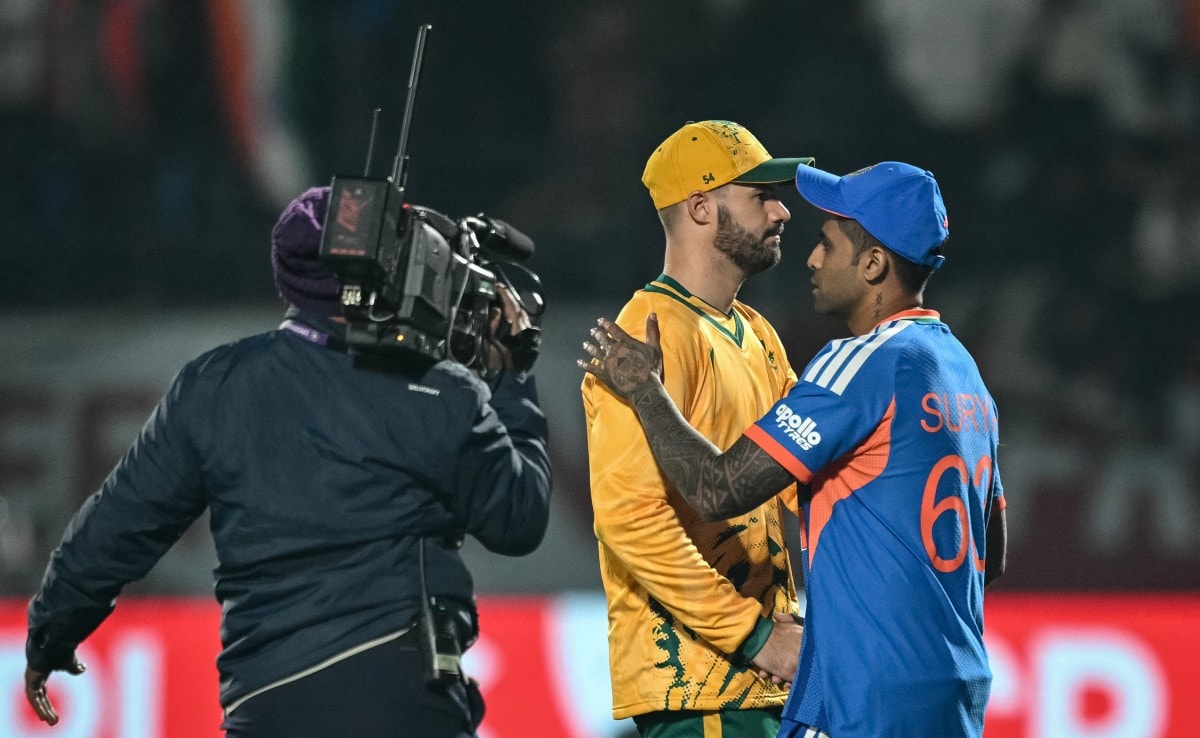
The International Cricket Council (ICC) finds itself in a sporting controversy, facing severe backlash over the T20 World Cup 2026 Super 8 format. As the names of the 8 teams to qualify for the next round of the tournament were finalised, ICC found itself in the middle of a social media storm over the 'pre-seeding' format. As a result of this, all four group winners find themselves in the same Super 8 group while the 4 runners-up have been placed in the second group.The pre-seeding system has inadvertently created a massive imbalance in the Super 8 groups. The ICC assigned fixed slots (e.g., A1, B1, C1, and D1) to top teams before the tournament even began.Group 1 now contains all four teams that topped their groups (India, Zimbabwe, West Indies, and South Africa).Group 2, meanwhile, consists entirely of runners-up (Pakistan, Sri Lanka, England, and New Zealand).This structure guarantees that two of the tournament's best-performing teams from the first round will be eliminated before the semi-finals, while a team that only managed to finish second in its group now has an "easier" path to the final four. Traditionally, progression in sports tournaments is designed to reward group winners, but under this format, finishing top offers little incentive.South Africa, for example, won their group but are treated as a lower seed because New Zealand -- who finished second in their group -- was pre-assigned a higher rank. As a result, once the top eight teams are confirmed, the final group-stage matches lose significance for Super 8 placement, stripping the tournament of the thrilling end-game drama fans expect.Critics have also pointed out how the schedule disadvantages co-hosts Sri Lanka. Despite playing their entire campaign at home so far, if they qualify for the semi-finals, the pre-determined bracket forces them to travel to India, denying them the chance to play in front of their home crowd in Colombo.The ICC has defended the move, citing logistical challenges. Co-hosting the tournament across India and Sri Lanka requires early planning, and the governing body insists that the pre-seeding system was necessary to manage venues and scheduling.




Most Popular



Men’s Tennis Shows Fight in Loss at #11 Baylor
4 hours ago



No. 16 Women's Tennis Posts 4
3 hours ago