
Why an $800 million plan to transform Australian cricket is at risk
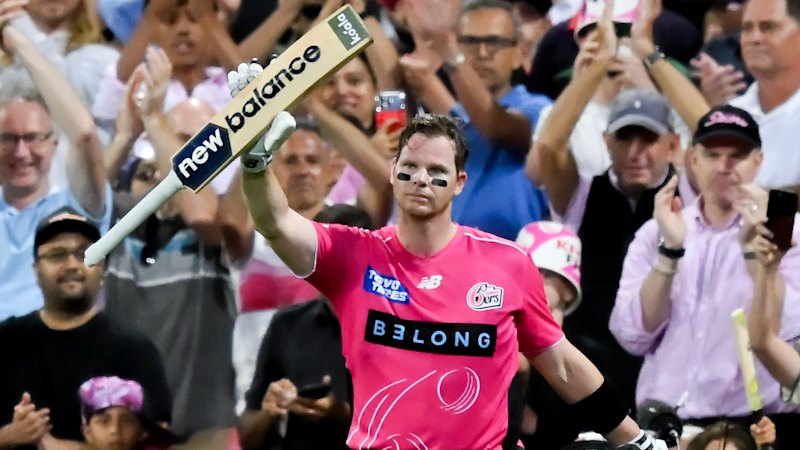
Plans to sell multimillion-dollar stakes in every Big Bash League club are at risk of falling over, amid mounting concerns about the float from some of Cricket Australia’s state associations.Cricket New South Wales has stated its reservations to Cricket Australia and the rest of the state associations in recent meetings of state chief executives and numerous one-on-one conversations, according to three sources with knowledge of discussions about which they were not authorised to speak publicly.Cricket NSW chair John Knox declined to comment, other than to say the decision was the most important strategic call in the state’s history.Other states also have concerns. Queensland Cricket is not comfortable with current proposals, according to two sources with knowledge of confidential discussions, and has written to CA requesting further information on which to base its deliberations. Queensland Cricket declined to comment.At least two states, NSW and South Australia, are drafting their own alternative financial models for Australian cricket - with CA’s approval - while others are undertaking deep analysis of CA’s BBL sale forecasts to conclude whether they would be better or worse off.There is a belief among several states that more revenue should be raised in traditional areas like broadcast deals and sponsorships - this has been a sore point since 2018.Some states have also discussed the question of raising more money through higher wagering product fees, an area in which cricket lags a long way behind the NRL and AFL.“It’s important to look at all options rather than just defaulting to a sale process,” said one senior state administrator. Another described the process as “complicated”. A third said their state was “challenging CA’s assumptions”. Cricket Victoria, which had been an early objector to sale plans, is considered to have become more sympathetic to CA’s position and is open to selling.Some parties now favour giving each state the option of making their own decision about selling within an agreed framework, rather than insisting that all clubs sell a stake for a fixed amount.Estimates of the value of a sale – based around the concept of selling 49 per cent stakes in six clubs and 100 per cent stakes in one Melbourne and one Sydney team – have ranged between $600 and $800 million.LoadingAnother meeting of Cricket Australia chief executive Todd Greenberg and state CEOs is set down for next week. Greenberg, who had set a nominal end of season deadline for an agreement, did not deny there was spirited debate behind the scenes, and also questioned the BBL’s status among global leagues given Australia’s recent poor record at T20 World Cups.“The impacts of saying no to privatisation are potentially just as big as saying yes,” he told this masthead. “We need to have an eye to the future and we all know the global market is changing. Whether we can go against the global trend of privatised domestic leagues and continue to grow our Big Bash Leagues is an open question.“The Sheffield Shield is the best competition in the world for preparing Test players, but the evidence of the recent T20 World Cup is that the BBL doesn’t currently do the same job for T20 Internationals.“So do we need greater investment in the BBL to ensure we are keeping pace with the rest of the world in a format that has gained far greater importance globally? It’s another very big challenge for Australian cricket.”Greenberg insisted discussions had remained respectful and cordial throughout. “The collaboration around the table with our state and territory colleagues has been excellent,” he said. “Everyone understands the importance of aligning on the best decision for the future of Australian cricket.”Mooney’s $400,000 pay dayCA chair and former NSW Premier Mike Baird has also been an advocate for selling stakes, to ensure Australian cricket is part of the rapidly growing global network of franchise leagues with private owners.Many of those groups, including the Ambani family in India, own teams in the Indian Premier League and multiple other jurisdictions.In parallel, Australian players have been arguing for a bigger piece of cricket’s revenue pie, with the Australian Cricketers Association recently suggesting to CA that their share should go up from its current 27.5 per cent of Australian Cricket Revenue to more than 30 per cent.There are also debates over how money should be distributed among the players: most agree that the top 10-15 cricketers in particular deserve to be better remunerated. The likes of Pat Cummins and Travis Head have fielded massive overseas offers in recent times.The difference made by private money was underlined this week by the sale of Beth Mooney to the Trent Rockets in the women’s Hundred competition in England for nearly $400,000 - more or less the same figure as the top rate available to men’s BBL players. In the men’s auction overnight, Tim David fetched a price of $754,000.The ACA, led by former AFLPA boss Paul Marsh, is adamant that all players should reap the benefits of any revenue uplift, hence the request for a bigger percentage. Marsh has not been invited to the most recent CEOs meetings, due to the discussions including implications for pay negotiations.While plans are afoot for a privately owned league in New Zealand , dubbed the NZ20, the South African T20 league is widely seen as the most threatening competitor for players and airtime. Each team is owned by a conglomerate that also has an IPL team, and since it began in January 2023, the SA20 has consistently attracted players who previously looked more seriously at the BBL in Australia.Some Australian players have already discussed the prospect of seeking big-money deals in South Africa or New Zealand should the BBL not privatise.“We know the importance of building a product in South Africa we can own and keep up with the world game and have a seat at the table in terms of the franchise movement,” SA20 tournament director Graeme Smith has said. “That can ultimately benefit cricket in South Africa.”Why some states are waveringLoadingCA may also have to consider redrawing the financial model that has been in place since 2012, which offers guaranteed annual funding to states in exchange for greater CA control of the game’s upside.That model worked well enough until the COVID-19 pandemic, but since then, CA has run an operating loss in every season since 2019-20, despite two lucrative tours each by India and England in that time.Knox, the Cricket NSW chair and former CEO of Credit Suisse in Australia, has been widely considered a vocal proponent for the raising of private capital in Australian cricket. He has been involved in one such purchase of Trent Rockets in The Hundred with the private equity firm Ares. But it is NSW that has raised the most vocal objections to the sale plans.These worries have included the prospect of selling off future profits in the game to investors with interests not aligned to those of Australian cricket, concern about how much control is wielded even by minority owners in the English competition, and broader queries about profitability.Figures shared among administrators have indicated that only the IPL and the BBL are truly profitable. Their success is derived not from the deep pockets of private investors but from the value of domestic media rights.Historically, Australian cricket’s biggest additional pools of revenue - outside the bread and butter of domestic broadcast and commercial deals - have come from broadcast rights sales to the Indian market and the hosting of World Cups. The 2015 ODI World Cup in Australia spun off a $51 million profit, and the 2022 T20 World Cup in Australia raised a profit of $42 million, well above initial forecasts.CA pushed ahead with a national conversation about privatisation of the BBL this summer after it received the recommendations of an independent report by Boston Consulting Group. BCG had been commissioned to look at how to ensure the BBL is regarded as the second best T20 league in the world, after the IPL.News, results and expert analysis from the weekend of sport are sent every Monday. Sign up for our Sport newsletter.

Most Popular