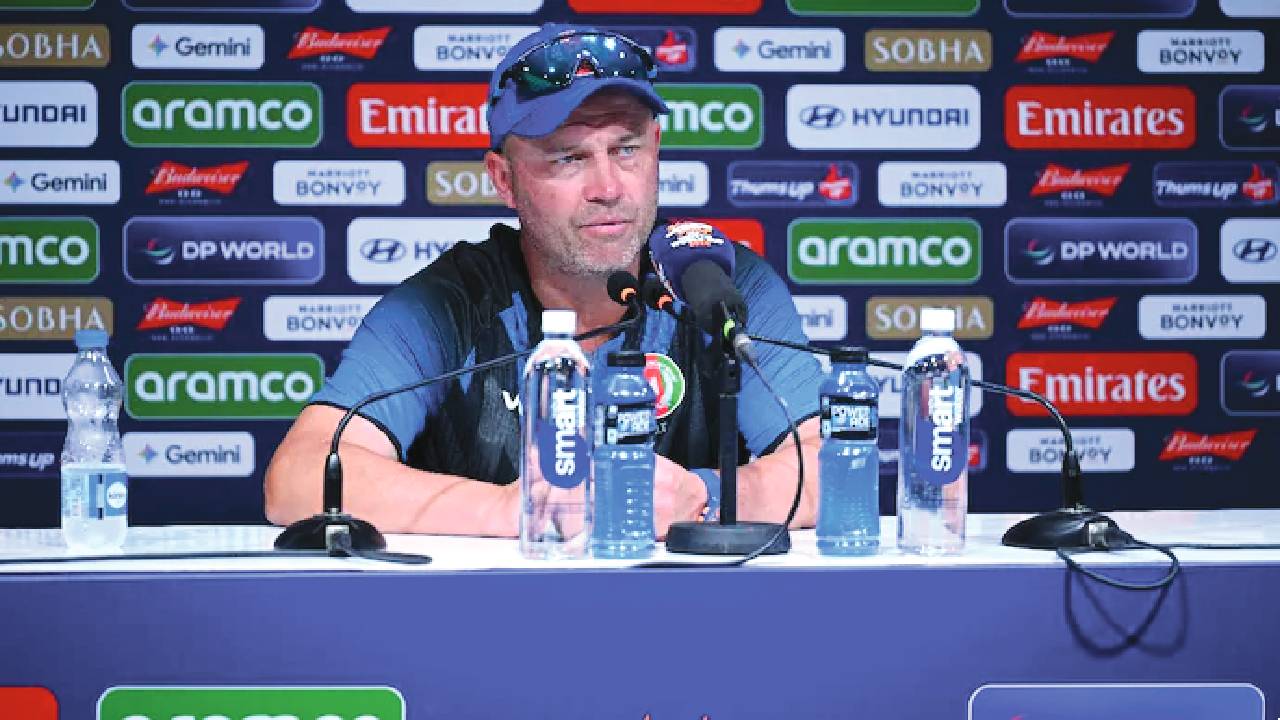
Is the Brentford managerial theory correct… or has Keith Andrews made them better?

If the 2025-26 Premier League season were to end today, who would be the main contenders for manager of the season?Well, for a start, Arsenal fans would be absolutely delighted at the early curtailing of the campaign. Their manager, Mikel Arteta, would undoubtedly win the award, having finally dragged his perennial runners-up to top spot.But who else is in contention? Unai Emery has again done a remarkable job at Aston Villa, especially considering his squad barely improved last summer, if at all (Villa remain the only side who haven’t had a goal scored for them in 2025-26 from any of last summer’s signings).Down the bottom of the table, there aren’t any miracle survival campaigns on the horizon, but Daniel Farke at Leeds United undoubtedly deserves the most credit for managing Leeds out of their crisis and into calmer waters (for now) by changing formation.And that’s probably it. Other than Keith Andrews.Brentford not only lost Thomas Frank, the man credited with masterminding their promotion to the top flight (after no fewer than 74 years away) and then recording finishes of 13th, ninth, 16th and 10th, but also their top scorer from last season in Bryan Mbeumo (20 goals), plus his partner-in-crime, Yoane Wissa (19 goals). Wissa’s exit was tumultuous and potentially destabilising, too. They also lost Christian Norgaard, one of the key cogs in their midfield, to Arsenal.Brentford, by many estimations, have the lowest wage bill in the Premier League, or at least one of the lowest. Last summer, they not only didn’t spend big, in net terms, but actually made a profit. It therefore borders on a footballing miracle that a man with no previous managerial experience has guided them not just to the usual safety mark with 12 games to spare — they’re already on 40 points — but a current place of seventh, which would be the highest in the club’s history.So in fact, the man who elicited a general response of ‘Why?’ from many when he was appointed as Frank’s successor last summer has, pound for pound, probably done the best job of any manager this season. Or has he?A video referred to as the ‘Brentford managerial theory’, published in January, has been doing the rounds on social media. The post, created and uploaded to TikTok by @SleeperBrentford, suggests that managing Brentford is the biggest “ego boost” in football, and leads to managers leaving for bigger jobs but not doing as well as their former club does after their exit.@sleeperbrentford End of my presentation #brentford #managers #thomasfrank #keithandrews #brentfordfc ♬ оригинальный звук – junior_gdThe video alludes to the struggles of Frank at Tottenham Hotspur. Frank has since been sacked, leaving with the worst win percentage of any permanent Spurs boss in the Premier League era. This raises the question of whether Brentford are just so well run that, given the consistent structures in place, most decent managers succeed there?That structure centres on staff in key roles who have been at the club for some time. Matthew Benham has been the majority owner since 2012, and Phil Giles has been the director of football since 2015.Technical director Lee Dykes has been at the club for seven years, as has CEO Jon Varney, while chairman Cliff Crown joined in 2013. Assistant coach and former player Kevin O’Connor joined the coaching staff in 2018. And Andrews, while not a Brentford stalwart, had been at the club under Frank last year, primarily acting as set-piece coach.That stability behind the scenes, with everyone buying into the same vision with tweaks along the way, helps counteract the regular changes in the first team via the club’s tried-and-trusted recruitment policy. They buy cheap, mostly younger talents from various corners of the globe and sell them on, often for a huge profit.Recruitment is planned, as much as it can be, for three transfer windows in advance. While they will get input from the head coach, they will never recommend players to the club.That recruitment comes via their pioneering use of data, spearheaded by Benham, which, as reported in The Athletic three years ago, involved a database of 85,500 players, compiling hundreds of detailed video reports on key targets, whittled down into 16 different positions on the field (with six criteria for scouts to look for in each position).“It is unique,” Dykes told The Athletic at the time. “We are using the numbers our way. A lot of people who say they have data are correct, but it is a shared resource with other clubs. Where is the marginal gain there?”The unique system means the club have a transfer net spend over the past five years estimated to be £103.9million ($90.7m). Transfermarkt judges this to be the 15th-highest net spend of current Premier League clubs over that time period, yet currently they’re occupying a European spot in the table.That net spend is less than Bournemouth, Fulham and even newly promoted Burnley and Sunderland.In terms of just this season, they are one of only four Premier League clubs to have made a profit in the transfer market, along with Bournemouth, Brighton and Wolverhampton Wanderers, owing to those sales of Mbeumo, Wissa, Norgaard, as well as goalkeeper Mark Flekken.They spent a decent amount, too, primarily a £42.5million record deal for Dango Ouattara from Bournemouth. They also added Caoimhin Kelleher from Liverpool to replace Flekken and the purchase of last season’s loanee Michael Kayode, the long-throw-flinging right-back, for what looks like a snip at £17.5m from Fiorentina.@theathleticfc Who is the best right-back in the Premier League? JJ Bull explains 🧠 Presented by Football Manager 26 @footballmanager 🤝 #premierleague #brentford #tactics #football #soccer ♬ original sound – The Athletic FCAndrews was hired because, in director of football Giles’ words, he fits their culture, he’s a very good coach, and everyone likes him.“With Keith being an internal appointment and promotion, the thought process about how to replace Thomas started many years ago,” Giles said last summer. “When we replaced Dean Smith, we had Thomas lined up. While we never promised him the job, we had the idea that Thomas could potentially take over from Dean.“It’s the same principle here (with Andrews). When we appoint coaches, we always have an idea about whether they could potentially step up. He will bring his own evolution, but it’s not starting from scratch, so hopefully we can make some quick progress. We’re not trying to change everything and go in a totally different direction.”So what does that evolution entail? And are Brentford in 2025-26 just a Frank side with some small Andrews improvements?Brentford are probably unfairly characterised as a purely direct side. The graphic below, which plots their build-up in terms of passes per sequence (shown on the x-axis) and direct speed (the y-axis), indicates they have gradually moved towards the playing style of your average Premier League side. Andrews hasn’t shifted this style massively this season.They are, however, second in the league for long balls. This probably feeds into their effectiveness on the counter: they have created 0.38 expected goals (xG) per 90 minutes from counter-attacks, by far the highest in the league across the last eight seasons.Along with counter-attacks, considered shot selection has been a hallmark of all Brentford sides in recent seasons, under both Frank and now Andrews.The graphic below shows that their average shooting distance frequently ranks at the bottom of the pile (the non-red dots are other Premier League teams in that season). Put simply, they don’t waste hopeful shots from 30 yards, instead preferring to work their way into promising shooting areas.A fair question, then, is: what has Andrews actually changed? Well, one notable improvement is in defence, which is another reason Giles stated Andrews got the job, given his work on defensive set pieces last season.Brentford are currently conceding around five fewer shots per game than in 2024-25. The exact reason for that improvement is unclear, but one notable adjustment is a far less aggressive high press this season.The graphic below shows their turnovers in the final third, with a sharp drop-off this season. They are focusing more on staying compact and condensing the pitch.And yes, set pieces unsurprisingly remain a great strength, with only Wolves — yep, really — being better at defending dead balls.Where they aren’t strong is scoring from attacking set pieces.In fact, on that metric, they are the worst team in the league. However, the data excludes goals scored via long throws, where they are strongest in the league, courtesy of Kayode.Their style of play remains clear and defined, albeit Andrews has been able to put his own twist on it.The 17 goals of Igor Thiago — who, until this week, had scored more than Wolves’ entire squad — have helped fill the Mbeumo-shaped hole. Ouattara has started to step up his game lately. His starring role in the 3-2 victory at Newcastle offered a strong hint of what he is capable of.Kevin Schade and Mathias Jensen have had solid campaigns, Kelleher has impressed in goal, and everything has been underpinned by the guile and experience of Jordan Henderson in midfield.These players will all leave in the coming years, but Brentford, like a football terminator, will attempt to regenerate and go again.With 12 games remaining, they are just four points off fifth, a place that will almost certainly guarantee Champions League football. Surely they couldn’t, could they? Well, no, probably not, but with their next seven opponents being Brighton, Burnley, Bournemouth, Wolves, Leeds, Everton and Fulham, who’s to say what Brentford’s aims could be?Andrews manager of the year? Brentford in Europe? Don’t bet against one of the Premier League’s greatest success stories.
.jpg)


Most Popular